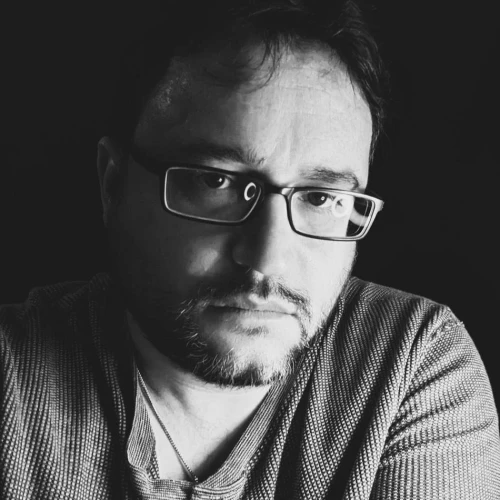
“Our mission is to support nonprofits worldwide,” Shay Chervinsky, CEO of Charidy, a leading fundraising company in the Jewish world, told JNS.
Charidy offers donors access to a wide range of causes through its platform, with campaigns categorized as faith-based, humanitarian, eco-friendly, disability-related, mehadrin [strictly kosher] and more.
To date, Charidy has helped more than 10,000 organizations worldwide raise more than $4.5 billion. Founded 12 years ago, the organization employs 100 people in offices across the United States, Australia, Israel, France, England and South America.
“It can be a small Chabad house in Guatemala or the CDC [Centers for Disease Control and Prevention] Foundation in the United States. During COVID, we helped raise more than $50 million for the CDC,” Chervinsky said. “Our campaigns can range from $50,000 to hundreds of millions of dollars, depending on the size of the organization.
“As long as you are looking to do good, we will be there for you and provide robust technology, including the most advanced AI tools, to help ensure a successful campaign,” he added.
Charidy’s biggest advantage, Chervinsky said, is that the platform provides campaigns with the support of a dedicated manager who specializes in global fundraising.
Chervinsky, who lives in central Israel, described the challenges in the aftermath of Hamas’s Oct. 7, 2023, onslaught on Israel. He balances his roles as a Chabad rabbi, a Border Police reserve officer tasked with days and nights of service in Judea and Samaria, and as the head of an organization accommodating a surge in fundraising needs. “It’s not a 9-to-5 job; it’s a mission,” he said. He joined Charidy nine years ago and has led the organization since.
In the wake of the Oct. 7 attack, the platform, often at no cost, assisted numerous Israel Defense Forces units seeking to raise money to buy essential equipment.
“Those who used to donate to yeshivot or Jewish schools redirected their contributions to supporting army units. For at least the first six months, we had very few campaigns that were not related to helping Israel—whether for communities in the South, the military or first responders,” he added.
A success-based model
Charidy operates on a success-based model: Once a nonprofit reaches its fundraising goal, the company takes a percentage of the funds raised. As part of the process, nonprofits are vetted upon registering on the platform, and Charidy uses its technology to set realistic fundraising targets. Once those goals are achieved, Charidy charges between 2% and 8%.
“We understand the sensitivity of providing services to nonprofits. Their strength is their mission, not the money, which is why we provide what they need first and get paid afterward,” Chervinsky said.
He added that in the aftermath of Oct. 7, Charidy was able to deal with the surge in demand, having experienced similar surges of activity in the past.
“Every year, Chabad movements organize a global giving day on the platform. Chabad emissaries fundraise on that day, usually in December. On a single day, as many as 600 Chabad houses can use our platform,” Chervinsky said.
One challenge in fundraising for military units, he noted, is that they are not structured as nonprofits. Charidy helped them, at no cost, find nonprofit organizations to host their campaigns.
Even before Oct. 7, Charidy hosted hundreds of chesed [“loving kindness”] campaigns.
“Whether it’s an individual who needs surgery or medical treatment, or, God forbid, a death in the family, we provide the platform for free and do not charge. Over the years, we have helped raise tens of millions of dollars for individuals at no cost,” Chervinsky said.
By the end of 2025, nonprofits will have raised $600 million through the Charidy platform.
“Feeling the impact of helping so many nonprofits in Israel and around the world is incredible. Organizations often have strong ideas and passion, but to fulfill their missions, they need funding. Not everyone who starts a nonprofit knows how to run it from a business perspective—they are driven by causes like helping children with disabilities or protecting animals,” he said.
“It is a privilege to help turn those good intentions into reality by bringing our experience. We have an outstanding global team, and seeing the relationships that develop between nonprofits and our campaign managers is heartwarming. Some nonprofits have been with us for nearly a decade, which reflects the impact we are making,” he added.