


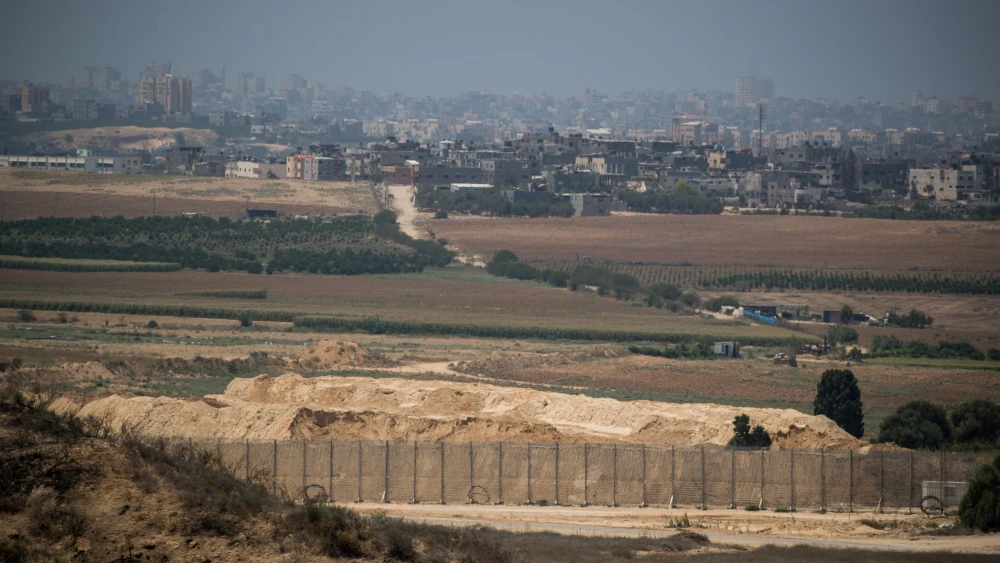
Despite ongoing attacks emanating from the Hamas-controlled Gaza Strip, Israel recently re-extended the Gaza fishing zone to 10 nautical miles and allowed Qatar to deliver $20 million in cash for humanitarian assistance to Gaza’s 2 million residents.
Israel’s policy towards Gaza has been to maintain the status quo—something that has upset many of Israeli Prime Minister Benjamin Netanyahu’s supporters and even has some opposition politicians to the left voicing support for a more forceful response.
According to Yoram Meital, professor of Middle East Studies at Ben-Gurion University of the Negev, an argument can be made that maintaining the status quo, while not ideal, is the best option open to Israel at the moment.
“The position of the Israeli government in recent years is based on the premise that the continuation of the status quo vis-à-vis the Palestinian parties in general and in the Gaza Strip in particular serves the Israeli interest better than the other two alternatives,” Meital told JNS.
Asked what he thinks about an alternative policy, Meital said Israel’s current approach “is better than launching a wide-ranging military operation which forces Israel to retake responsibility in Gaza Strip with its 1.8 million population,” in which case he noted that Israel would likely face “ongoing guerrilla warfare.”
Additionally, said Meital, retaking the Strip “will dismiss the claim that Israel has withdrawn from Gaza and is not responsible for what is happening there.”
“A third possibility is the renewal of the political process, but Israel’s position is that that is not realistic,” he said. “Thus, Israel finds itself trapped in Gaza, with any significant change not in sight.”
The continued Hamas-led riots on the Gaza-Israel border, along with repeated rocket and incendiary balloon attacks from the Gaza Strip, are making life increasingly difficult for residents of Israel’s south.



