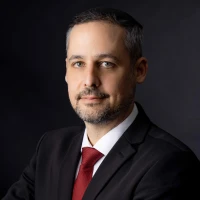
Steve Witkoff, U.S. President Donald Trump’s special envoy to the Middle East, said on Thursday the United States had communicated with Iranian officials in recent days and reported that plans for mass hangings of protesters in Iran had been “shut down,” as Washington weighed a diplomatic path with Tehran.
Witkoff spoke in a sit-down interview with Australian broadcaster Erin Molan at a gathering in Hollywood, Fla., hosted by the Israeli-American Council (IAC).
He stressed that Trump had personally warned Iranian leaders and directed the administration to convey U.S. concerns about reports of impending executions.
“At his direction, we communicated with the Iranians yesterday,” Witkoff said. “One of the things we were concerned about were the killings that were rumored to be on the way—hangings, mass hangings. And that’s been shut down.”
Asked whether the United States could resort to military action, Witkoff said he hoped for a diplomatic resolution, but warned that the alternative was “a bad one.”
He said any agreement would have to address four areas: uranium enrichment, missiles, Iran’s stockpiles of nuclear material and Tehran’s proxy network.
“There are four issues—nuclear enrichment, missiles ... , the actual material that they have, which is roughly 2,000 kilograms, which is enriched anywhere between 3.67% and 60%,” he said, adding, “and the proxies, of course.”
Witkoff portrayed a deteriorating economic and humanitarian situation, citing prolonged daily shortages of water and electricity, coupled with high inflation. He said that the United States “stands with” Iranians who oppose the regime, calling them “incredibly courageous people.”
Board of Peace
Molan asked Witkoff about a concept he referred to as the “Board of Peace,” which he credited to Trump and said was being developed by a team that includes Jared Kushner, the president’s Jewish son-in-law and senior adviser in his first administration.
Witkoff described a new governance framework intended for Gaza, saying the administration had taken steps to establish a technocratic governing structure.
“We actually have succeeded—the United States government has—in standing up a new government that will forever replace Hamas,” he said. “That happened today.”
Witkoff announced the start of Phase 2 of the Trump administration’s 20-point Gaza peace plan on Wednesday. This phase is intended to shift “from ceasefire to demilitarization, technocratic governance and reconstruction” of Hamas and Gaza.
Witkoff’s comments on Iran came as the administration signaled increased focus on the Islamic Republic amid turmoil inside the country and heightened regional tensions. He insisted that Trump’s approach blends deterrence with diplomacy and urged the audience to “trust” the president’s instincts.
“He’s the right man for the job,” Witkoff said.
Witkoff also addressed the Hamas hostage issue, saying mediation had been deeply personal for both him and the president. As a bereaved parent, he said that working with hostage families gave his son’s death meaning.
He recounted a moment at the White House after the release of hostages, saying the president had pulled him aside and told him it was “the greatest day I’ve ever had in the White House.”