Newsletter
Newsletter Support JNS

Israel tightens security, shuts Judea and Samaria, Gaza crossings for election day

The closures went into effect at 12:01 a.m. and will continue until 11:59 p.m., barring unforeseen security developments, according to the Israeli military.

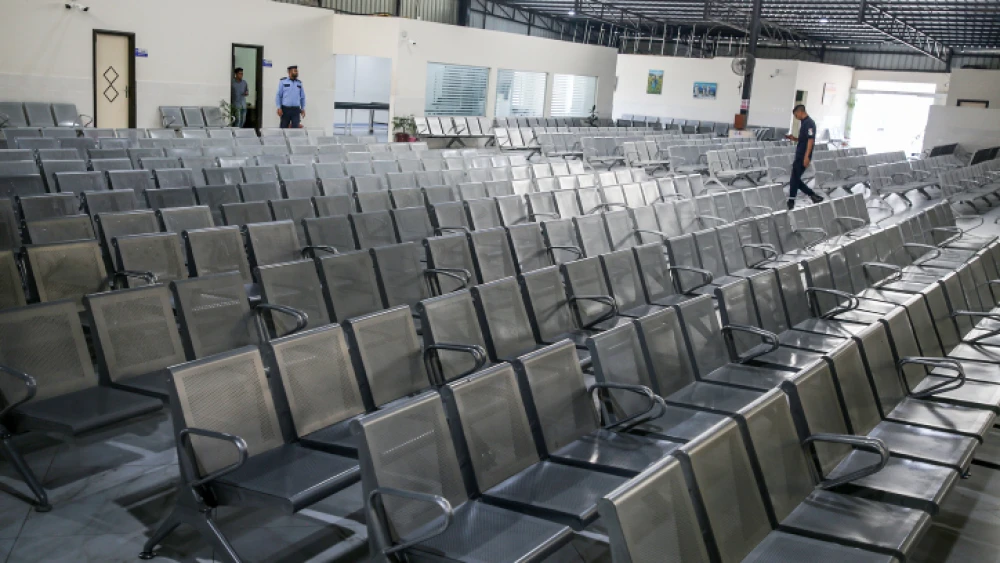
The Erez Crossing, in Beit Hanun, between Israel and the northern Gaza Strip, on Aug. 4, 2022. Photo by Attia Muhammed/Flash90.

Israel has implemented additional security measures for Tuesday’s national election, including a general closure of crossings in Judea and Samaria and the Gaza Strip.

The decision, made during a situation assessment by the defense establishment, comes in the wake of a series of terror attacks across Judea and Samaria, commonly known as the West Bank.

The closures went into effect at 12:01 a.m. local time and will continue until 11:59 p.m., barring any unforeseen security developments, the Israel Defense Forces said in a statement.

There will also be no passage for journalists through the Erez Crossing between Israel and Gaza on Tuesday, with passage resuming on Wednesday in line with regular hours, according to a statement from the Government Press Office.

Five Israeli soldiers were wounded in a terror attack in the Jordan Valley, south of Jericho, on Sunday.

On Saturday night, a 50-year-old Israeli civilian was murdered by a Palestinian terrorist at the entrance to Kiryat Arba.

The shooter, Muhammad al-Jabari, was shot dead by security forces at the scene.

“I think they allowed it to go on too long—the protests, everything,” Jonathan (“Jay”) Sures, one of 26 regents of the public school system, told JNS.
“It’s not about improving Israel’s image. It’s not about fighting back the media war,” Talia Dekel-Fleissig told JNS. “It’s about making sure that the public understands what’s actually going on.”
The film was also nixed by both of Australia’s national public broadcasters.
“It’s not a decisive shift to a new phase of the war,” Jason Brodsky, policy director at United Against Nuclear Iran, told JNS. “Rather it is a reminder that the U.S. has the will to police the Strait of Hormuz.”