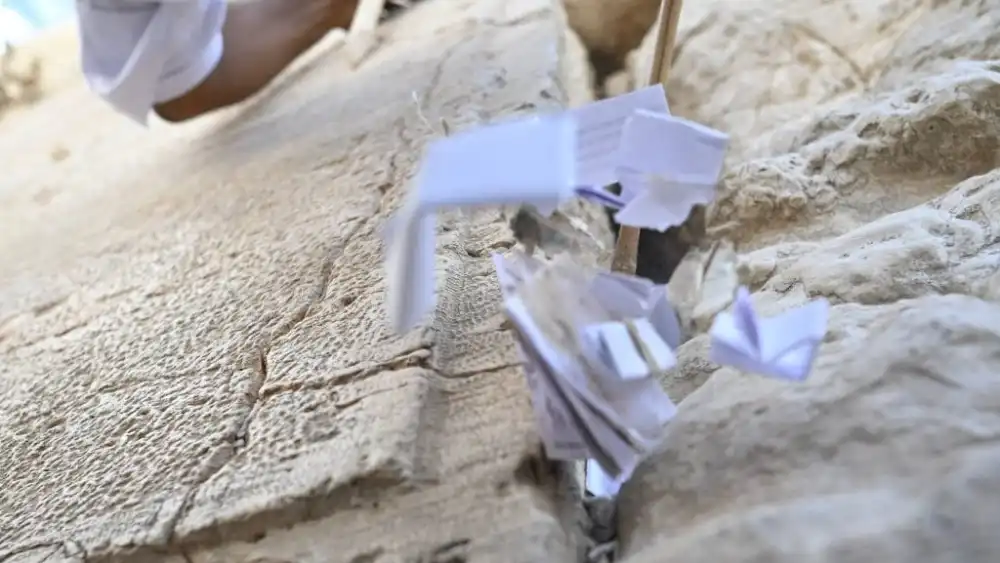
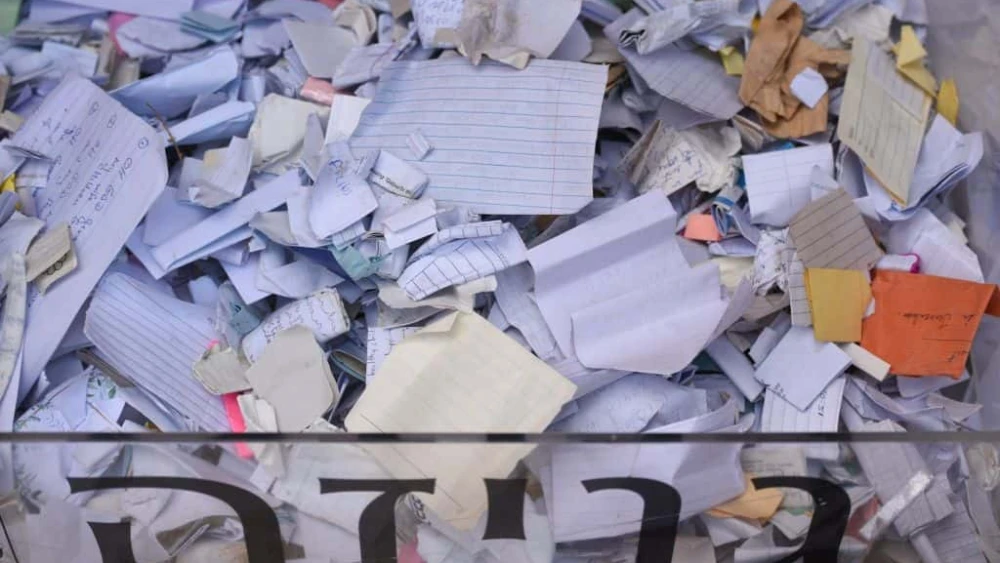
One of Jerusalem’s most iconic religious traditions is custom of writing prayers on scraps of paper and placing them in the cracks of the Western Wall.
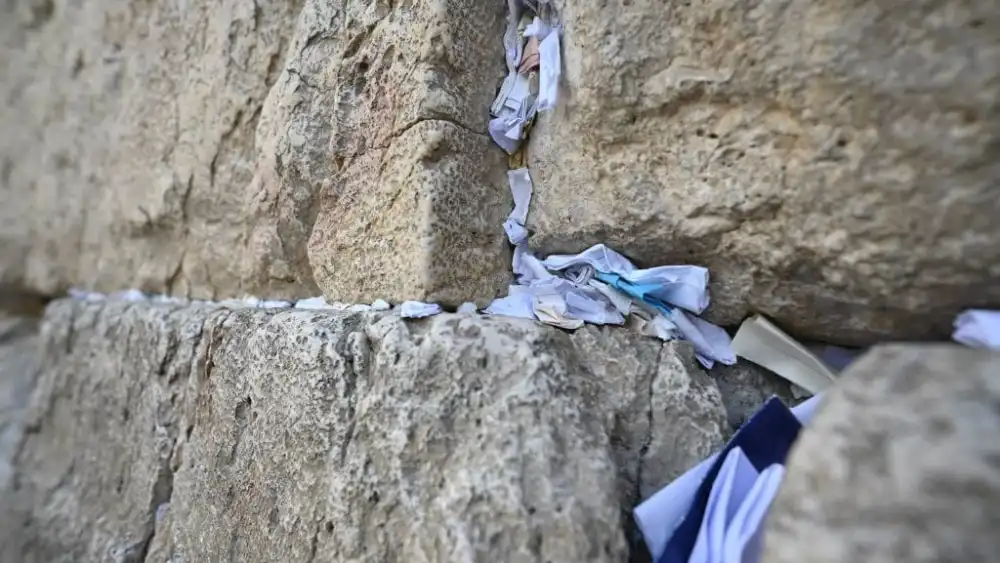
Visitors to the holy site of all faiths leave thousands of notes to God—known as ptakim—praying for personal success, a loved one’s health, peace in the Middle East and a myriad of other things.
The custom stems from the Jewish teaching that God’s presence never left the Western Wall and that prayers ascend to heaven through the adjoining Temple Mount. People unable to visit can also write notes online, which are printed out placed in the wall by staff.
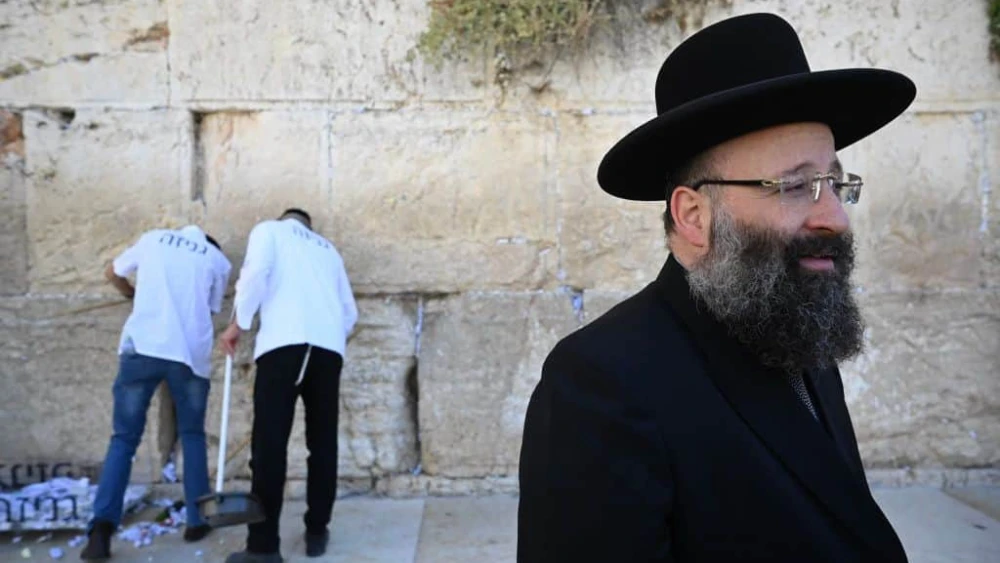
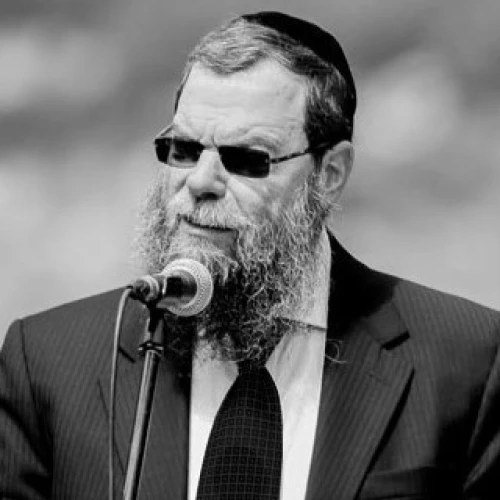
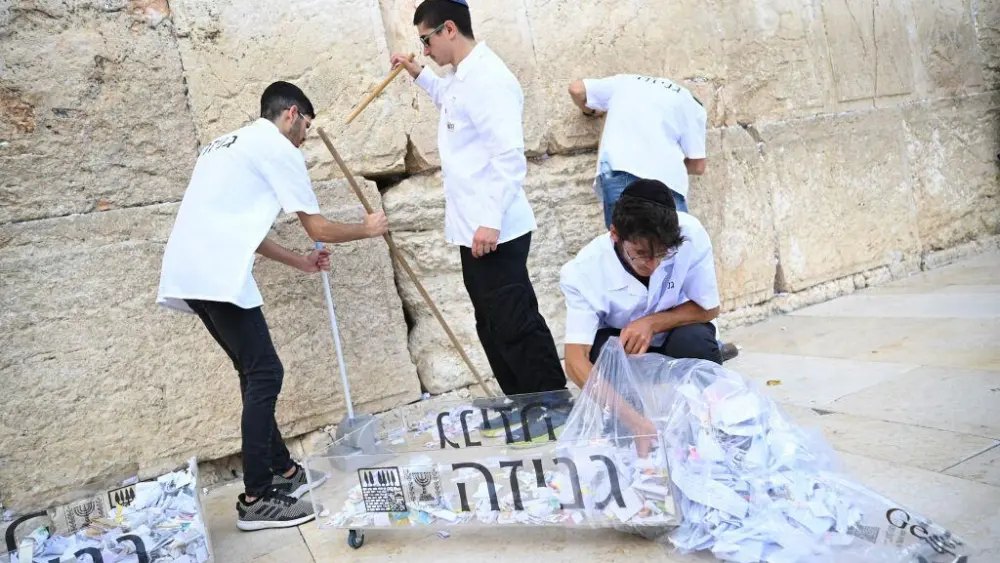
Twice a year—before Passover and the High Holidays—the Western Wall Heritage Foundation removes the notes. The foundation administers the holy site’s daily affairs. The cleanup is done under the supervision of the Chief Rabbi of the Western Wall and the Holy Places Shmuel Rabinowitz, Rabbi of the Western Wall and the Holy Places.
Notes removed from the wall are buried in a Jewish cemetery on the nearby Mount of Olives. Workers are careful to respect the privacy of the prayers and do not read the notes.
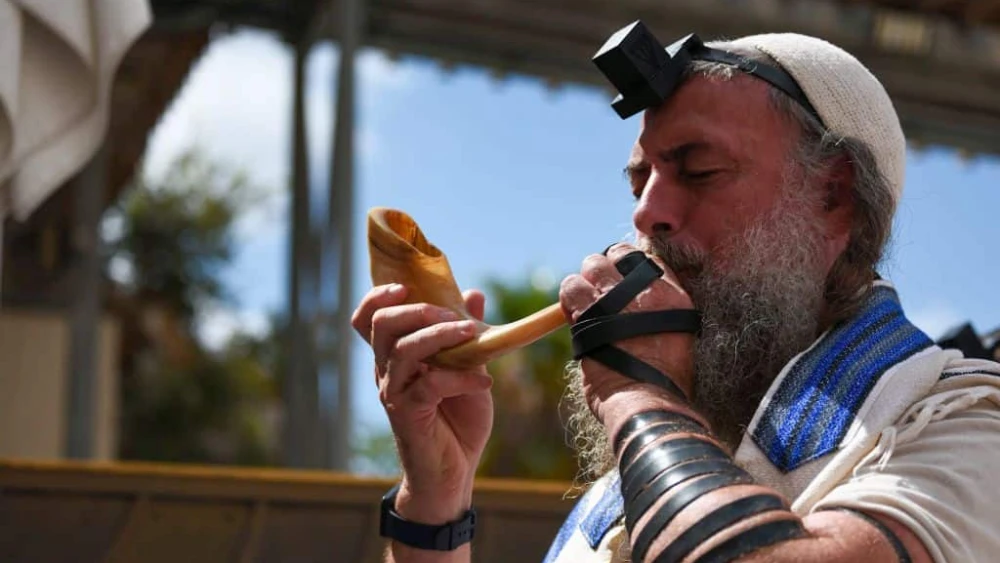
At the end of August, engineers inspected the wall for safety, removing loose stones and seasonal plants. Thousands of Jews will visit the Western Wall during the High Holidays and the week-long holiday of Sukkot. The High Holidays being with Rosh Hashanah, the Jewish new year, which starts on Sept. 15 at sundown.
The Western Wall, also known as the Wailing Wall, is the only remnant of a retaining wall encircling the Temple Mount built by Herod the Great and is the holiest site where Jews can freely pray. The Temple Mount, where the First and Second Temples were built, is the holiest site in Judaism.
Worshippers at the Western Wall were able pray for a happy new year as workers made room for the next six months of notes.
Photos by Yoav Dudkevitch/TPS