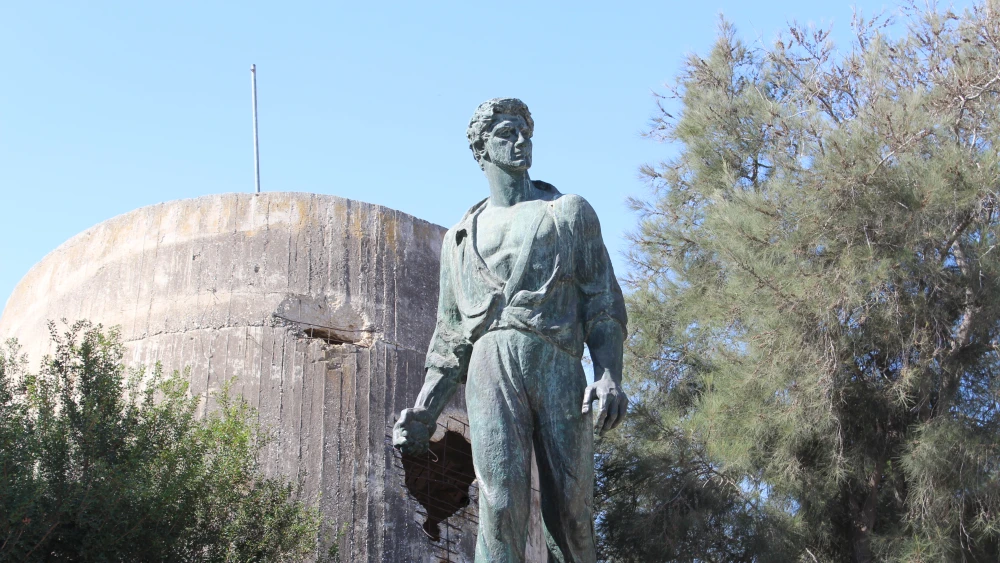
The memorial honoring fighters of the Warsaw Ghetto Uprising, as well as a nearby Polish military monument, were defaced with red graffiti praising a Ukrainian nationalist militia. Warsaw police confirmed that an investigation was underway after the vandalism was reported on Saturday.
Both monuments were spray-painted with the words “Slava UPA,” meaning “Glory to the Ukrainian Insurgent Army,” a World War II-era nationalist organization responsible for massacres of Polish civilians. Poland’s Jewish Historical Institute condemned the vandalism as an attack on the memory of Holocaust victims and Jewish resistance fighters, according to Ynet.
The Ukrainian Embassy in Poland condemned the vandalism on Saturday, accusing Russia of orchestrating provocations intended to inflame tensions between Poles and Ukrainians.
Russian involvement has not been established. Similar graffiti has appeared on several other monuments across Poland in recent weeks.
W sobotę, 14 listopada, w Warszawie doszło do kolejnych dwóch dewastacji pomników. Napisy „Slava UPA” pojawiły się na Pomniku Bohaterów Getta przed Muzeum Historii Żydów Polskich POLIN oraz na Pomniku Żołnierzy 1 Armii Wojska Polskiego przy ulicy Andersa 13. To kolejna odsłona… pic.twitter.com/Y7NDsfpjxn
— Miejski Reporter (@MiejskiReporter) November 14, 2026