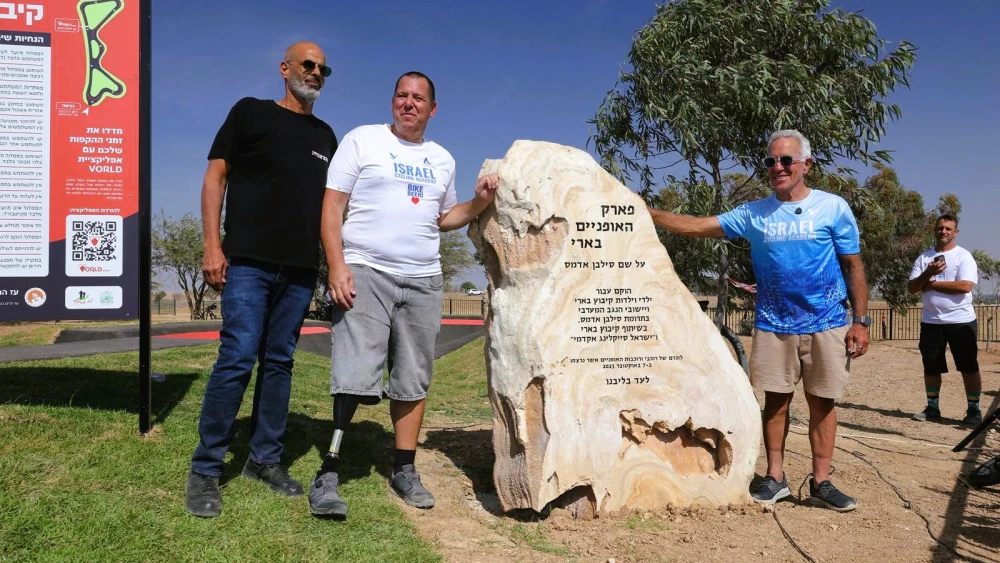

Kibbutz Be’eri was founded as an “11 points” remote outpost at the close of Yom Kippur 1946. It was intended to spearhead the creation of Jewish communities in the Negev Desert for the future Jewish state. At the time, there were no roads and no water, only rocks and sand.
Be’eri is home to 1,200 people and anchors the Eshkol Region. A printing and fintech company there employs 600 people, while farmers raise cattle, potatoes, peanuts, mangos, jojoba for skin-care products and more.
For two decades, Be’eri and all other communities on the Gaza border endured daily rocket attacks. People had 15 seconds to run to safety. The physical dangers and psychological trauma impacted humans and animals alike. Families slept in home bomb shelters and safe rooms in case of nighttime attacks.
On Oct. 7, 2023, one day after its 77th birthday, the kibbutz was attacked by Hamas terrorists who committed the most barbaric horrors inflicted on Jews since the Holocaust. More than 130 men, women and children were murdered. Thirty-two were kidnapped. Twenty-one children lost one or both parents, while 100 lost siblings or other close family members. Be’eri’s homes, schools, library, dining hall and dental clinic were destroyed.
Today, Be’eri is an active construction site as it rises like a phoenix from the ashes. Its guiding vision is “Be’eri: stronger and more resilient, prosperous and welcoming than ever before—for current members and generations to come.”
Kibbutz residents voted to demolish all but one of the homes damaged during the massacre. This one will be preserved for five years as a House of Testimony while they decide its ultimate fate. Eighty new houses are being built in three eastside neighborhoods. Hundreds of damaged homes are being repaired and upgraded. Antiquated and damaged water, sewage, electricity, road and communication infrastructures are being replaced.
Other buildings and facilities are being rebuilt, reinforced, modernized and expanded using “trauma-informed design.” Residents recognize that physical spaces hold memories and that thoughtful design can foster healing, restore a sense of control and safety and recreate familiar surroundings.
Shared spaces such as a dining hall and sports fields support the community’s recovery. Projects fully funded but not entirely completed include a daycare center and kindergarten; youth center; innovation center; library; and new medical center.
Buildings and facilities are being rebuilt, reinforced, modernized and expanded using ‘trauma-informed design.’
The total cost of physical reconstruction is $150 million.
Partners include the Israeli government; Jewish National Fund-USA (JNF-USA); Keren Kayemeth LeYisrael (KKL); other Jewish and secular philanthropic organizations; and countless individuals, family foundations and grassroots supporters worldwide. Many donations unlock an additional 25% match from KKL.
About $12 million must still be raised for other vital projects, especially safe room upgrades for all 418 homes that include reinforced doors that can be locked from the inside and filtration systems that purify and recirculate air, so that terrorists cannot set homes on fire and smoke families out to be murdered.
The final round of fundraising will also cover 20 residential units for young adults; a restored community headquarters for leadership and administrative offices; a cemetery and commemorative garden; a regional veterinary clinic; an indoor/outdoor sports complex; and a new dining hall and members’ club.
Details are presented in the 2025-2026 Impact Report: “We Are All Be’eri—The Journey Back Home of Kibbutz Be’eri.”
The goal is not just to bring people back but to make them want to stay, giving them a place to heal, raise children, re-establish their daily lives and thrive. The return date for Be’eri families that have not yet come back is July 31, 2027.
Meanwhile, 50 babies have been born since Oct. 7. Traditional and family celebrations and gatherings have continued uninterrupted, though with fewer participants. Be’eri Printing now employs more people than before Oct. 7, and the kibbutz is growing barley for “Single Be’eri,” its signature single malt whiskey.
Construction and renovation proceed apace. A new avocado- and citrus-packing facility has joined the revitalized winery, dairy, cycling and other enterprises.
On my recent trip to Israel, I visited battlefields from the 1948 War of Independence; the Valley of Elah, where David challenged Goliath; ancient Canaanite and Jewish cities; the Pilgrimage Road, which Jesus and other Jews traveled to reach the Second Temple; and the City of David and nearby museums. In Be’eri, a co-founder’s grandson and other friends guided me through the hall of remembrance and construction sites.
Everywhere I went, I witnessed millennia of history; glittering skylines of steel, glass and Jerusalem limestone; and incredible examples of Israeli resilience and resolve in the face of threats to destroy the country.
Each experience underscored how Jews, throughout centuries of hostility and attempted eradication—and still today—have chosen life and remembered the past without dwelling on it. Above all, they have rebuilt and used their intellect and industry to renew the places they call home across repeated diasporas and their recent return to their ancestral land.
There is no better example of this than Kibbutz Be’eri.