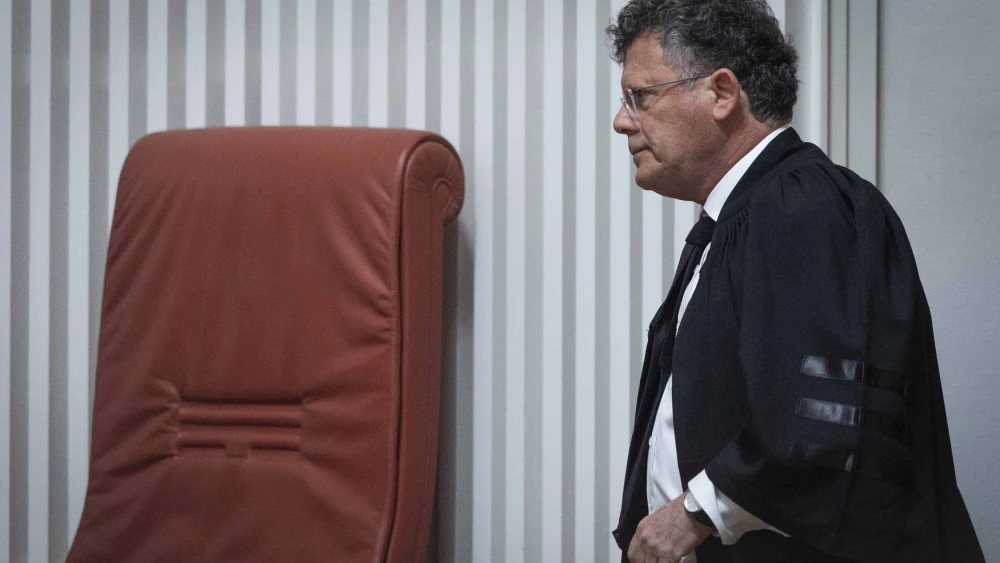
Israel’s High Court of Justice on Sunday opened hearings on petitions seeking to strike down a law that reshapes Israel’s Judicial Selection Committee, in a case that could determine the future balance of power between the elected government and the judiciary.
The case is being heard by all 11 Supreme Court justices currently serving on the bench — an expanded panel reserved for issues considered to have exceptional constitutional importance.
At the center of the dispute is an amendment passed in March 2025 to Basic Law: The Judiciary, which changes the makeup of the committee responsible for appointing judges. The legislation removes Israel Bar Association representatives from the panel and increases the influence of government and coalition representatives.
Petitioners, including civil rights groups, watchdog organizations, the Israel Bar Association and opposition lawmakers, argue that the amendment will politicize the judicial system by allowing politicians to exert greater control over judicial appointments.
They contend that the previous system, while imperfect, preserved judicial independence by requiring cooperation between elected officials, judges and legal professionals. The petitioners warn that the new arrangement could lead to judges being selected for political reasons rather than professional qualifications.
The Association for Civil Rights in Israel argued that the government sought to expand its influence over appointments throughout the judicial system, including the Supreme Court, in order to promote judges viewed as politically favorable.
Opposition lawmakers Knesset members Karin Elharar and Yoav Segalovich of the Yesh Atid Party argue that the amendment would weaken a key democratic safeguard. Their petition argues that “politicians will choose judges based on ideology and loyalty rather than professionalism,” which they said could damage judicial independence.
The government and Knesset representatives rejected those claims, arguing that the previous system gave judges excessive influence over their own appointments. Supporters of the law say elected officials have a legitimate right to greater involvement, particularly because the High Court has the authority to overturn legislation passed by the Knesset.
They also argue that the court should not review the amendment because it is part of a Basic Law, which holds quasi-constitutional status in Israel.
During the hearing, several justices questioned the decision to exclude the Bar Association from the committee. Justice Ofer Grosskopf challenged the logic behind removing the organization as a response to allegations of misconduct.
“Let’s say there was corruption in the Bar Association — why does that lead to the conclusion that it should be removed from the committee?” Grosskopf asked. He added that if corruption allegations alone justified removal, “should corruption among politicians — which has also been alleged and proven in court — lead to the removal of politicians from the committee?”
Justice Dafna Barak-Erez described the change as “radical” if it was intended only to prevent conflicts of interest. She said alternative measures could address such concerns without removing the Bar Association entirely.
Knesset representative attorney Yitzhak Bert defended the amendment, saying the court’s growing involvement in major public disputes created a need to give elected officials more influence over judicial appointments. He also referred to criticism that the judiciary lacked ideological diversity.
The hearing was briefly disrupted when MK Tali Gotliv repeatedly interrupted Supreme Court President Yitzhak Amit. After warning her, Amit ordered security officials to remove her from the courtroom.
The government has advanced several legislative proposals in recent years, including changes to the judicial appointments process, a proposal allowing the Knesset to override certain High Court rulings, limits on the court’s use of the reasonableness doctrine, and changes to the appointment process for legal advisers in government ministries.
Supporters say they want to end years of judicial overreach, while critics describe the proposals as undermining judicial independence.