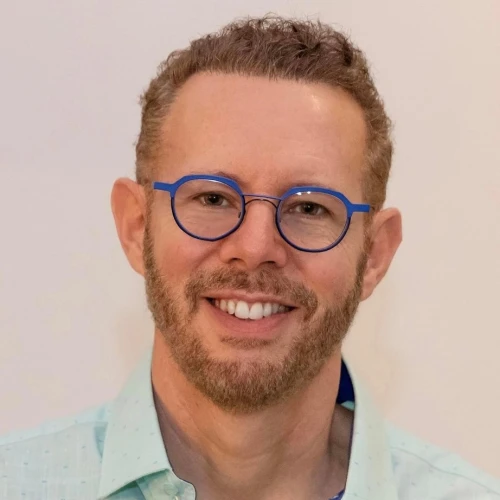
Jennifer Mnookin, the new president of Columbia University, is taking steps to gradually reopen the university’s Morningside campus in upper Manhattan, which has operated under heightened access restrictions since a wave of anti-Israel protests in 2024.
“While safety and security of our community are of the utmost importance, they are also not our only considerations,” she wrote on Monday.
Mnookin said that she has heard from students, faculty, staff, alumni and neighbors who are frustrated by closed gates and restrictions that make the campus feel less connected to New York City. She acknowledged concerns from those who believe the restrictions have provided greater safety and stability.
“Reopening our gates responsibly will require us to learn from our recent experience, assess risks, listen to different perspectives and be willing to adjust as circumstances change,” she wrote.
Brian Cohen, executive director of the Kraft Center for Jewish Student Life, Columbia/Barnard Hillel, told JNS that “safety on campus is not a Jewish issue or a political one.”
“It is a basic condition for education. High schools and other colleges in Manhattan control access to campus, and Columbia should do the same,” he told JNS. “President Mnookin’s thoughtful approach to this issue is appreciated and necessary.”
Mnookin, who assumed her role on July 1, is the university’s first Jewish president. She previously served as chancellor of the University of Wisconsin-Madison.
Her announcement comes more than two years after Columbia became the epicenter of a nationwide wave of campus protests after Oct. 7.
On April 17, 2024, Columbia students established a “Gaza solidarity encampment” on the Morningside campus. Protesters demanded, among other things, that the university divest from companies connected to Israel. The Columbia University Apartheid Divest coalition, which included chapters of Students for Justice in Palestine and Jewish Voice for Peace, led the protests.
The following day, then-Columbia president Minouche Shafik authorized the New York City Police Department to clear the encampment. Police arrested more than 100 protesters, including 108 Columbia students and legal observers, according to the Columbia Law School Human Rights Institute.
The protests spread to universities across the United States, with students establishing encampments and demanding that their schools divest from Israel or companies they said supported Israel.
At Columbia, protesters occupied Hamilton Hall on April 30 after Shafik rejected demands to divest from Israel. Protesters renamed the building “Hind’s Hall” after Hind Rajab, a Palestinian child who was killed in Gaza along with members of her family. The NYPD entered the building that night and arrested more than 100 people as it cleared the occupied campus building.
The protests and allegations of antisemitic harassment also drew federal scrutiny. In March 2025, the Trump administration canceled approximately $400 million in federal grants and contracts to Columbia, citing what federal agencies described as the university’s failure to protect Jewish students from persistent harassment.
Mnookin has personal experience dealing with campus encampments. While chancellor of UW-Madison, she authorized police to clear an encampment on the university’s Library Mall on May 1, 2024. UW police, assisted by local and state law enforcement, arrested 34 people during the operation. Most were released, while four were booked into the Dane County Jail. The encampment was later re-established before the university reached an agreement with Students for Justice in Palestine to end it on May 10.
At Columbia, Mnookin has appointed Shih-Fu Chang, dean of the Fu Foundation School of Engineering and Applied Science, and Geraldine Downey, a psychology professor, to co-chair a Campus Access Advisory Committee. The committee will include students, faculty, staff and members of the surrounding Morningside Heights community and will advise the administration on further changes to campus access.
The university is also immediately expanding guest access. Beginning Tuesday, Columbia faculty can register up to 24 same-day guests, while students and staff can register up to five, up from two. Children under 12 accompanied by someone with campus access will no longer need a separate QR code.
Beginning Oct. 1, Columbia will also establish a temporary access-services kiosk at the 116th Street and Broadway entrance to help students, faculty, alumni, visitors and others navigate campus access requirements.
Mnookin said the measures are intended as a first step toward a more open campus while maintaining security.
“Together, we can develop an approach to campus access that protects our community and the continuity of our academic work while also moving us back toward a campus that is more open and welcoming,” she wrote.