The Trump administration hosted a historic gathering of leaders of major Hasidic communities on Thursday, drawing controversy because several of the rabbis are explicitly anti-Zionist or non-Zionist.
Brokered in part by Rep. Mike Lawler (R-N.Y.), whose district includes large Hasidic communities, the meeting also produced a rare reunion between the two Satmar rebbes, brothers who have been at odds since a succession dispute following their father’s death.
Rabbi Aharon Teitelbaum of Kiryas Joel, N.Y., and Rabbi Zalman Leib Teitelbaum of Williamsburg, Brooklyn, greeted each other at the White House, likely marking their first face-to-face meeting in decades. Their dispute began after their father, Rabbi Moshe Teitelbaum, died in 2006 and designated Zalman Leib as his Williamsburg successor, angering Aharon’s supporters and leading to a split within the Satmar community.
The brothers shook hands and exchanged greetings, according to reports. Aharon also congratulated Zalman Leib on his grandson’s engagement, which had been announced the previous day.
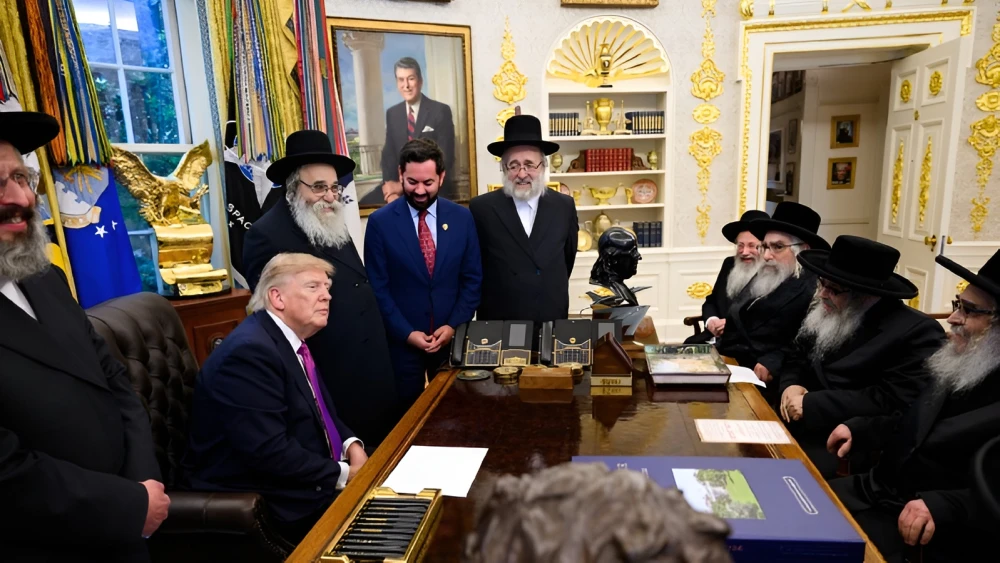
The roughly 30-minute Oval Office meeting was the first gathering of its kind at the White House since 1979, according to the White House. The delegation included Rabbi Benzion Halberstam, the Bobover Rebbe; Rabbi Yisroel Hager, the Vizhnitzer Rebbe of Monsey; Rabbi Malkiel Kotler, rosh yeshiva of Beth Medrash Govoha in Lakewood, N.J.; and Rabbi Aharon Mendel Twersky, representing his father, Rabbi Dovid Twersky, the Skverer Rebbe.
The delegation first met with White House officials in the Roosevelt Room, where U.S. Vice President JD Vance joined the gathering. White House Jewish liaison Martin Marks, who had worked for months to organize the meeting, and Staff Secretary Will Scharf also participated. Jared Kushner joined the group for the Oval Office meeting with U.S. President Donald Trump.
The rabbis discussed issues affecting their communities, including religious education and the needs of Jewish prisoners. Concerns also included protecting haredi educational independence from New York state requirements and issues facing the Kiryas Joel community.
The delegation’s presence at the White House drew criticism from some pro-Israel voices because Satmar is explicitly anti-Zionist, while other members of the group are more accurately described as non-Zionist. Satmar rejects the establishment of a Jewish state before the arrival of the messiah.
The rabbis reportedly collectively agreed not to raise the topic of the military draft of haredi men into the Israel Defense Forces, a contentious issue within the community, during the meeting, according to Belaaz News.
Trump also met privately with Aharon, Vance and Kushner, according to photos published by Satmar. Aharon led the other rabbis in a traditional blessing for the president and government and thanked Trump for his support of the Jewish community.