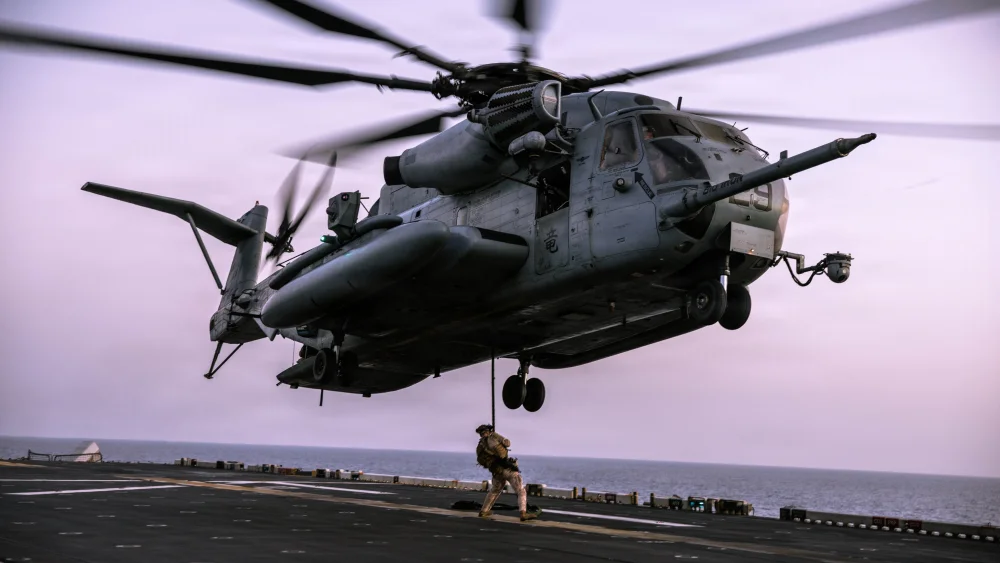
American forces destroyed three crude oil tankers belonging to Iran’s Islamic Revolutionary Guard Corps near the Strait of Hormuz on Saturday, U.S. Central Command.
The strikes were carried out after the IRGC fired ballistic missiles toward two U.S. Navy warships patrolling regional waters, CENTCOM said.
A U.S. aircraft carrier and guided-missile destroyer successfully evaded multiple unprovoked Iranian attacks and no American personnel were harmed, the statement read.
One vessel was disabled off the coast of Kharg Island in the Persian Gulf, another was “completely destroyed” near the city of Jask in southern Iran in the Gulf of Oman, and the third, also in the Gulf of Oman, was rendered “inoperable” after the crew was ordered to abandon ship, CENTCOM said.
“The three Iranian crude oil tankers are part of a multibillion-dollar shadow network that funds the IRGC and its regional proxies,” the military body stated.
“Let the message to the IRGC be clear: If you shoot at two of our ships, we will impose an even higher economic cost—taking out three of yours,” said Adm. Brad Cooper, CENTCOM commander. “We will not hesitate to defend American forces, and if necessary, destroy Iran’s limited and exposed oil fleet.”
Following CENTCOM’s statement, Defense Secretary Pete Hegseth warned Iran that if it shoots at U.S. ships, “we will destroy (and sink) their oil tankers. All they have to do is not shoot at [the] U.S. Navy.”
It’s simple: if Iran shoots at U.S. ships, we will destroy (and sink) their oil tankers. All they have to do is not shoot at @USNavy.
— Pete Hegseth (@PeteHegseth) September 5, 2026
Iran’s oil tanker fleet is defenseless — Iran has no navy or air force. Our planes, ships & subs can strike them all, in @CENTCOM & @USPACOM. https://t.co/lr5TaxloBw
On Thursday, President Donald Trump told British television network GB News that the U.S. has capabilities to monitor the three nuclear sites that were struck by American forces during “Operation Midnight Hammer” on June 22, 2025, and during the 40-day military campaign of “Operation Epic Fury” that was launched on Feb. 28, 2026.
“We have cameras on every major area of the first three and we also have cameras on Pickaxe Mountain. And we know everybody that walks in and walks out. We can read the name. … if you’re ever at Pickaxe Mountain I can see your [tag] name. … You could literally from space read their name tag, can you believe it?” Trump revealed.
.@POTUS on Iran's nuclear sites: "They had three sites, and now they may have Pickaxe Mountain. The three sites have been obliterated... We have cameras on every major area of the first three and we also have cameras on Pickaxe Mountain. We know everybody that walks in and walks… pic.twitter.com/raz5NHk2qG
— Rapid Response 47 (@RapidResponse47) September 3, 2026
Pickaxe Mountain, located near Iran’s heavily damaged Natanz uranium enrichment facility, is a heavily fortified site that hosts two deeply buried tunnel complexes, according to Reuters.
It is one of the few Iranian sites linked to Tehran’s nuclear project that has not been the target of U.S. or Israeli strikes, the BBC reported last month.
Trump twice in July and again on Friday threatened to strike the mountain, after satellite images have appeared to show construction taking place in the area, the report continued.
In his interview with GB News, Trump reiterated that the Iranian regime is “in big trouble.”
The U.S. has stopped the Islamic Republic from developing nuclear weapons, he said, and has defeated its navy, its air force. “Their leaders are gone, everything is gone, just about there. ... We have great control over the Hormuz Strait; we’re taking out 30-40 boats a night, and a lot of oil is coming out.”
He stressed that the Iranian economy is “crashing,” with inflation at some 300%. “Their money is valueless,” he added.
.@POTUS: We have to stop Iran from having a nuclear weapon, and we've done that. We've defeated their navy, their air force, their leadership structure. We have control over the Hormuz Strait. Their money is valueless. They're in big trouble. pic.twitter.com/BXYgpNqsJR
— Rapid Response 47 (@RapidResponse47) September 3, 2026
U.S. Vice President JD Vance meanwhile told reporters on Thursday that “Major combat operations are currently not ongoing and they haven’t been ongoing in a very long time.”
The deployment of U.S. forces in the Gulf region is helping secure “some basic balance in these world energy markets,” he said.
If the U.S. did not assist the transit of ships through the Strait of Hormuz, “nobody else would do it ... [and] we would have a catastrophic world energy crisis,” Vance said, referring to Iran’s attempts to close the strategic choke point.
He then said that Washington will not speak to the Iranian regime as long as it shoots at commercial vessels in the critical waterway.
.@VP: "Major combat operations are currently not ongoing and they haven't been ongoing in a very long time... What we're talking about here is trying to maintain some basic balance in these world energy markets." https://t.co/dVgsv2HSdO pic.twitter.com/hfdjBUVbxG
— Rapid Response 47 (@RapidResponse47) September 3, 2026
Trump: No shortage of ammunition
Also on Thursday, the U.S. president addressed reports claiming that the American military is running low on ammunition as a consequence of the Iran war.
Trump stressed on Truth Social, “We have virtually unlimited amounts of Mid to High Grade Ammunition, far more than we could ever use for this, or for any other War (which is highly unlikely!), that could improbably take place.”
He added that the U.S. is manufacturing munitions at levels “never seen before,” stockpiling and preparing for “any contingency that could happen.”
Although the munitions are designated for U.S. purposes, he added that sales to allied nations will again begin soon.
— Rapid Response 47 (@RapidResponse47) September 3, 2026
Meanwhile, Seoul on Friday stated that it was reviewing options, including military efforts, to support freedom of navigation in the Strait of Hormuz, Reuters reported.
Several South Korean media outlets reported the previous day that Seoul could seek parliamentary approval for military deployment as early as this month, but the government denied making such a decision, the report read.
“Nothing has been decided,” a presidential official was cited as saying, adding that Seoul would also have to consider domestic legal procedures and military readiness on the Korean Peninsula.
South Korea has discussed “contribution” options with countries including the United States, Britain and France, according to Korean outlets.
According to Reuters, the reports said options under consideration included a maritime patrol aircraft, a logistics support vessel, or a mine detection and clearance unit.
Netanyahu: Toppling Iran’s regime ‘within reach’
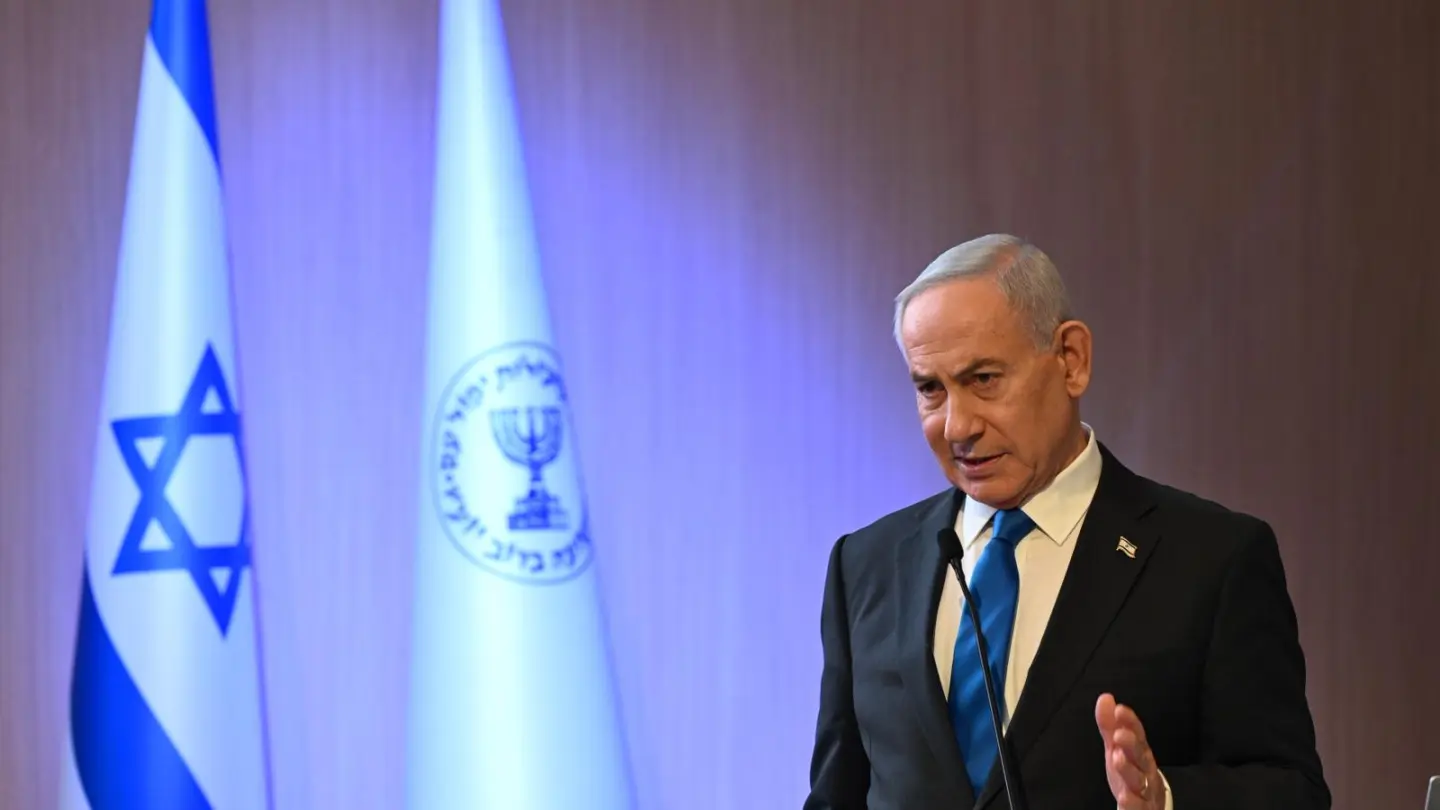
Israel is capable of toppling the Iranian regime, Prime Minister Benjamin Netanyahu said on Thursday, describing the goal as “within reach.”
“I am convinced of our ability to remove this threat once and for all; meaning, to topple this regime,” Netanyahu said at a Rosh Hashanah toast with the IDF General Staff Forum at the Kirya military headquarters in Tel Aviv. “This is the central mission still before us, but it is close. It is not impossible. It is within reach.”
The prime minister said that Israel had achieved historic gains during three years of war, including in its operations against Iran.
“We faced the threat of annihilation by a regime that aspires to eradicate us and wants to arm itself with nuclear bombs to destroy us. We have pushed back this threat and other threats as well,” Netanyahu said.