At a time when official relations between Jerusalem and Pretoria remain deeply strained, a royal delegation from South Africa came to Israel for a weeklong visit that ended on Thursday with a very different message: one of love, dialogue and “building bridges” between the two peoples.
The 12-member delegation was composed of Queen Sinokuhle Matiwane of the AmaMpondomise Kingdom; eight princesses, including Princess Lerato Mabalane of Baphiring ba Mabalane in North West Province and Princess Esihle Ntola of the AmaNtshangase Kingdom; and two princes, including Prince Litha Dalindyebo of the AbaThembu Kingdom in the Eastern Cape.
Princess Fundiswa Zote, who also represented the AbaThembu Kingdom, said before departing that although King Buyelekhaya Dalindyebo had come to Israel in December 2025, this visit by a group of mostly female traditional leaders representing various South African kingdoms was “awesome,” even during what she referred to as “this hard, hard, hard period” in the country.
“It’s been exciting; it’s been awesome,” she told JNS on Thursday. “We are truly grateful. We’re thankful for the relationship. We’re thankful for the friendship and we hope that this extends beyond, beyond, beyond.”
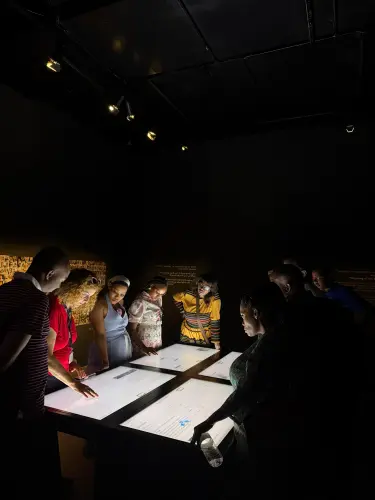
Zote said the trip had focused on “showing our women what Israel is all about” and involved high-level meetings and visits around the country. Highlights included Christian holy sites—her favorite was Magdala on the western shore of the Sea of Galilee—as well as the City of David and the Museum of Tolerance Jerusalem (MOTJ).
She said one of her people’s main concerns was water, a problem they were addressing with the help of Israel and particularly Innovation: Africa, an Israeli-founded nonprofit that uses Israeli solar and water technology to provide clean drinking water and electricity to African communities.
“There’s no water in our communities and we’ve been speaking to Innovation: Africa to see how we can work together and collaborate and use some of the Israeli technology to bring water to our people,” she said.
Zote concluded the interview by saying, “May God bless the city of Jerusalem. May God keep her. May God bless Israel and keep Israel in perfect peace. We love you.”

‘Building cultural bridges’
The visit was publicized on Wednesday by the Israeli Foreign Ministry, which hosted the delegation. “A prominent delegation of South African queens and princesses representing different kingdoms in South Africa is currently visiting Israel,” it said.
The visitors are “engaging with various Israeli organizations, focusing on innovation, technology, and building cultural bridges to strengthen relations between the people of South Africa and the people of Israel,” the ministry said.
A prominent delegation of South African queens and princesses representing different kingdoms in South Africa is currently visiting Israel.
— Israel Foreign Ministry (@IsraelMFA) September 2, 2026
Where they are engaging with various Israeli organizations, focusing on innovation, technology, and building cultural bridges to… pic.twitter.com/nUxzAvA2Bp
Boosting traditional ties
“The primary objective of the historic visit was to strengthen diplomatic, cultural and economic relations between Israel and traditional leaders across South Africa,” a spokesman for the delegation said on Thursday.
“Focusing heavily on healthcare advancements, agricultural empowerment, and technological shared learning, the delegation engaged with key Israeli leaders, social innovators, and state-of-the-art facilities.”
A highlight of the trip was “an exhaustive tour” of Hadassah Medical Center in Jerusalem’s Ein Kerem, he said.
“The royal delegates explored the medical center firsthand to witness Israeli medical expertise, innovative healthcare delivery and humanitarian medicine protocols,” he said.
The visit offered a striking counterpoint to relations between the Israeli and South African governments, which have deteriorated dramatically since the Hamas-led massacre on Oct. 7, 2023.
South Africa has emerged as one of Israel’s most vocal international critics and in December 2023, instituted proceedings against Israel at the International Court of Justice in The Hague, accusing the Jewish state of violating the Genocide Convention in its war against Hamas in the Gaza Strip. Israel vehemently rejects the accusation.
The case remains active. Israel submitted its formal response, known as a Counter-Memorial, in March 2026, and the court has set further deadlines extending into 2029.
South Africa recalled its ambassador and diplomatic staff from Israel in November 2023, and Israel subsequently recalled its ambassador to Pretoria. The two countries have not had ambassadors stationed in each other’s capitals since then.
Yet government-to-government relations tell only part of the story of ties between the two countries. Israel has increasingly developed direct relationships with South African traditional leaders, who occupy a distinctive place in the country’s social and political landscape and retain considerable cultural influence in many communities.
Unlike European royalty, South Africa’s kings, queens and other traditional leaders are not simply ceremonial figures. Traditional leadership is recognized under South African law and operates alongside the country’s elected institutions, particularly in rural communities. More than 20 million South Africans live in communities represented by traditional leaders, giving them considerable influence in local governance, development and cultural affairs.
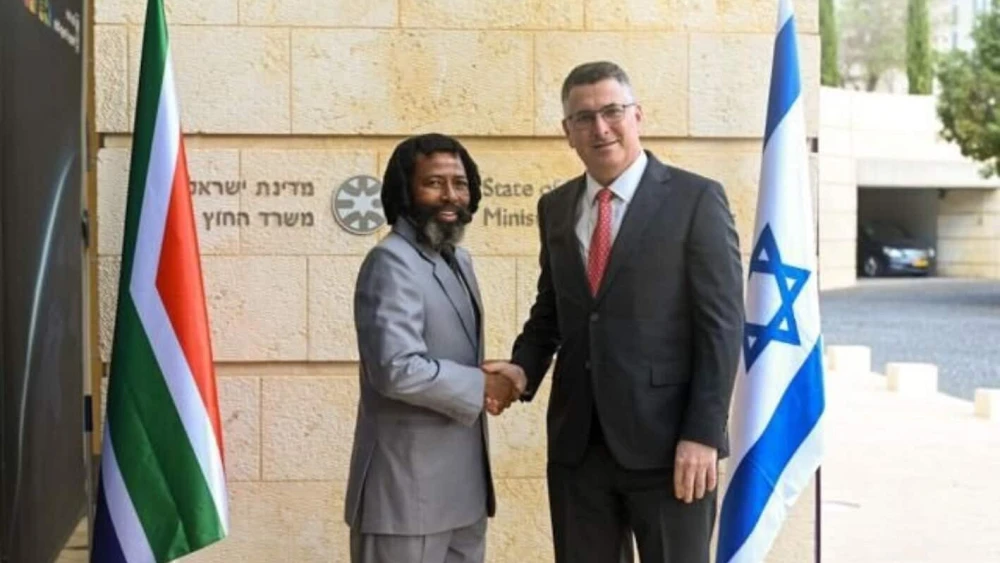
The current visit is the latest in growing contacts between Israel and those traditional leaders. When King Dalindyebo visited Israel at the Foreign Ministry’s invitation in December 2025, President Isaac Herzog and Foreign Minister Gideon Sa’ar welcomed him. Dalindyebo visited communities affected by the Hamas massacre, met survivors, condemned Hamas and voiced strong support for Israel.
Israel’s Foreign Ministry has conducted outreach directly to traditional leaders in South Africa. Israeli diplomat David Saranga, head of the ministry’s Digital Diplomacy Division, has led the initiative, meeting royal and traditional leaders in Israel and South Africa as part of his efforts to strengthen relations with their communities.
When the monarch hosted Saranga at his Enkululekweni residence in the Eastern Cape in January this year, he described Israel as his “second home.” He said he considered Israeli leaders his allies.
“My relationship with Israel is simple,” Dalindyebo said. “I am a Christian; I am the younger brother to Christ. Israel is the home of Christ, the home of Christians.”
He attributed his close relationship in part to the Jewish state’s response to devastating floods in the Eastern Cape in June 2025.
“It was the Israelis that came to me, extending an olive branch during our desperate time when we suffered from floods,” he said. “I asked for no assistance. They saw from their hearts that they need to give us help and from that help, they are now extending to give us more help.”
Although Dalindyebo’s embrace of Israel came at a political cost—the Economic Freedom Fighters (EFF) terminated his membership following his visit—the king rejected claims that his ties with the Jewish state undermined South African foreign policy and sharply criticized the ANC government’s position on the Israeli-Palestinian conflict, telling his detractors to “go to hell.”
Women and traditional leadership
The latest visit came as South Africa seeks to strengthen the role played by women within its traditional leadership structures. The South African Queens Council, established in 2024 to give queens a greater role in promoting social cohesion, community development and socioeconomic initiatives, represents several of South Africa’s traditional communities and royal houses.
Its leadership includes Queen Tina Madosini Ndamase, chairwoman and a representative of the AmaMpondo aseNyandeni; Queen Neo Mononela-Mopeli, deputy chairwoman, of the Bakoena Kingship in QwaQwa; and Queen Lolita Hokwana Matanzima from the AbaThembu Kingdom.
The Israeli trip’s emphasis on technology and innovation dovetails with the increasingly prominent role South African queens are being encouraged to play in economic and community development. This could open avenues for cooperation in areas where Israel has substantial expertise, including agriculture, water management, health, education and entrepreneurship, a Foreign Ministry official said.
For Israel, the royal delegation represented an opportunity to engage directly with influential South Africans and present a picture of the country markedly different from the one portrayed by its fiercest critics and in the South African media, he said.
“It’s a follow-up to the king’s visit last year and part of our effort to strengthen relations with traditional leaders,” the official told JNS. “The queens have a key role in the structure of the kingdoms in Africa. And that’s why we initiated this visit.”