The United Nations Security Council held an emergency meeting on Tuesday about escalating clashes between Iran-backed Houthi terror group and Yemeni government forces, which Saudi Arabia supports.
The session was the second of its kind in less than a week.
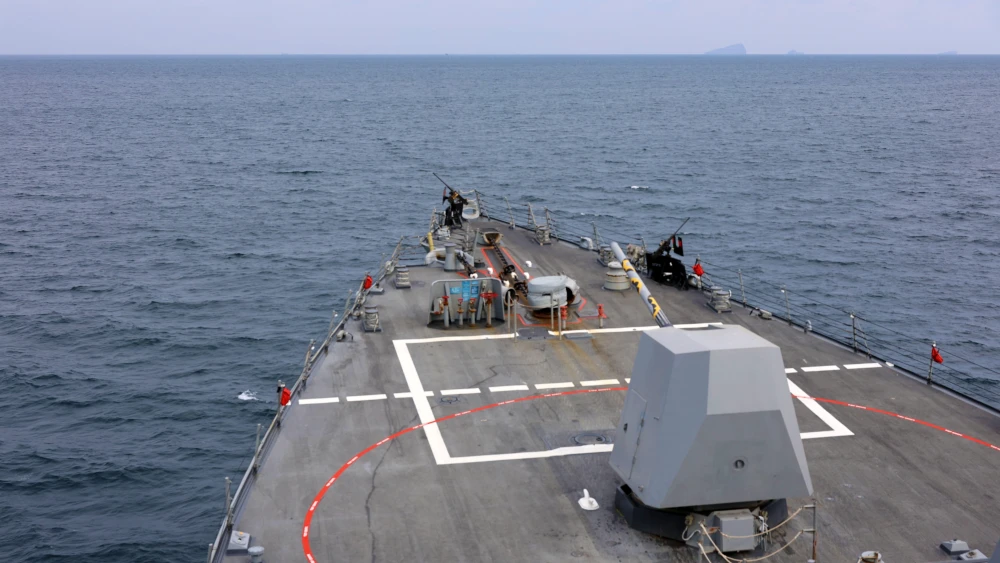
The fighting, which stretches across Yemen’s coast, comes as the Houthis try to close the strategic Bab el-Mandeb Strait to supplement the Iranian regime’s efforts to control the Strait of Hormuz. The fighting threatens to further disrupt global shipping and add instability to Yemen’s dire humanitarian situation, including mass displacement.
The Bab el-Mandeb Strait is a narrow waterway separating the Arabian Peninsula from the Horn of Africa, linking the Red Sea to the Gulf of Aden. It is one of the world’s busiest shipping corridors, carrying around 9% of global seaborne trade. The Houthis seized several islands last week.
“Freedom of navigation underpins the global economy, and the United States is working with our partners to protect it,” said Jennifer Locetta, U.S. alternate representative for special political affairs in the United Nations
Locetta demanded that Iran end its support for the Houthis, one of its Middle East terror proxies. She said that the Security Council should be “clear-eyed” about the Islamic Republic’s role in arming, funding and directing Houthi actions.
The council has previously sanctioned the Houthis, including freezing assets and an arms embargo.
Jamal Alrowaiei, Bahraini ambassador to the global body, decried the Houthi cross-border drone and missile attacks on Saudi Arabia, which caused casualties and damage to civilian infrastructure.
“Despite repeated condemnation by the Security Council, the Houthi militias continue to threaten and disrupt navigation and vital maritime lifelines,” he said. “It is high time for the Security Council to take a more decisive stance.”
The Houthis fought a devastating war against a Saudi-led coalition, which a 2022 ceasefire halted. The new Houthi maneuvering is particularly harmful to Riyadh, which is seeing its ability to export oil diminished in multiple directions.
Saudi Arabia closed its East-West pipeline in recent days due to Houthi strikes.
The Houthis say that the new strikes are taken independently of Iran, and that they aim to end what they say is a Saudi blockade of Houthi-controlled areas. Critics say that the terror group is acting with Iran to try to squeeze the United States, a Saudi ally, into concessions, including retracting Iran sanctions and ending the U.S. blockade of Hormuz.
Despite a reported call for help by Saudi Arabia, Washington is choosing to largely remain outside the current fray. Instead, it engaged in what the White House calls direct talks with the Houthis, which were hit by U.S. strikes in the opening months of the second Trump administration.
A planned Monday meeting of Iran and Gulf states to attempt to navigate the crises was postponed at Riyadh’s request in protest of the Houthis’ actions.