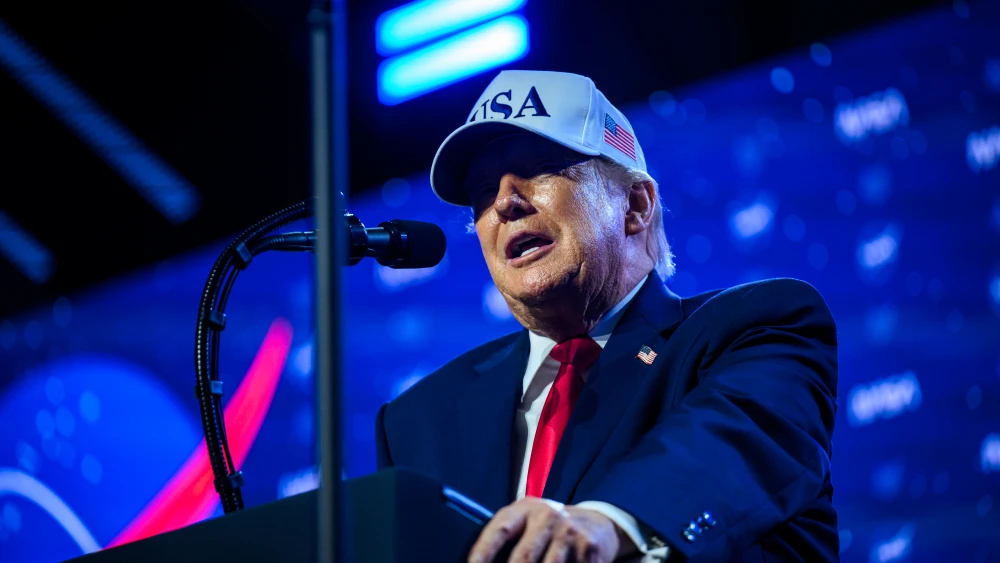

In a recent interview, U.S. President Donald Trump was asked why Republican candidates were overwhelmingly defeated in the 2026 midterm elections.
His rambling explanation jumped from voters’ frustration with affordability to gasoline prices to their dissatisfaction with the Iran War. Then he came to a startling observation: “There’s a great dislike, incredibly, for Israel.”
The single word “incredibly” deserves attention.
Many Jewish supporters were appalled. Had Trump just tagged Israel as an electoral liability? Was it yet another attempt to blame the Jews? Did he suggest that America’s relationship with Israel was contributing to Republican losses?
Was this focus on Israel the beginning of a reversal of Trump’s extraordinary record of support for the Jewish state? Was he being influenced by Vice President JD Vance and the growing isolationist wing on the far-right? Is there a larger question about America’s overseas commitments and its relationship with Israel? Did the anti-Israel drumbeat from the Democrats suggest a need to reconsider his alignment with Israeli Prime Minister Benjamin Netanyahu?
The likely answer to all these questions is “no.”
It’s fair to point out that Trump avoided a litany of other factors affecting voters, including bad candidates, immigration extraction overreach and the president’s back-and-forth, on-and-off comments about so many issues.
Trump brought to the election an appearance of corruption and distractions like the White House ballroom, the Washington Mall reflecting pool, his triumphal arch, and his tendency to rename and claim various geographic regions.
Moreover, the traditional midterm rebound of the party out of office set the stage, and Trump’s 2024 victory against weak opponent Kamala Harris may have masked other weaknesses.
A closer reading of Trump’s chosen word “incredibly” suggests something quite different.
It may have reflected his own astonishment at the growing hostility toward Israel and the normalization of antisemitism in American political discourse. Trump has witnessed the transformation of antisemitic and anti-Israel rhetoric from a fringe position into an increasingly accepted feature of progressive Democratic politics.
Trump’s record on Israel speaks for itself. He recognized Jerusalem as Israel’s capital in 2017; moved the American embassy to Jerusalem in 2018; recognized Israeli sovereignty over the Golan Heights in 2019; and brokered the Abraham Accords in 2020. In May 2018, he withdrew from former President Barack Obama’s 2015 nuclear deal with Iran.
His military actions confronting Tehran have been even more consequential. In 2025 and 2026, Trump ordered that America fight alongside the Israeli Air Force to destroy the Iranian military and demolish nuclear-program assets. His naval blockade is applying financial pressure in pursuit of a regime overthrow.
Stopping Iran from achieving nuclear capability is a likely centerpiece of what Trump hopes to be his legacy.
Domestically, Trump carried the fight against antisemitism to the academic source of the post-Oct. 7 woke progressive anti-Israel, pro-Hamas riots.
Trump must be very frustrated that these accomplishments have not translated into greater public appreciation of the danger a nuclear Iran represents. His declaration that “Iran will never have a nuclear weapon” is not merely a pledge to Israel. It is a strategic imperative for the United States and the Western world.
His incredulity about Jewish voters has also been made clear. “How a Jewish person can vote for a Democrat is beyond me,” Trump recently said. “Because I’ve been the best president in the history of Israel and they acknowledge—and by the way, in Israel I think I was at 99% or something.”
Unfortunately, the president did not make the argument for war with Iran effectively enough to the American public. Voters see gasoline prices, military expenditures and the prospect of another Middle Eastern war. They do not necessarily appreciate the consequences of allowing a hostile regime to acquire nuclear weapons.
Trump must better explain why the costs of prevention could be far less than the price of confronting a nuclear Iran.
The Iranian regime has spent decades financing terrorism, arming proxies, destabilizing the Middle East and threatening Israel’s destruction. A nuclear-armed Iran would fundamentally alter the global balance of power, embolden terrorist organizations and potentially trigger a regional nuclear arms race. Israel may be the immediate target, but America would be among the ultimate beneficiaries of preventing that unimaginable catastrophe.
But Trump should not mistake electoral dissatisfaction for a mandate to retreat from Israel. Nor should he assume that accommodating isolationist voices will win over the progressive left. He risks alienating his own supporters without gaining meaningful political ground.
The president’s challenge is to distinguish political expediency from strategic necessity. He must explain that America’s relationship with Israel is not an act of charity or an electoral calculation. It is a partnership rooted in shared security interests and democratic values.
Jewish Americans who supported Trump should not panic, but they should expect clarity and consistency. They should also expect him to confront antisemitism wherever it originates, whether on the progressive left or the nationalist right.
Trump’s word “incredibly” may have revealed more than he intended. Perhaps he is not questioning his commitment to Israel so much as expressing disbelief that so many Americans have turned against the democratic, liberal and innovative nation that has stood alongside the United States.
Recent elections of high-profile radical Islamists Zohran Mamdani and Dr. Abdul El-Sayed with a significant percentage of Jewish Democrats’ votes must be puzzling to him.
Stopping Iran from achieving nuclear capability and “making America great again” are the likely centerpieces of what Trump may hope to be his presidential legacy. In this context, American Jews should take comfort that, since the 1948 refounding of the Jewish state, it is Trump who has stood strongest on Israel’s side.
A president’s responsibility is not simply to follow public opinion. It is to lead it. We should trust that Trump believes preventing a nuclear Iran is not a political favor to Israel. It is an investment in America’s own security.