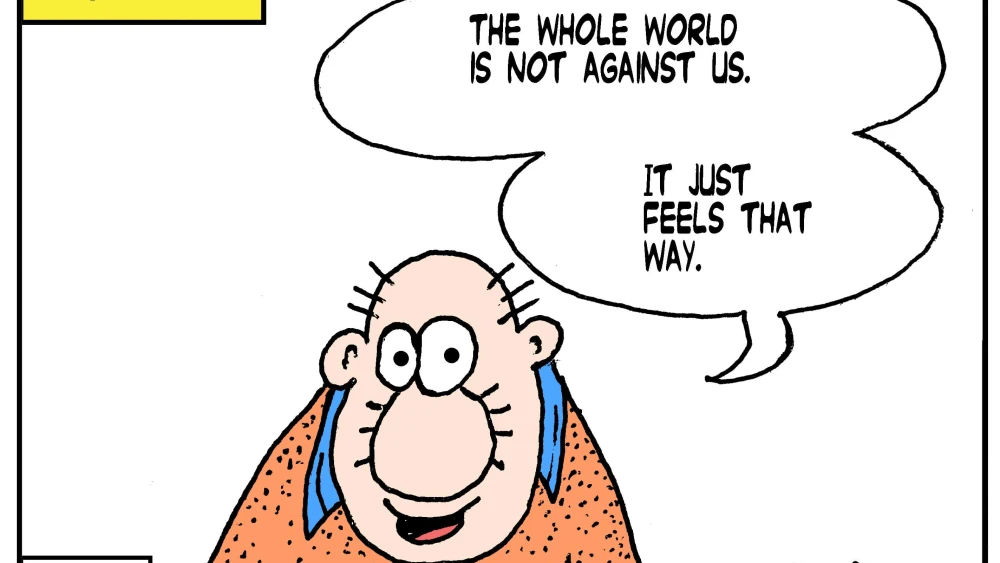

I’ve been thinking a lot about Yaakov Kirschen now that the year 5785 has ended and a new one has begun. I had long known about him but had just started actually getting to know him, meeting the man behind the “Dry Bones” political cartoon—recognized far and wide in the Jewish news world—on the last Saturday in March.
I happened to be in the same place he was that Shabbat, spending time with family in a suburb of Tel Aviv before flying back to the States that night. He was convalescing from a recent stroke (not his first) in a rehab facility about a dozen blocks away.
Days earlier, I had asked a work acquaintance of mine (a close friend of his) if I could tag along to finally meet him in person and see how he was doing. We scheduled a late-morning visit, converging at the center’s entrance, and then proceeded to the second floor towards his room.
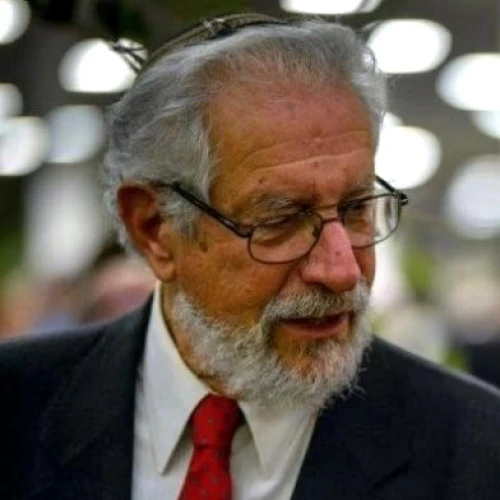
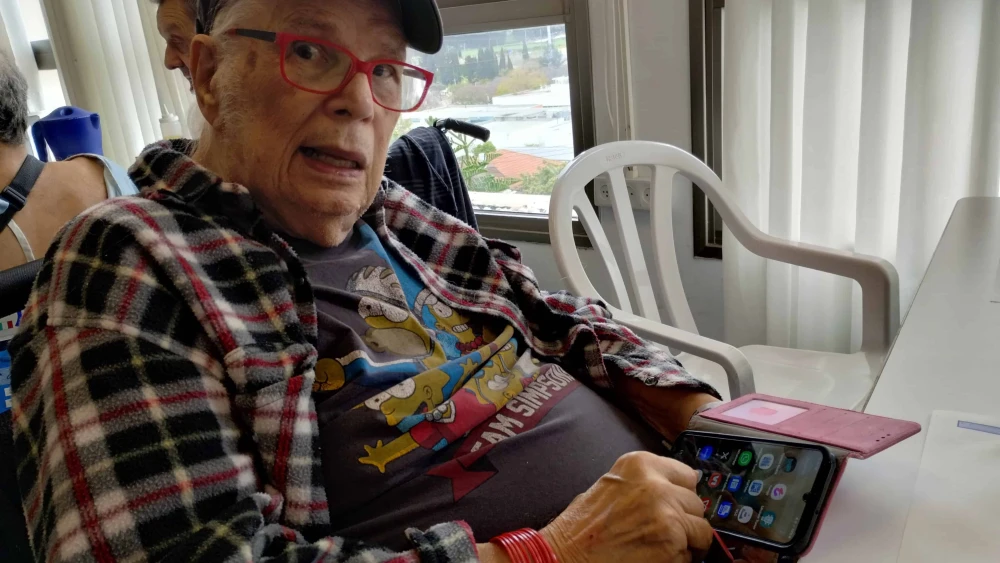
He seemed eager to have the company. We settled ourselves—me, our mutual friend and his wife, Sali Ariel—at a table in a modest dining room flanked on one side by a wall of windows. He positioned his wheelchair across from me, dressed in a “Simpsons” T-shirt topped by a plaid flannel shirt and wearing a faded blue ball cap with a “Y” on it.
He saw my eyes travel to the letter. “Yale,” he said, without me even asking.
His hair was pulled back in a ponytail, 1960s-style, which shouldn’t have surprised me but did. He wore a signature pair of red-rimmed glasses I had come to recognize in the head shot that accompanied his email and cartoons.
We barely had time for the requisite “How do you dos?” before he started talking. Before he started from the beginning.
‘If it’s not libelous, it goes in the paper’
Yaakov (Jerry) Kirschen was born on March 8, 1938, at the Women’s Hospital of Maryland and lived in Greenbelt, Md., before his family moved to Brooklyn, N.Y., where he was raised. After high school, he majored in art and minored in economics at Brooklyn College before switching to Queens College, where he graduated in 1961.
He made aliyah a decade later, on Oct. 10, 1971.
A couple of years later, in January 1973, he said, “I went to The Jerusalem Post with several cartoons. The editor at the time was Ted Lurie. He told me, ‘Either this will be a big success or a flop. If it’s a success, then you’ve won.’ He gave it a try. After a while, he said, ‘I personally don’t like it, but our readers do, so I’ll keep you on.’”
Yaakov said he had a lot of freedom with his work, discussing potential topics with editors, and then doing the drawing and writing. “Every day, I would come in and drop it off. It was due at 5 p.m. I’d bring it closer to 8 p.m.” He smiled at the memory, pointing out that he was a deadline writer. “Once it got to the Post, it was photographed on special paper and put on lead type. The paper went to press at midnight.”

Yaakov said the rule was, “If it’s not libelous, it goes in the paper.” It didn’t go through lawyers back then, he said, though in the same breath proudly noted that he was censored twice.
He worked for well-known editors at the Post, such as Lea Ben Dor and N. David Gross. In all, he worked there for 50 years, with the cartoon being syndicated—picked up by Jewish and secular news outlets worldwide.
In August 2023, he was hired by JNS, and we became colleagues. It just so happened that I was in Israel the first week that his cartoon appeared on the Jerusalem-based wire service.
We didn’t cross paths in person then. I went back to the United States, and like most people in the world of remote employment, conversed with colleagues via Slack or Zoom—in cluttered offices and spotless kitchens, surrounded by walls of bookshelves or piles of boxes, talking news leads and plugging away at the keyboard.
He and I would occasionally email, when he’d ask about the placement of his cartoon on the site, or I’d mention preferred punctuation in the text that went with his art. That never mattered much to him. He was about the big picture, not the smaller details.
In some ways, that made us a good match. But it still didn’t get us any closer to meeting.

‘I would think all day, let it ruminate’
Until March 29, 2025. It was my last day of a weeklong trip sponsored by the Israeli Ministry of Tourism for a small group of journalists. Yaakov seemed mildly interested in some of the places I told him we went, but our conversation quickly turned to the business at hand.
He had talked almost nonstop for 45 minutes when Sali asked if I wanted some coffee. “Always,” I replied. She handed me a thin plastic cup that caved slightly before she set it down before me, shaking her hand from the heat.
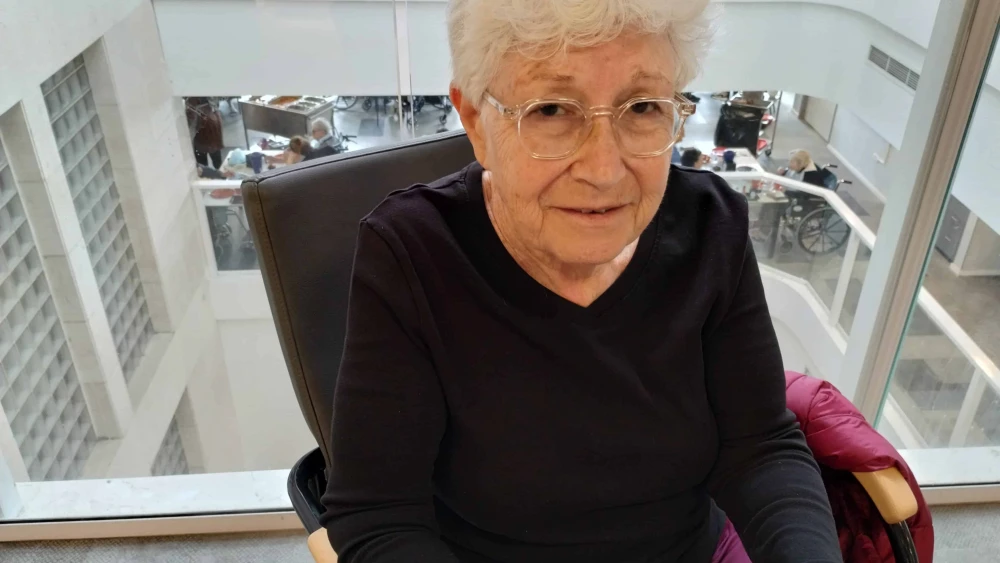
Yaakov watched me take a tentative sip and said he wasn’t a coffee drinker. Coca-Cola was his beverage of choice. Other than that, to prep for work, he watched TV and read the news all day. Until it was time to draw.
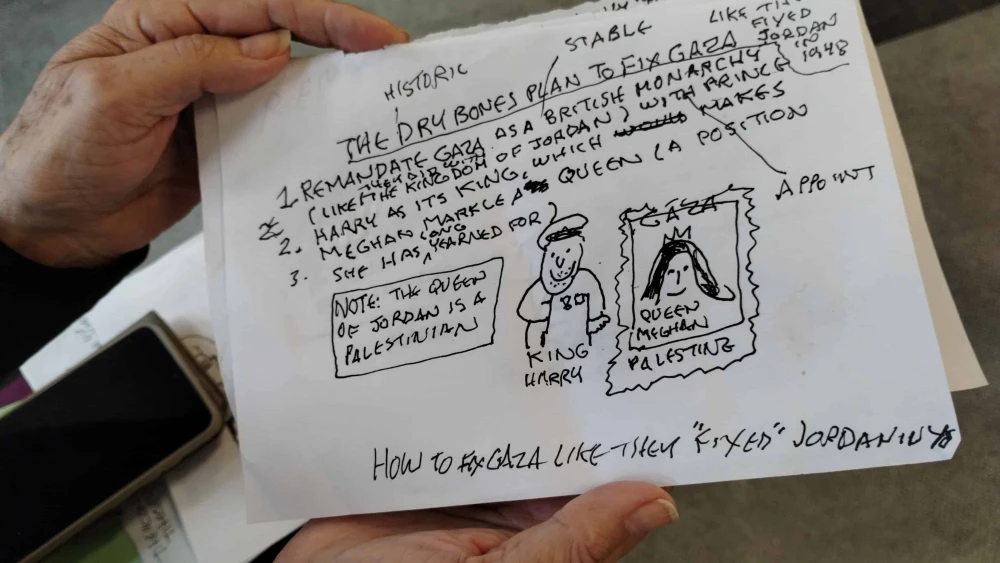
He detailed the editorial process, pointing out the three major aspects to his craft: the editor in his head, assigning the work; the writer of the text, crafting accompanying words; and the cartoonist, the artist who sketched the images that literally drew people in.
“I would think all day, let it ruminate,” he said. “The shorter the time limit, the quicker the cartoons would have to come, and sometimes, for the better. The deadline pressure often worked.”
Sometimes, he said, he’d later change the text. Occasionally, he changed the cartoon at the last minute. Somehow, it always came together.
Once he threaded the needle, he said it took “about an hour to do.”

He told a few anecdotes about controversial cartoons and people he crossed paths with in the course of his career. He met Sali, also in 1973, as friends (when they were both married to other people, he shared, while she glanced over and nodded). He recounted moving to Tel Aviv from Jerusalem in 1992 and the cafe they preferred to patronize. He mentioned his impatience with financial matters and troubled health.
And he acknowledged a frustrating fact: Sketch artist that he was, he could never draw caricatures (as opposed to characters). They eluded him until a stroke five years ago; suddenly, this style opened up to him.
At 87, he was still as verbally sharp but had slowed down, still penning cartoons, though not daily, with the help of Sali, now 78.
Ninety minutes had gone by. My instant coffee was drained, and Yaakov was getting tired. We had to stop because the lunch crowd started filing in. Yaakov didn’t want to eat. Instead, he wheeled himself into his room to rest, but not before telling me we could continue our conversation another time—and soon. I looked forward to it.
Yaakov Kirschen passed away two weeks later, on April 14.
In the months since, I imagine the topics his pen would have covered: Passover, the Yoms (Yom Hashoah, Yom Hazikaron, Yom Ha’atzmaut), Lag B’Omer, Shavuot, Tisha B’Av. The 12-day war with Iran in mid-June.
A skeptic by nature, he was an equal-opportunity critic when it came to politics, though Zionist to the core. I wonder about the people, places and subjects he might have tackled these past five months; every day seems to bring rich material from the Middle East. While he would certainly have lauded the U.S. administration’s battles against campus antisemitism, he would also surely have had fun with the new Air Force One plane gifted by Qatar. He would have skewered the U.N. meetings.
Yaakov was an original. He was authentic in a world where everyone seems so tentative, so wary, so anxious and unsure. He liked to push the envelope, but only so far.
His body of work, including several books and computer games, speaks for itself. He introduced a medium into the major English-language newspaper in Israel of his day and followed the trends of the trade, changing technology through five decades—the typewriter to the keyboard, the internet, blogging, social media, scanning and eventually emailing the cartoons he once took so much care to hand deliver.
Sometimes, I think the trip provided the opportunity to meet this man while I still could. There are no coincidences, right?
After all, I went that Shabbat morning to say hello. I didn’t expect such a permanent goodbye. I may not have been a “Dry Bones” guru when I came to visit. But I was most certainly a Kirschen fan when I left.