


Column

In America, voting is the only game in town and voters are the source of power. In Israel, the courts are in charge.

Making common cause with those who wish to destroy the Jewish state is indefensible. Still, Netanyahu’s defenders must be careful not to bolster slander that Israel isn’t a democracy.

The bankruptcy of Philadelphia’s National Museum of American Jewish History was the inevitable result of a decision to build an overpriced monument to the vanity of its builders.
The public has understood that for decades, they have been offered only one basic story: the progressive worldview that bears no relation to their own lives and aspirations, but which has become the default position of the entire political establishment across the now obsolete left-right divide.

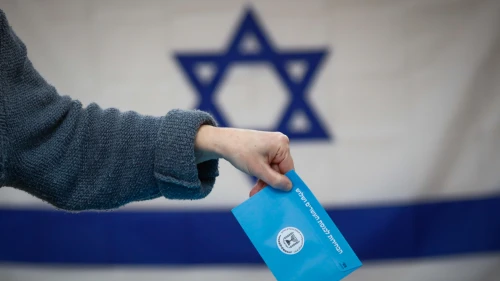
Looking at the numbers emerging from Israel’s March 2 election, one has to wonder: How many votes does Netanyahu need to win by for the entire electorate to declare his victory?

Spending on political speech is a cherished right, even if you’re trying to buy the presidency. But doing so doesn’t give you immunity from criticism—no matter that you’re Jewish.

While the public has chosen to stand with Netanyahu even as he is about to face trial, the opposition is prepared to ignore the will of the public and twist democratic norms for their own machinations of power.
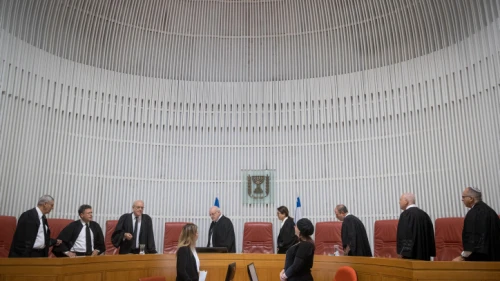
Israel’s High Court created the problem that drove tens of thousands of voters into Benjamin Netanyahu’s arms. The result could be a government willing to enact legal reforms that the court bitterly opposes.

For the Columbia University professor, Palestinians are the Native Americans of the Middle East. He imagines “parallels” between “the resistance of Native Americans to their dispossession and that of the Palestinians.” But his futile search for parallels exposes the spurious nature of his claim.

Once again, Israel’s overly vibrant hyper-democracy has proven by a definitive 20-mandate victory, that after 11 years at the helm it is only the voters that still want Netanyahu to be their leader.

The effort to break the logjam established that there is a broad consensus on national security, and that only judges, and not political rivals, can topple Netanyahu.

The significance of this election—the third in less than a year—lies in its elements of surprise. In the first place, voter turnout reached 71 percent, the highest in 21 years.