
As Israel prepares for elections, Iran, Hezbollah and other extremist forces may seek to undermine the democratic process itself.
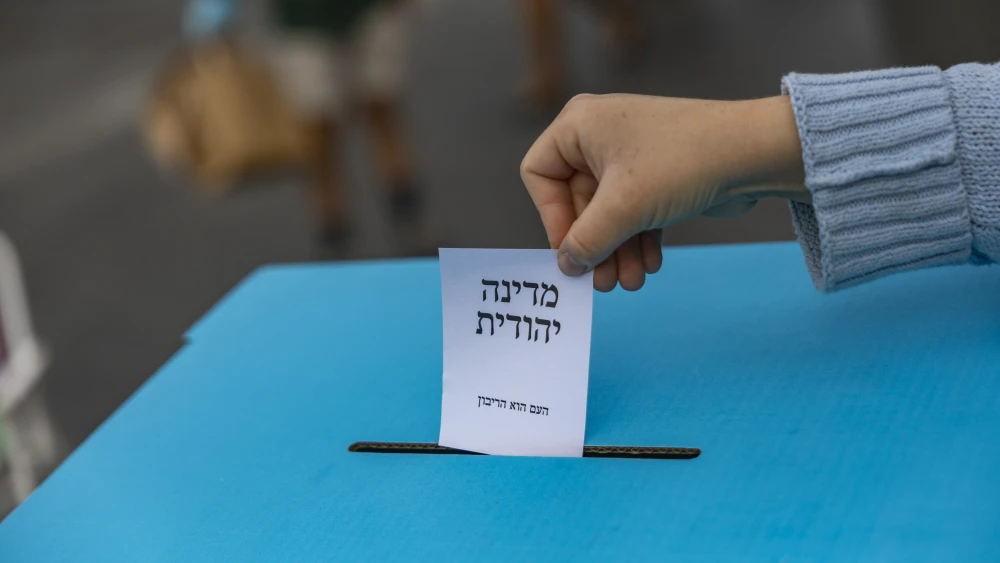
More than 7 million Israelis are preparing to cast their ballots in national elections in a process that reflects one of Israel’s greatest strengths: its democracy.
This election is an important test for Israel. It is a test of whether democracy can thrive in a region where extremist movements seek to impose their will through violence, intimidation and fear.
So, as Israelis prepare to exercise their right to vote, we must issue a direct warning to Iran, Hezbollah and other radical elements in our region. Israel is aware of the reports that these extremists may seek to exploit the election period through provocative military activity, cyberattacks or disinformation campaigns.
Israel will not allow these forces to dictate the choices of its citizens. Anyone who attempts to threaten or attack the democratic process will face very serious consequences.
We already know the consequences of allowing extremist ideology to flourish. Three years after Oct. 7, the world should have no illusions about the threat posed by Hamas. That day, Hamas terrorists murdered 1,200 people, injured thousands and abducted 251 men, women, children, babies and elderly people into Gaza. Families were slaughtered in their homes. Civilians who believed in peace and coexistence were targeted simply because they were Israeli.
This is what happens when radical ideology takes hold. Three years later, Hamas remains active in Gaza. Its weapons and tunnels remain a threat, and its leaders continue to resist disarmament.
Last week, Hamas threatened to impose taxes on private sector humanitarian aid, another clear sign that they are seeking to reconstitute themselves in the Gaza Strip. A lasting future for Gaza cannot be built while an armed terrorist organization remains committed to destroying Israel.
But radicalization is not confined to Gaza. Hezbollah continues to threaten Lebanon and Israel. The Houthis disrupt international shipping in the Red Sea. Iran supports extremist forces across the region. These are not isolated problems. They are connected manifestations of an ideology that rejects peaceful coexistence and seeks to replace stability with intimidation.
The coming Israeli elections must be understood in this broader context. Extremist forces seek to intimidate voters, spread disinformation, provoke a security crisis and exploit divisions within society. Their objective is to weaken democratic institutions and convince citizens that they cannot determine their own future.
The ability to disagree, campaign and choose new leadership is a source of national strength.
Israel’s response must be clear: Our democratic process will continue, and our citizens will make their choices freely. We will defend our security without surrendering our democratic character.
There is also an important contrast closer to home.
The Palestinian Authority recently announced another postponement of its elections. Its nearly 91-year-old leader, Mahmoud Abbas, will continue the four-year term that began in 2005. The last Palestinian legislative elections, held in 2006, resulted in a Hamas victory in Gaza, when the terrorist organization took over the Strip. The P.A. has not held national elections since.
Even though the P.A. tries to blame the delay on Israel, the real reason is clear: It is afraid that Hamas could win again. Indeed, the P.A. understands that Hamas’s radical ideology is taught in its own schools.
Palestinian children should not be taught that Israel has no right to exist or that terrorism offers a path to victory. The P.A. cannot credibly claim to promote peace while rewarding those who murder Israeli civilians.
Postponing elections does not eliminate extremism. Avoiding a confrontation with radical ideology does not make it disappear. It only allows the problem to grow.
Israel offers a different example. Elections are not a sign that we are free of political divisions or security threats. They demonstrate that even under extraordinary pressure, democratic institutions remain standing. The ability to disagree, campaign and choose new leadership is a source of national strength.
That is the future the Middle East needs more of, not less.
The Abraham Accords have shown that cooperation between Israel and regional partners, including the United Arab Emirates, Bahrain and Morocco, is possible. These agreements offer an alternative to the extremists’ vision: a region where countries pursue shared interests, economic opportunity and stability, rather than permanent conflict.
The choice facing the region is stark. We can confront radicalization, strengthen democratic institutions and build partnerships that create a better future. Or we can allow extremists to dictate the terms of our lives.
As Israel approaches its elections, our message to Iran, Hezbollah, Hamas and every other extremist force is unequivocal: You will not decide Israel’s future. That decision belongs to the Israeli people.
Our message to the international community is just as clear: Defending democracy requires more than praising it in speeches. It requires confronting those who threaten it, refusing to normalize terrorism and demanding accountability from leaders who deny their people the right to choose.
Israel will continue to defend its citizens, protect its democracy and pursue peace with those willing to build it. The radicals may try to test our resolve. They will not be allowed to determine our future.