
We are approaching a psychic and emotional danger zone. Too much is happening. We’re on news overload. The multiple crises that have shaken us in 2020 seem to be converging and climaxing. The weight of the tumult keeps getting heavier.
With three weeks to go before an epic election, our minds don’t know where to turn. Our social media ensures that we are constantly exposed to a cascade of troubling news items. Wherever we turn, our emotions are triggered.
We hate our political rivals. We’re afraid to die from a virus. We don’t trust anyone on the other side. We’re angry at the lost economy. We’re even triggered by a neighbor who won’t wear a mask.
We rationalize this near-hysteria by convincing ourselves that the stakes are enormous. It’s life or death. It’s the future of the country. It’s our cherished ideals. It’s everything we value most that is at stake.
With this state of high anxiety sure to rise even further in the coming weeks and months, how can we keep our balance and sanity in the midst of the storm?
Here’s one idea: Enter a sukkah.
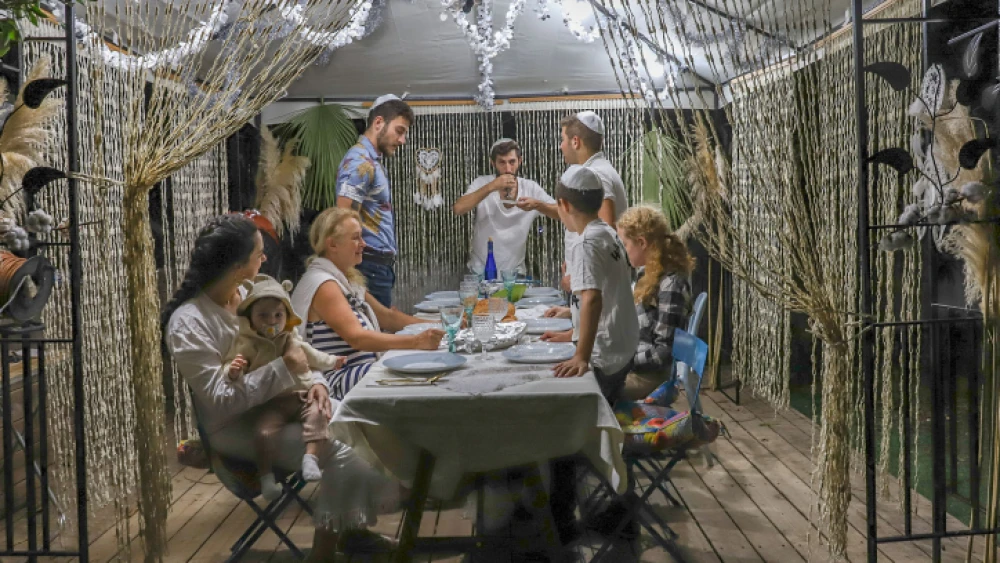
A sukkah is one of those frail huts Jews build during the holiday of Sukkot, where they take part in festive meals. Since the holiday began last Friday night, I’ve had several meals in our cozy little sukkah, with no guests but two of my kids.
How does entering a sukkah help me deal with the turmoil of the moment? For one thing, it’s not just a change of environment, as in a hike in nature. It’s a change in living conditions. We’re eating our meals in a completely new space, not in the adjacent house where we are accustomed.
By entering a different living space that calls on us to be joyful, we can imagine ourselves living a more joyful life, no matter which house we’re in, no matter what the turbulence looks like outside.
But there’s something deeper and more important. Inside a sukkah, you can see more clearly the things in your life that have the most value. Outside the sukkah, it may be big macro things that are at stake. Inside the sukkah, you are face-to-face with the most meaningful and intimate things in your life. Your family. Your friends. Your tradition.
Inside a sukkah, in other words, you are encouraged to reflect on what matters most. You don’t neglect the outside world, but you keep it in perspective. You realize that no matter what societal turbulence is occurring, you have the power to surround yourself with forces that will nourish your spirit.
Oh, and one more thing. When you enter the sukkah, try to keep your mobile device inside the house. The storm outside can wait. I can assure you it isn’t going anywhere.
David Suissa is editor-in-chief and publisher of Tribe Media Corp and Jewish Journal. He can be reached at davids@jewishjournal.com.
This article was first published by the Jewish Journal.