
Sudan’s war is widely described as a humanitarian catastrophe. But that description, while accurate, tells only part of the story. What is unfolding is not just a tragedy; it is a conflict actively sustained by ideology, infiltration and external influence.
At the center of this reality lies a factor too often overlooked: the enduring role of Islamist networks and their intersection with broader regional dynamics, including Iran’s expanding influence.
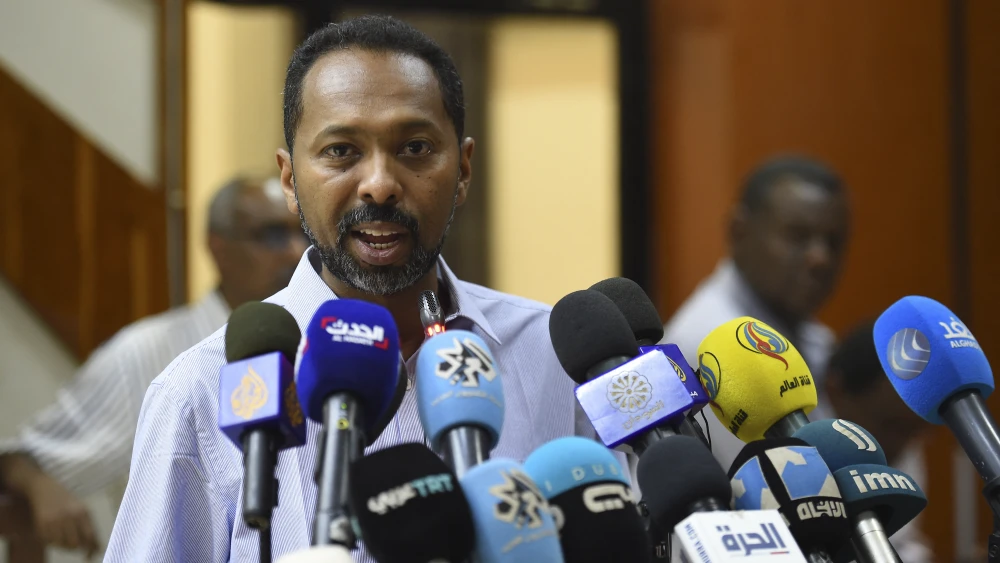
This point was underscored in Brussels this month, where Sudanese political figure Khalid Omar Youssef briefed members of the European Parliament following the Berlin Summit. Representing the civil democratic alliance “Somoud,” Youssef made clear that the war cannot be understood without examining the forces shaping it behind the scenes.
According to Youssef, Sudan’s Islamist movement did not disappear after the 2019 revolution. It adapted.
That revolution, driven by popular demand for change, sought to dismantle decades of Islamist rule. But the transition was cut short in 2021, when a military coup enabled Islamist-linked networks to regain influence—this time from within state institutions.
The result is a system where power operates from inside the structures meant to govern.
By influencing the military establishment and shaping key decisions, these networks have contributed to prolonging the conflict and obstructing efforts toward a negotiated settlement. This is not a temporary disruption. It is a structural challenge.
The influence of the Muslim Brotherhood, as a transnational ideological movement, adds another dimension. Its legacy and networks continue to affect political dynamics in Sudan, reinforcing resistance to democratic transition and complicating the path to peace.
But Sudan’s crisis is not only domestic.
Iran’s growing engagement reflects a broader regional pattern. Across multiple contexts, Tehran has expanded its reach by aligning with local actors and embedding itself within fragile political environments. Sudan risks becoming part of that trajectory.
This shifts the nature of the conflict.
What may appear as an internal struggle becomes linked to wider regional competition, where ideology, proxy influence and strategic positioning intersect.
Yet international responses have largely focused elsewhere. Humanitarian aid has been mobilized, and diplomatic discussions continue. But without addressing the underlying political drivers, including Islamist networks and external influence, these efforts risk treating symptoms rather than causes.
Youssef’s message was clear: A sustainable peace requires confronting these realities directly. This includes growing calls to designate Islamist groups operating in Sudan as terrorist organizations, a step already taken in some jurisdictions and increasingly discussed in Europe.
For Sudan, the stakes are profound. The conflict is not only about control of the present but also about the country’s future. Whether it moves toward democratic governance or remains caught in cycles of instability will depend on how these forces are addressed.
Ignoring them is not neutrality. It is part of the problem.