
Three years into the most devastating humanitarian catastrophe on earth, Sudan has completely vanished from international headlines. While college campuses across the West erupt in organized rage over Israel defending itself against terrorism and the United Nations dedicates endless sessions to condemning the Jewish state, a genuine genocide is quietly unfolding in Africa.
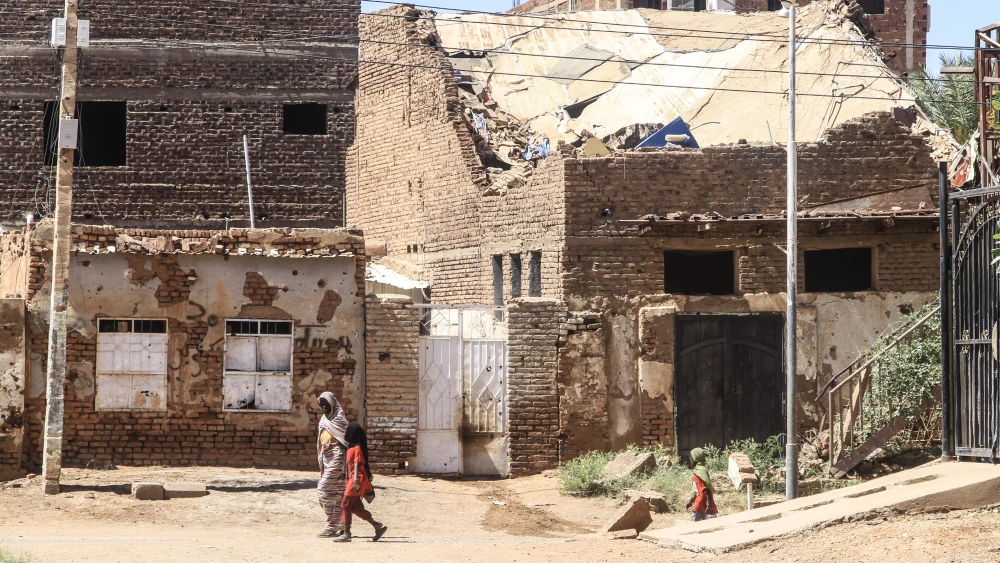
The Sudanese people are paying the ultimate price through famine, mass displacement and a relentless campaign exhibiting the defining characteristics of ethnic cleansing. The profound indifference of the world is not an accident. It is a deliberate choice. It exposes a deeply ingrained double standard where global outrage is exclusively reserved for Israel, allowing actual atrocities to metastasize across a region already stretched to its absolute limits.
The raw statistics alone should demand immediate global action. More than 14 million people have been displaced since heavy fighting erupted in April 2023. This figure includes more than 4.5 million individuals who fled across borders into neighboring nations. Famine has officially taken hold in at least five distinct locations, notably within Darfur and the Nuba Mountains. As many as 26 million people are trapped in a state of rapidly deteriorating food security. More people live in severe famine conditions inside Sudan than in the rest of the world combined.
Yet, there are no emergency campus encampments for Sudan. No major boycotts are organized to punish the warlords starving these populations.
For three solid years, warnings that Sudan was on the brink of total collapse were broadcast widely. Those urgent alarms simply went unanswered by the very international bodies that claim to champion human rights. Organizations like the United Nations dedicate vast resources and countless resolutions to obsessively target Israel, while turning a blind eye to the millions of Africans facing actual erasure.
The conflict itself long ago outgrew its domestic origins. What began as a power struggle between Gen. Abdel Fattah al Burhan of the Sudanese Armed Forces and Mohamed Hamdan Dagalo of the Rapid Support Forces has morphed into a sprawling regional proxy contest.
Multiple foreign sponsors are deeply involved. Egypt firmly backs the internationally recognized military government. Meanwhile, the United Arab Emirates reportedly supplies advanced weaponry to the rival Rapid Support Forces. This is the same paramilitary organization whose historical roots trace directly back to the notorious Janjaweed militias responsible for the initial Darfur genocide two decades ago. History is repeating itself with grim precision. The targeted slaughter of non-Arab ethnic groups in Darfur has raised fresh, verified concerns of genocide, supported by satellite imagery revealing mass graves. Nevertheless, the international courts in The Hague remain conspicuously quiet, reserving their most aggressive legal warfare for Israel.
The strategic stakes extend far beyond the realm of humanitarian conscience, directly impacting the security of the free world and Israel. Sudan sits squarely at the geographic intersection of North Africa, the Sahel and the vital Red Sea corridor. Iran recognizes this strategic value perfectly. Tehran is actively exploiting the chaos to extend its malignant influence. By seeking a naval foothold on the Red Sea coast through Port Sudan, Iran aims to threaten the Bab al Mandeb strait and tighten its regional ring of fire around Israel and moderate Arab states.
The geography of Sudan demands attention it is clearly not receiving. Iran understands that a foothold in Sudan allows it to choke off global maritime trade and launch direct attacks on Israeli shipping routes heading to Eilat. A fractured Sudan serves as an open weapons bazaar, a transit corridor for jihadist militants and a severe migration pressure valve directed toward Egypt, Libya and ultimately Europe. The conflict is producing dangerous spillover effects across the continent, while Tehran quietly builds another staging ground for its terror network.
The diplomatic architecture originally built to address this catastrophe has collapsed. Multilateral frameworks designed to produce a humanitarian ceasefire failed completely. Neither combatant possesses a genuine incentive to stop fighting. Leaders on both sides continue to profit handsomely from the destruction. Massive quantities of looted gold flow steadily out, while increasingly sophisticated weapons move smoothly in the opposite direction.
Meanwhile, the outbreak of the broader conflict engineered by Iran in late February made a structurally bad situation significantly worse. American diplomatic capacity is heavily stretched. Consequently, Sudan has become an abandoned crisis. At least 59,000 people have been confirmed killed, and verified offensives bear the unmistakable hallmarks of systemic extermination.
Washington is clearly absent from this critical file today. Western governments have imposed no meaningful costs on the foreign actors pouring fuel on the fire. Preventing Sudan from becoming a permanent failed state is a strategic necessity for the West and its Middle Eastern allies. A divided nation guarantees severe regional instability and provides a fertile breeding ground for Iranian-sponsored terrorism. Starvation is actively used as a weapon of war while millions of children face acute malnutrition.
The hypocrisy is deafening. The global community has proven that it can mobilize infinite resources to scrutinize Israel fighting a defensive war, yet it cannot muster basic diplomatic energy to stop an actual genocide in Africa. Ignoring this reality is not neutrality. It is a morally bankrupt policy with devastating consequences.