When I was elected president of Israel, my wife Michal and I privately celebrated for another reason, besides the great responsibility and trust placed in me: the fact that from now on, we would have the privilege of living in Jerusalem, a city that has had a deep place in our hearts for many years.
Yes, it is a privilege to live in Jerusalem. And every morning over the past year, waking up in Jerusalem, we have felt a certain excitement, an excitement of the sort that only life in Jerusalem can provide.
The poet Yehuda Amichai, for whom Jerusalem was heart and soul, wrote in one of his poems a verse that captures something of my feelings: “Jerusalem is a swing: sometimes I descend into the generations and sometimes I rise into the heavens.” And that’s Jerusalem: a city in which polar opposites, diversity, and change are all fused, lending it its unique character.
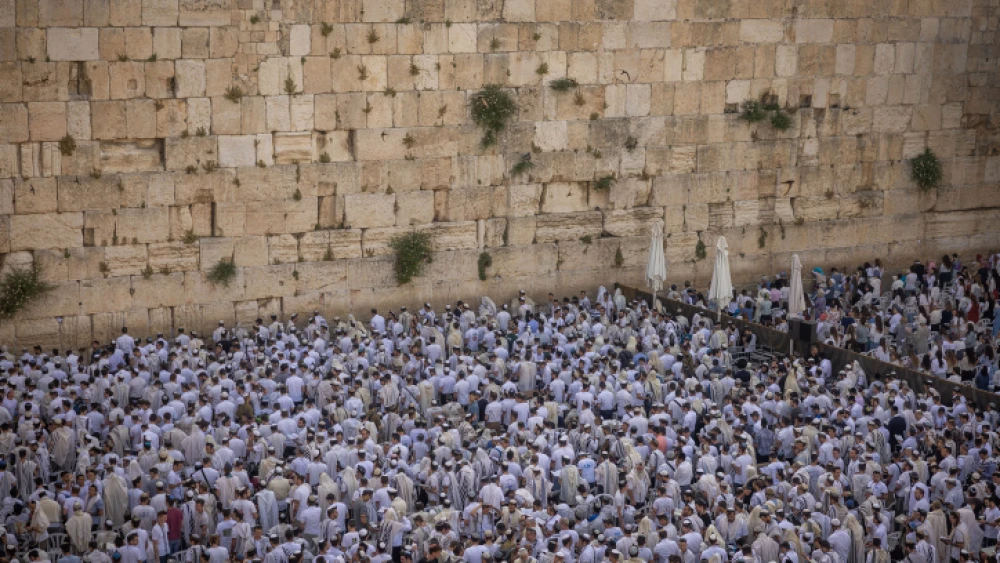
There is no other city in the world like Jerusalem. A city that people pine for, a city that they face to pray, and for whose sake they pray, a city to which so many look up. A city that serves as common ground but is often also a locus of frictions. A city that contains everything of everything: the spirit of sanctity and the vibrancy of day-to-day life. Jerusalem is a city whose one million inhabitants reflect the entire mosaic of Israeli society and its complexity, a city whose name means “peace,” yet has also known many wars.
Jerusalem Day is a symbol of one of the formative events in the city’s history. From the day that Jerusalem was unified, all parts of it have been growing and developing. And while safeguarding its sovereignty as the State of Israel’s capital, Jerusalem also promises freedom of worship for members of all religions, and no less importantly—a form of coexistence that does not diminish difference and tradition, and which brings to light the hidden power of our ability to live together and work together hand in hand.
On Jerusalem’s festive day, a national holiday for us all, our hope for Jerusalem is that it preserves its unique character, including the burst of renewal and growth that it has experienced in recent years. I am sure that the future that awaits Jerusalem and its people will be no less impressive and promising than its rich past.
Isaac Herzog is the president of the State of Israel.
This article first appeared in Israel Hayom.