


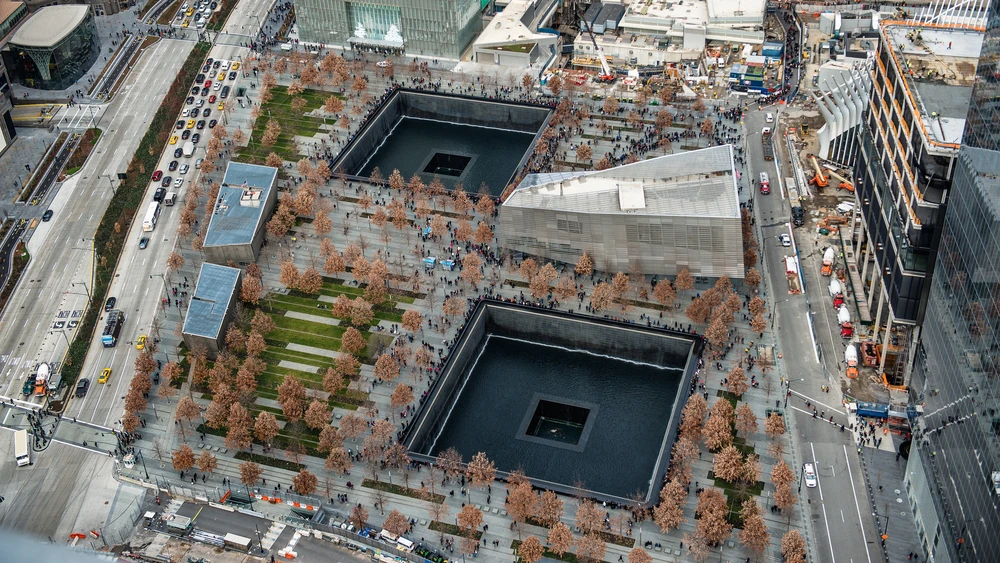

On Sept. 11, 2001, 19 Arabs from the terrorist organization al-Qaeda hijacked and crashed four passenger jets in the United States, killing 2,977 people. The horror of the 9/11 attack provoked a worldwide outcry to subdue international terrorism.
On Sept. 28, 2001, the U.N. Security Council began a global “War on Terror.” The world body unanimously adopted Resolution 1373 and passed subsequent anti-terror measures aimed at “preventing and suppressing” international terrorism.
U.N. Resolution 1373 also created a new U.N. agency called the Counter-Terrorism Committee (CTC) to monitor compliance with the anti-terror initiative. Each U.N. member state was required to submit periodic progress reports to the CTC for review. Because the resolution was passed under the authority of U.N. Charter Chapter VII, it was legally binding on the member states.
Resolution 1373 was well-designed. It instructed member states to upgrade their domestic laws in ways that made terrorism legally and financially prohibitive. Each state was required to criminalize terrorism, block the financing of terrorism, stop terrorist immigration, deny terrorists safe haven, apprehend terrorists for prosecution, share counter-terrorism intelligence with other member states and otherwise cooperate freely to meet the above goals.
Nations worldwide adopted the reforms of Resolution 1373, and the resulting upsurge in anti-terrorist cooperation was remarkable. Some authoritarian states like China, Saudi Arabia and Egypt passed anti-terror laws so extreme that they repressed political dissidents in violation of their human rights.
Given this hyperactive start to battling terror, some observers probably predicted that by Sept. 11, 2026, the terrorist threat would be reduced to a few minor disturbances. Yet today, terrorism remains an evolving threat to world peace.
According to a recent West Point study, terrorism has expanded in multiple ways: in its geographic scope; the volume of attacks; and the speed of radicalization. Al-Qaeda and the Islamic State, although weakened, remain active in the Middle East and Africa.
Iran spent the post-9/11 years developing an international terrorist network called the “Axis of Resistance.” The component groups included Hezbollah in Lebanon, Hamas and Palestinian Islamic Jihad in Gaza, the Houthis in Yemen and the Islamic Resistance in Iraq. On Oct. 7, 2023, that axis launched a Middle East war that has killed tens of thousands with no end in sight.
Why did the implementation of Resolution 1373 fall short of its goal?
There were essentially three causes. First, certain U.N. member states—Iran, North Korea, Myanmar—rejected its core mandates. Iran departed aggressively from the U.N. plan by establishing itself as the world’s foremost state sponsor of terrorism. The global watchdog of financial crime, called the Financial Action Task Force (FATF), “blacklisted” all three outlaw countries, blocking them from conducting lawful banking transactions with other countries. Since then, the states have resorted to illegal financial workarounds.
The second reason was that various other U.N. member states lacked commitment. They superficially adopted the resolution’s legal framework but maintained inadequate compliance programs. For example, the FATF said Qatar failed to apply basic rules against terrorist financing. Far from denying safe haven to terrorists, Qatar also hosted Hamas leaders in luxury hotels for over a decade. A Turkish bank was caught facilitating tens of millions of dollars in terrorist transactions for Iran. The Palestinian Authority received a minimally respectable evaluation from the FATF, even though its Martyrs Fund (“pay for slay”) program financially rewards Palestinian terrorists. Apparently, by classifying the payments as “civil service” salaries, the P.A. exempts them from its anti-terror laws.
The third factor was not a refusal to comply or deficient compliance, but a dispute of interpretation. Resolution 1373 did not define “terrorism.” The Organization of Islamic Cooperation, the League of Arab States and the Organization of African Unity believe that killing for an “armed struggle” of “self-determination” is not terrorism. Thus, their anti-terror compliance programs leave loopholes where militants thrive.
By contrast, Western states do not tolerate terrorism for any political purpose. They follow the standard of U.N. Security Council Resolution 1566, which declared in 2004 that terrorism is “under no circumstances justifiable by considerations of a political … nature.”
In sum, three countries refuse to comply with Resolution 1373, various countries comply with 1373 marginally, and numerous countries believe 1373 does not pertain to certain political causes.
The 25th anniversary of 9/11 offers a moment to ponder the state of security in the world. Protecting against terrorism is like waterproofing the hull of a boat. You can use a first-rate sealant; however, if even one plank seam lacks complete coverage, ocean water will leak through and flood the entire cabin. It bears repeating at every U.N. assembly that we’re all in the same boat.


