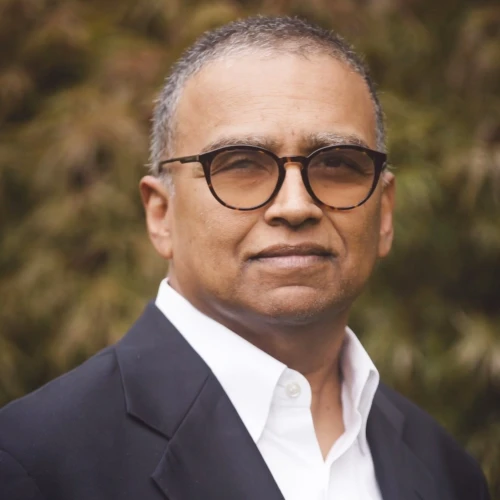
As a law student at American University Washington College of Law in the early 1970s, I worked part-time as the administrator of the campus’s Abraham S. Kay Spiritual Life Center, a building in the center of the Quad, donated by the Jewish Kaye family and designed to look like a giant eternal light unto the nations.
The Kay building’s use reflected its design, as its ground floor served as offices for clergy members of up to a dozen religious organizations and as a social hall. The main floor provided a nondenominational prayer and ceremonial hall.
Kay had a somewhat convivial atmosphere. Several Protestant ministers, a Catholic priest, a rabbi (at the time, Rabbi Harold White) and an imam, among others, not only met with university students in their offices, but they also had many warm conversations in the building’s public areas among each other and with students.
Effectively, all the clergy had similar goals: to raise American University’s students’ awareness of prayers and rituals, and how to get along with each other and the outside world via communication and kindness.
My job was to facilitate their goals during my work hours. I scheduled the use of the social hall and the upstairs prayer and ceremonial hall. One of my favorite memories was facilitating the wedding of the daughter of then-Sen. Edmund Muskie (D-Maine). At that time, the senator was campaigning to be the next U.S. president, and numerous media outlets sought space at the Kay to cover the wedding and speak with the senator. NBC was the last organization to request an interview space, by which time I had run out of locations within the building. Afterward, whether they realized or not, viewers saw Muskie being interviewed in the ladies’ room at Kay Spiritual Life Center. The senator and I enjoyed a good laugh when he came out!
While the early 1970s were a time of much student anguish and protests because of the ongoing Vietnam War, for me, it was a pleasurable experience to interact with the clergy of the different religions and to help them accomplish their evening and weekend plans.
Perhaps, much of the warm communications among the clergy at Kay reflected things like the Papal encyclicals of the 1960s, Protestant appreciation of Jewish Psalms or Jewish participation in the civil-rights movement, American culture and the re-establishment of the Jewish homeland in Israel. At Kay, getting along among religious groups seemed to prevail.
Today, in 2025, some of that appreciation, understanding and getting along is missing, particularly between Islam and those of other faiths.
From Western religious history, today’s situation reminds one of an oft-repeated old-new story: A leader, either Jewish or a friend of the Jews, leads a group that wishes to modify some Hebrew practices. He is met with rejection again and again. The leader’s disciples create a new religion that incorporates the modifications and derides Judaism. Only after many generations, and much conflict, do most of the breakaway religions come around to a live-and-let-live acceptance of Jews.
Today, one of the breakaway religions, Islam, still finds it difficult to be friends with the other religions, particularly with Jews.
So, when the Jews began advocating for their own return en masse to the Jewish homeland in the late 1890s, and certainly by the 1920s and 1930s, when the Jews began returning and rebuilding their cities in the Jewish homeland, the Muslims decried and attacked the Jewish return. By the 1940s, the Islamic opposition to the Jews went even further as Muslims effectively declared a war against the Jews and joined with Hitler and the Nazis.
With no let-up, the Muslims waged actual wars against the Jews in 1948, 1956, 1967 and 1973. In the 1960s, the Muslims structured a new paradigm, a Palestinian narrative, to wage a public relations war against the Jews. Since then, other than several promising moments of peace-making, a cold peace has remained in effect with outbreaks of gorilla-style warfare, and, most recently, with the Muslims’ horrendous massacre of Jews on Oct. 7, 2023.
That massacre was the last straw. Palestinian Muslims in the Gaza Strip barbarically attacked Jews in their homes and at a music festival, while other Muslims from Iran, Lebanon and Yemen joined in attacking the Jewish state from all directions. The Muslims waged this war while threatening to eventually wipe out not only Jews but Christians around the world as well.
It took the Christian breakaway from Judaism a very long time to learn to live and let live with Jews. The question for me becomes: How long will it take the Islamic breakaway to live and let live with the Jews and with the Christians?