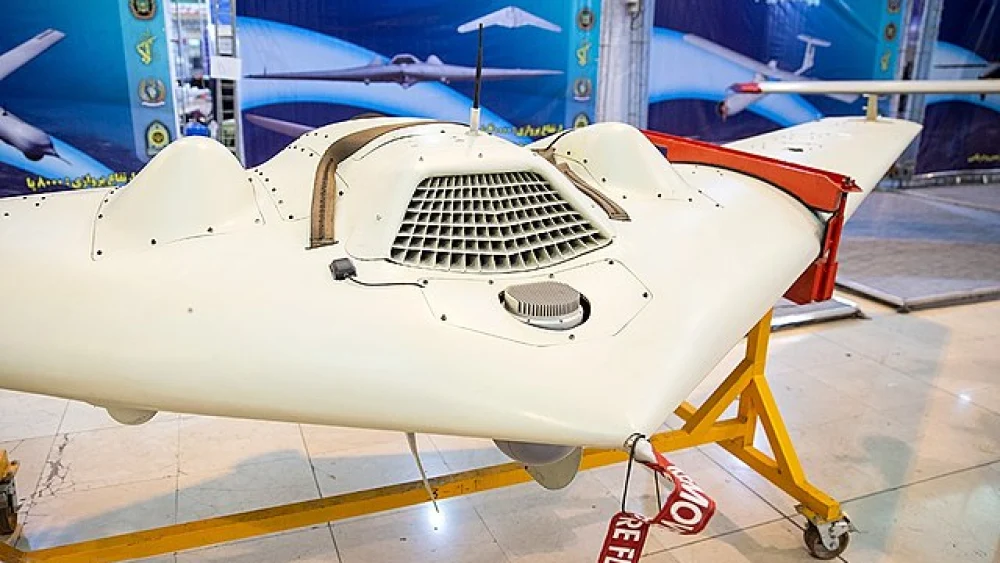

We have never before seen Western capitals so riled up and angry about Iranian drones, which are now playing an influential role in the ongoing military conflict in Ukraine. Suddenly, there is talk of sanctions, retaliation and diplomatic repurcussians.
Iranian drones are not a new issue for Western leaders. They have long affected Western strategic interests in the Middle East, given that their targets were Saudi and Emirati facilities.
Used in several attacks in Iraq, a drone arsenal belonging to the Lebanese terror group Hezbollah threatens the security and stability of Israel, despite the West’s protestations of support for the Jewish state. The West only resented these drones when they interfered in the war in Ukraine.
The West has an eye that sees only what it wants when it wants. In a sense, the West’s dilemma with these drones only began when they realized that the Ukrainian crisis affects its direct interests in a way that alters the balance of power and jeopardizes the tens of billions of dollars provided to Ukraine since the Russian invasion.
Recently, Britain joined France in accusing Iran of violating the terms of the 2015 nuclear deal by supplying Russia with armed drones. It is as if supplying the Houthi militia with drones—used to attack oil facilities in Saudi Arabia and the UAE—along with Hezbollah and Iraqi militias, were not similar violations.
Unfortunately, fear for the fate of negotiations to revive the nuclear deal outweighed the importance of Western interests for some time. Things are different now. The deal is in a coma. What matters now is the fate of billions of dollars of direct military support to Ukraine that Iranian drones are threatening.
The strategic landscape today is both more ambiguous and more dangerous than before. The West no longer cares about Iran’s acceleratation of its pace of uranium enrichment, which is now in full swing. It will continue to accelerate as the Iranian regime senses a possible confrontation, whether over the failure of the nuclear agreement or over escalating tensions between Russia and the West in Ukraine. With the possibility that Iran could get directly involved in the conflict, the regime may want a nuclear deterrent should it become a military target.
The bottom line is that events offer new evidence that the U.S. is not a responsible partner and classifies its allies by degrees when necessary. This is self-evident and understandable in the world of politics. But it is crucial that Washington not require others to sacrifice for it, even if it means the loss of enormous economic and commercial interests, as is the case with oil production. The West’s vehement stance on Iranian drones adds further evidence of the West’s duplicity in dealing with its Gulf allies.
The West must learn a lesson from the decline of its status and the loss of its friends in the Gulf and the Middle East. However, this is not a matter of “schadenfreude” at the West’s predicament. There is no time for such nonsense. But all threats must be measured by the same yardstick, because a threat that violates laws and agreements, and targets a partner today, will not exclude anyone in the future.
The Iranian regime does not believe in the rules of the traditional political game. Rather, it believes in the ruthless use of force to achieve its goals. What could be conceded in negotiations yesterday and today may be hard to recover tomorrow.
This is how the regime’s ambitions accelerate, and this affects not only Iran’s relations with the West, but also the security and stability of our region.
Salem al-Ketbi is an Emirati political analyst and a former candidate to the UAE’s Federal National Council.
This article was originally published by Israel Hayom.