
At the Melbourne launch this week of the book Bondi Terror, written by Alex Ryvchin and Sharri Markson, Markson posed two questions weighing heavily on Jewish Australians: “Is there something worse still to come? Have the lessons of Bondi truly been learned, especially by our political leaders and law enforcement?”
Those questions capture the fear, anger and uncertainty gripping the Jewish community in Australia.
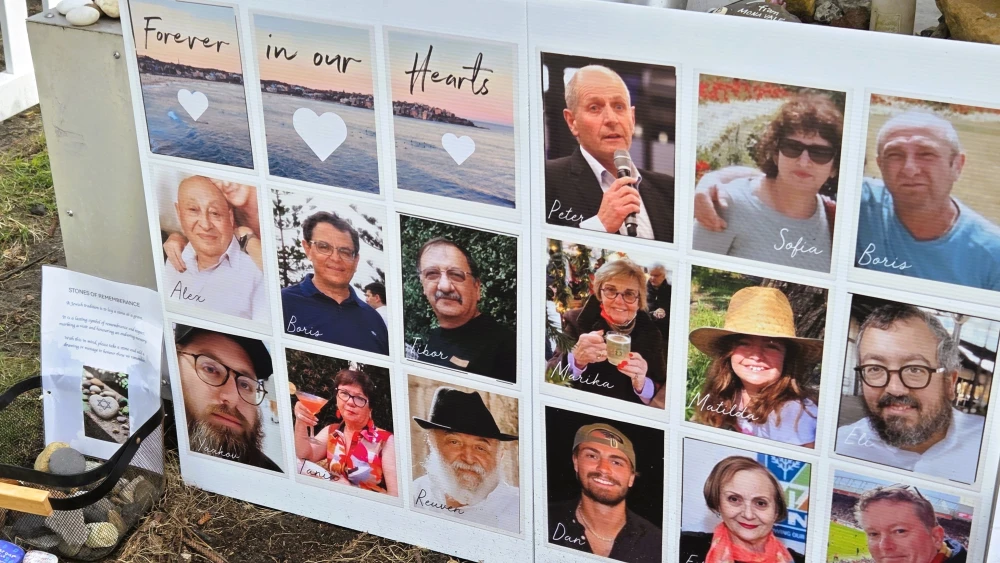
Since the terrorist massacre at Bondi Beach last December, when 15 people were murdered celebrating the holiday of Chanukah, Jewish Australians have confronted an unimaginable reality: Are we safe in our homes, schools and synagogues? Can we trust those responsible for protecting us?
A government’s most fundamental responsibility is the safety and security of its citizens. Yet Bondi has left many Jewish Australians questioning whether political considerations have taken precedence over that duty.
Could something worse still happen? Tragically, we cannot dismiss that possibility. Bondi demonstrated what follows when hatred is allowed to escalate into violence. Until Jewish Australians see evidence that the threats identified before the massacre are being confronted decisively, the fear of another attack will remain.
For more than two years, our community warned about escalating antisemitism and attacks on Jewish institutions. What matters now is whether Australia has learned anything.
Since Bondi, our community has experienced profound grief, exhaustion, anger and betrayal. Jewish organizations have supported victims and strengthened security. Thousands gathered in solidarity, determined not to allow terrorism to extinguish Jewish life.
But behind that resilience is a devastating question: Are we safe in our own nation?
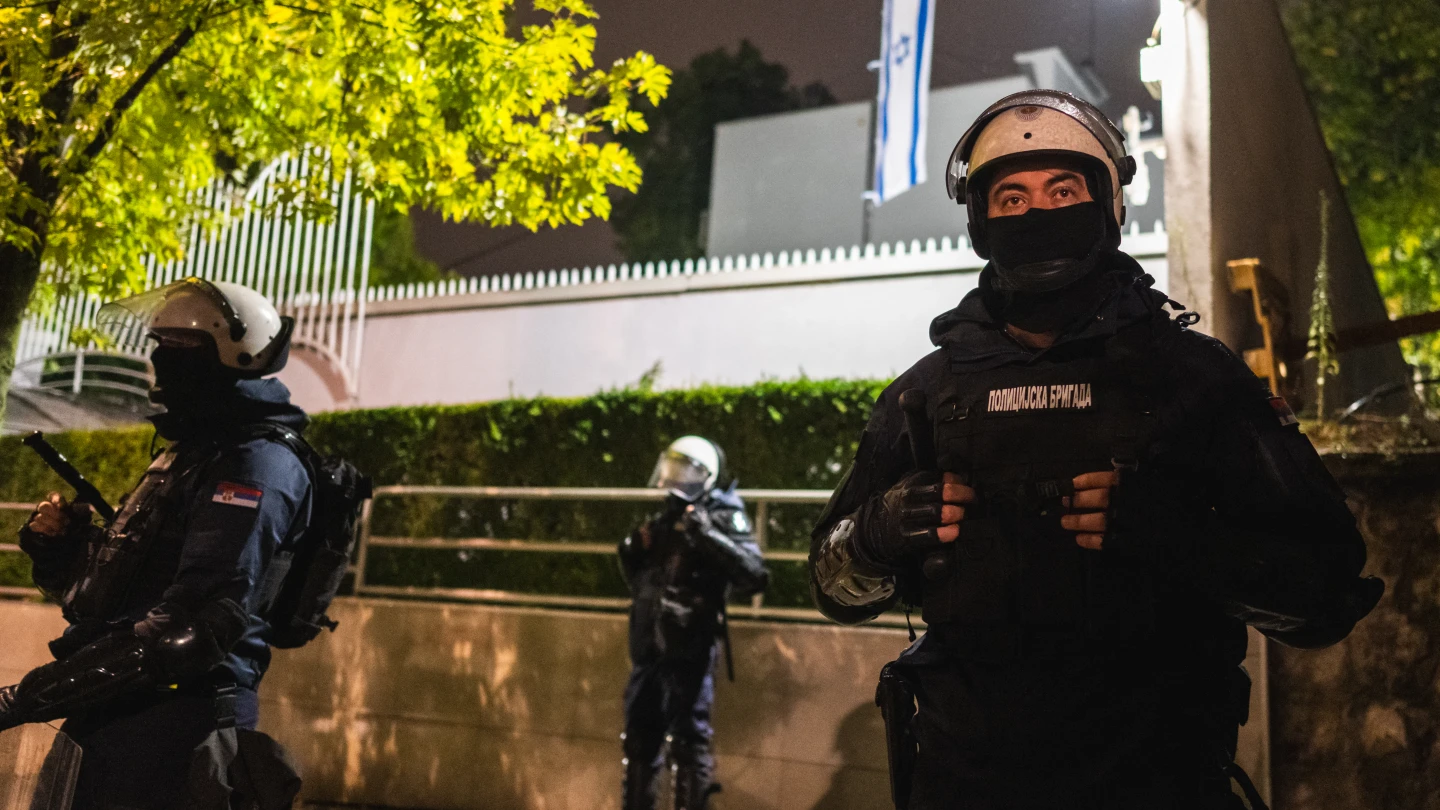
Why must we enter synagogues through security fences, past armed guards and surveillance cameras, simply to practice our faith? Why do our children require such measures to enter the same schools we attended without them? When did being visibly Jewish become a security risk in Australia?
Antisemitic threats should never be accepted as normal.
Jewish Australians have not merely enjoyed Australia’s freedoms. They have helped defend and build the nation.
Gen. Sir John Monash, the Australian-born son of Jewish immigrants, commanded the Australian Corps during decisive Allied victories in World War I, becoming one of Australia’s greatest military leaders.
For generations, Jews have contributed to virtually every facet of Australian life: business, medicine, scientific research, law, education, the arts, journalism, philanthropy and countless other professions. They have created businesses, supported hospitals, enriched our culture and strengthened Australian institutions.
How can a country that Jewish Australians helped build and defend accept that their grandchildren need armed protection simply to attend school or synagogue? No Australian child should be forced to conclude that armed guards are the price of being Jewish.
Australian Prime Minister Anthony Albanese initially resisted demands for a federal royal commission following Bondi, announcing one only after sustained pressure from victims’ families, Jewish leaders and prominent Australians.
Why did grieving families have to fight for an inquiry into such a devastating terrorist attack?
Controversies surrounding taxpayer grants to organizations accused of spreading antisemitic rhetoric have compounded concerns about government oversight.
Jewish Australians need more than condolences. They need the confidence that authorities will confront threats before another tragedy.
Some leading Islamic organizations condemned Bondi. But a bigger question must be asked: What do those condemnations mean when further examples of antisemitic preaching in mosques continue to emerge? Words of sympathy ring hollow if they are not accompanied by a willingness to confront hatred within one’s own institutions.
Equally troubling are questions surrounding substantial taxpayer-funded grants awarded in the name of “social cohesion,” including scrutiny of organizations accused of promoting or tolerating antisemitic rhetoric.
Jewish Australians have not merely enjoyed Australia’s freedoms. They have helped defend and build the nation.
We must ask: Where is the social cohesion? What safeguards ensure public money is strengthening mutual respect rather than reaching organizations whose conduct undermines it?
The entire enterprise seems to be about buying votes.
Jewish organizations pursued legal action against preacher Wisam Haddad, whose sermons were found to breach Australia’s racial discrimination laws. In November 2023, Haddad quoted a religious passage describing Jews hiding behind trees and stones, ending: “There is a Yahudi [Jew] behind me, come and kill him.”
Why should Jewish organizations bear the burden of challenging such rhetoric? Why aren’t existing laws being enforced more effectively?
Some Muslim leaders have condemned incitement. Muslim Australian Ahmed al-Ahmed demonstrated extraordinary courage confronting an armed terrorist at Bondi. The issue is extremist Islamic ideology and whether religious institutions and authorities are confronting it effectively.
The Holocaust did not begin with gas chambers. It began with propaganda, boycotts, exclusion and discriminatory laws before escalating into genocide.
Australia is not Nazi Germany, but history warns against normalizing antisemitism. The Albanese government’s response deserves scrutiny over whether it has done enough to prevent that normalization.
Many non-Jewish Australians have shown extraordinary compassion since Bondi. Yet where was widespread outrage when synagogues were attacked, schools vandalized and Jewish students intimidated? There is a difference between mourning people after they have been murdered and defending them while they face threats beforehand.
And why do anti-Israel protests continue following the Gaza ceasefire? Peaceful protest is a democratic right. But antisemitic intimidation, glorification of terrorism and threats of violence cross the line and demand a response.
This is about more than Israel or Gaza. It raises questions about defending Western democratic values: freedom, tolerance and equality before the law.
It begins with the Jews, but it never ends with the Jews. A society tolerating hatred against one minority risks endangering everyone’s freedoms.
Perhaps most heartbreaking is that I find myself grateful my Holocaust survivor grandparents are no longer here to witness what is happening in Australia.
My grandfather recorded his Holocaust testimony for Steven Spielberg’s Shoah Foundation in the 1990s. He concluded: “You are lucky to grow up in a country like Australia, a country free of the antisemitism we grew up with in Poland. Don’t let anyone make you feel second-class. Always be kind to all mankind, but importantly, always be a proud Jew.”
What would he think of firebombed synagogues, Jewish children requiring armed security and families murdered while celebrating Chanukah?
I am thankful that he didn’t have to witness Bondi. Still, I know what his message would be: Stand tall. Remain kind. Never feel second-class. Always be a proud Jew.
I carry those words whenever I write or speak publicly.
As we await December’s final report on Bondi, the Royal Commission is expected to recommend improvements to intelligence, policing and security. Will it also examine political decisions, failures of enforcement and institutional tolerance that may have allowed antisemitism to become entrenched?
Questions remain about the extent to which senior government ministers and extremist preachers have faced public questioning. Will there be accountability for government failures, scrutiny of social cohesion funding and meaningful consequences for those unlawfully promoting hatred? Or will there be merely another set of security recommendations?
A Royal Commission cannot itself impose criminal penalties. But it can expose failures and recommend action.
My grandfather believed that Australia would protect his descendants from the hatred he endured in Poland. I want future generations to believe that, too. That is why I write, speak publicly and advocate. If things don’t change fundamentally, don’t be surprised when another Bondi happens.
“Never Again” cannot be something we say after Jews have been murdered. It must be something we defend while they are still alive.