Growing up as a Jewish child in Moscow in the 1980s, Michael Novakhov remembers an older student harassing him when the latter learned that he was Jewish. He turned to his uncle for help, and his uncle dispatched a large man to confront the bully.
“I learned that antisemites only understand power,” Novakhov, a New York state representative, told JNS. “When we have power, we are strong. We need to be strong.”
Decades later, Novakhov, who represents the state Assembly’s 45th district, which includes southern Brooklyn, is still taking that lesson from the former Soviet Union.
“I never felt so Jewish as after Oct. 7,” he told JNS.
Born in Baku, Azerbaijan, Novakhov was raised in Moscow in what he described as an artistic family. His aunt was a singer. His grandmother and great-grandfather worked in theater. And his mother was an editor at the Russian edition of Harper’s Bazaar.
He first came to the United States as a teenager and spent about a year with his father, who immigrated in 1979. He returned to Moscow to be with his mother before moving to New York permanently around 2000.

His path to state office was far from conventional.
A journalist by profession, he founded Freedom FM, a Russian-language radio station broadcasting from New York City’s Freedom Tower, in 2019. He continues to host programs on the station, in which he sold his shares to his business partner after he was elected to the state Assembly in 2022.
After he helped support the campaign of Inna Vernikov, a Republican New York City Council member, the chairman of the Kings County Republican Party encouraged him to run for the state Assembly.
He beat Steven Cymbrowitz, a Democrat who had represented the district for 22 years.
“What I love the most about the job is helping the people,” Novakhov told JNS.
He knew that he was Jewish growing up but didn’t have a religious upbringing. After moving to Brooklyn, he began to learn more about Jewish culture and traditions. Oct. 7 was a turning point in his Jewish identity.
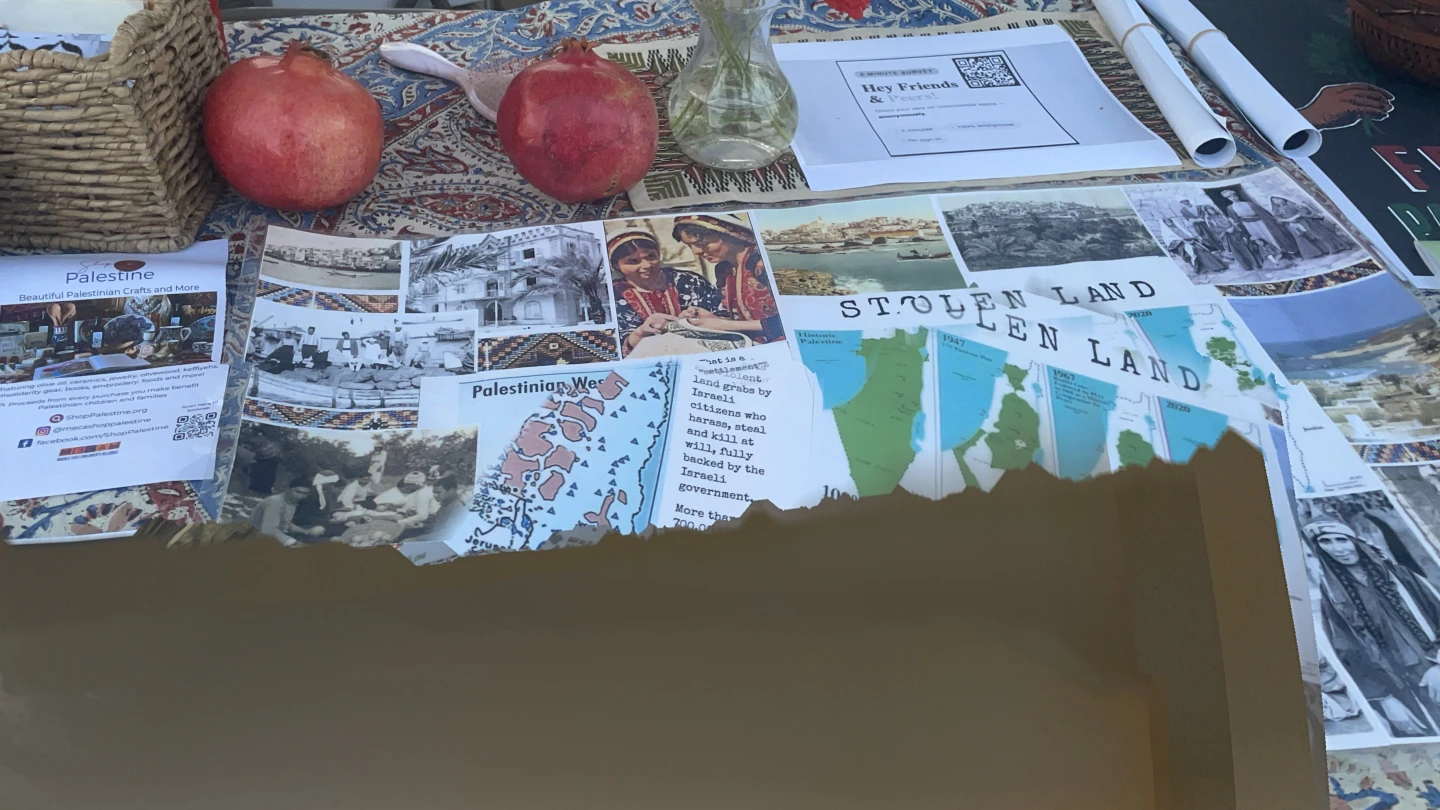
Watching the aftermath of the attacks and seeing people tear down posters of Israeli hostages in New York made the issue deeply personal for him, he told JNS. He responded by displaying hostage posters in the large, glass storefront of his district office.
Novakhov got anonymous notes criticizing him for the display, including messages accusing him of being responsible for the deaths of Palestinian children. He also received support from people of different backgrounds, he told JNS.

“It’s not about politics,” he said. “People were taken hostage by terrorists.”
Novakhov’s experience with Jew-hatred also shaped his response when a constituent contacted him about alleged harassment at Murrow High School.
He visited the public school and met with the principal and a representative of the New York City Department of Education. When officials disputed that there was a problem, he shared his childhood experience of being targeted for being Jewish.
“I never thought that in America, in the 21st century, a kid would experience something that I experienced in the Soviet Union in the ’80s,” he told JNS.
Novakhov urged officials to take the necessary measures. He didn’t hear back from the constituent, which leads him to believe that the matter was resolved.
His approach to public service is shaped by his journalism background and his desire to help constituents, even when he cannot advance legislation on his own, he told JNS.
As a Republican in a Democratic-controlled legislature, he sometimes approaches Democratic colleagues to sponsor bills that he develops.
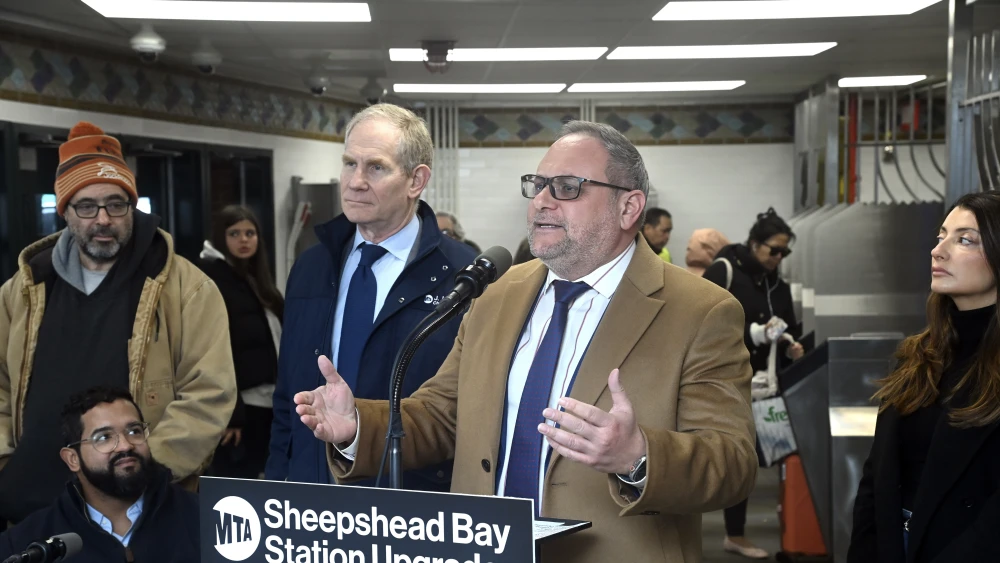
He cited a news conference he organized outside Madison High School, a public school in Brooklyn, after parents complained that students had been displaced while migrants were housed at the school. Novakhov said that the event drew national media attention.
“Sometimes, a small guy could do something,” he told JNS.

He also described himself as a creative person, who sings, plays guitar and has written songs. That side of his personality, he said, also influences his approach to politics.
“I don’t want to be that official politician, who’s always serious or has a fake smile on the photograph,” he said. “I want to be natural. I want to be truthful and honest with people.”
Novakhov enjoys meeting constituents on the street and hearing directly from them about the issues affecting their lives, he said.
“Politics means more humans and not just machines,” he told JNS. “If we will have more humans in city politics, in state politics and federal politics, we can achieve much more.”
His advocacy for Jewish constituents has drawn comparisons from supporters to former state Assembly member Dov Hikind, who is known for his work fighting Jew-hatred.
Novakhov told JNS that he did not set out to become known for combating antisemitism, but doing so was a natural response to Oct. 7 and to concerns that he heard from constituents.
“I just became someone who people see that is fighting for them,” he said.
Novakhov has also decried New York City Mayor Zohran Mamdani over his anti-Israel rhetoric. He voiced support for Bruce Blakeman, the Republican nominee for governor and Nassau County executive.
Jewish voters should reconsider their traditional support for Democrats and build greater political power through the Republican Party, Novakhov told JNS.
He hopes that people who disagree with him politically understand that he is more than his political positions.
“I’m a good man, and I’m an honest man,” he told JNS. “I’m just fighting for my people, for my constituents and for my people.”