Many experts express admiration for Hezbollah leader Hassan Nasrallah. From senior military officers to researchers and journalists, Nasrallah’s every gesture and statement is analyzed. Nasrallah is reliable, say his admirers. He makes promises and delivers. He is faithful to his patrons in Tehran, despite Lebanon’s attempts to restrain him.
However, all that can be said of Nasrallah with certainty is that he is a consummate actor and liar who has raised manipulation to an art form.
Nasrallah closely follows everything published about him and Hezbollah, not only in Israel but also abroad. He attributes great importance to the words and commentaries of senior Israeli officers both past and present.
He pays particularly close attention to those “experts” who provide details and outline the enormity of Hezbollah’s military threat, naming of the most endangered places and sites inside Israel.
Senior Israeli security officials assert that in the next war the boundary between the military and the civilian fronts will be blurred due to the accuracy and size of Hezbollah’s missile arsenal.
The more details provided in Israel on these matters, the more pleasure and encouragement Nasrallah derives. He believes that Israeli society is weak and unprepared for war, and will do anything to avoid a confrontation with Hezbollah.
The critical question, however, is what he will do. Assuming that Israel will not allow the establishment of precision-missile factories in Lebanon, and also that Hezbollah (and Iran) is not going to stop trying to establish such factories, what will happen if the next (and third) time such a factory is discovered, Israel simply strikes instead of releasing information about them? How will Nasrallah react?
Israel’s working assumption has to be that Nasrallah will not be satisfied with firing a few anti-tank missiles at Israeli military installations and vehicles. Possible responses range from sending suicide drones into northern Israel with the objective of striking military and civilian targets, to firing rockets at military installations and towns close to the border fence.
Such a response on Nasrallah’s part could develop into a broader confrontation, even though Nasrallah does not want an all-out war with Israel.
It needs emphasizing that at the end of the day, Nasrallah does not set Hezbollah’s strategic goals, let alone those of the Shi’ite militias in Syria, many of which work without Nasrallah’s involvement. Their goals are set by Iran and carried out by Iranian Quds Force commander Gen. Qassem Soleimani, who is personally supervising Hezbollah’s military operations.
It has been reported that Soleimani arrived in Beirut immediately after the recent Hezbollah anti-tank rocket attack to meet with Nasrallah.
It is the commander of the Quds Force of the Iranian Revolutionary Guard Corps, representing Iran’s Supreme Leader Ali Khamenei, that sets the boundaries of the conflict.
The Lebanese constraint exists, but is meaningless to Iran’s strategic goal.
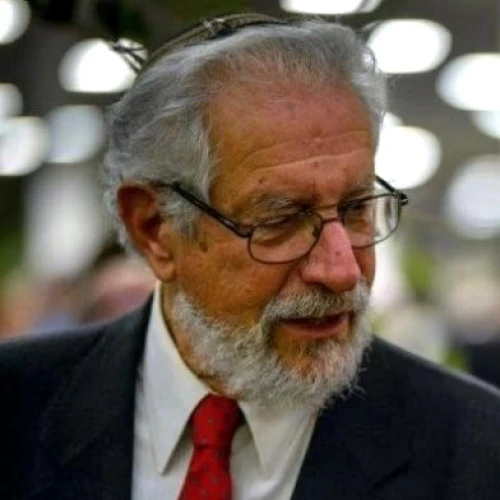
IDF Brig. Gen. (ret.) Dr. Shimon Shapira is a senior research associate at the Jerusalem Center for Public Affairs. He served as military secretary to the prime minister and as Israel’s Foreign Ministry chief of staff. He is the editor of the Jerusalem Center eBook “Iran: From Regional Challenge to Global Threat.”
This article first appeared on the website of the Jerusalem Center for Public Affairs.