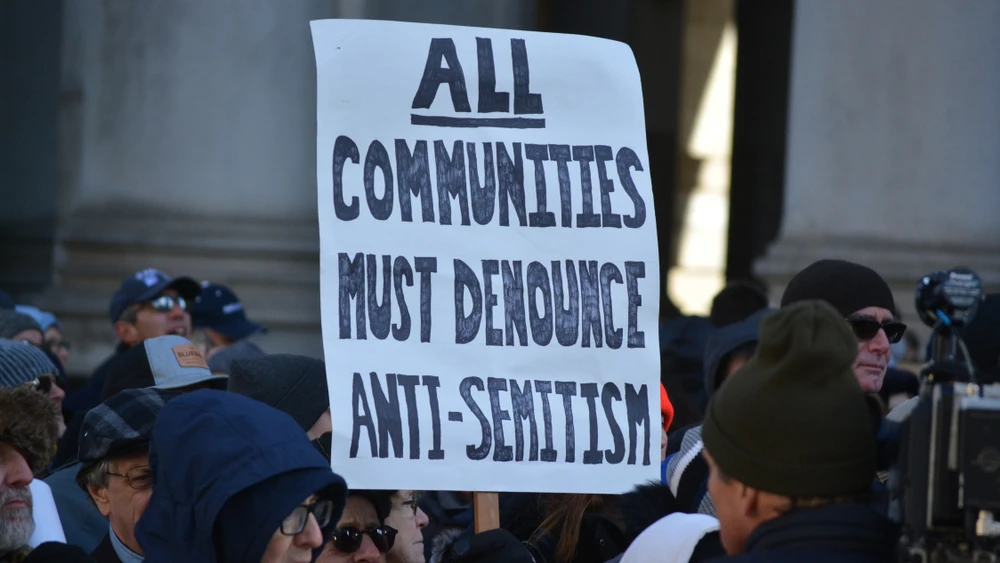

We count incidents. We map incidents. We archive incidents. We convene conferences about incidents. We create databases, research centers, scholarly associations, testimony projects, reporting platforms, surveys, advisory groups, working groups and task forces devoted to explaining antisemitism, a hatred that has existed for thousands of years and has never been especially subtle about its purpose.
At some point, we must ask an uncomfortable question: How much more studying do we actually need?
This is not an argument against scholarship, preservation or testimony. There is important work being done in each of those areas. The USC Shoah Foundation’s work documenting survivor testimony is invaluable. Preserving the voices of people who endured the Holocaust is not simply an academic exercise; it is a sacred responsibility. The same can be said for recording the experiences of Jews expelled from Arab and Muslim lands and preserving firsthand accounts that would otherwise disappear with time. There is historical material that must be collected because once the witnesses are gone, their stories cannot be reconstructed.
The problem begins when every new initiative is presented as though the Jewish community is still suffering from a shortage of information. We are not.
We know antisemitism is rising. We know where it appears. We know how it presents itself on college campuses, in K-12 education, in workplaces, in the media, in politics, on social media and in the streets. We know the language it uses. We know the organizations promoting it. We know the ideologies that excuse it. We know which institutions tolerate it, which administrators minimize it, which politicians exploit it and which media outlets sanitize it.
The Jewish community is not short on documentation. It is short on consequences.
That distinction matters because every dollar devoted to another study, archive, conference or tracking project is a dollar not spent on direct intervention, legal action, parent organizing, political pressure, curriculum review, media accountability, leadership development, campus defense or building independent institutions capable of responding in real time.
Funding is not infinite. Donor attention is not infinite. Institutional bandwidth is not infinite. When another large initiative enters the marketplace and announces that it will study, map, collect or analyze antisemitism, it does not operate in a vacuum. It absorbs funding, staff, media attention, donor relationships and intellectual oxygen that could be directed toward organizations that are actually confronting the threat. That is the part nobody wants to say out loud.
The Jewish nonprofit world often behaves as though every new initiative automatically expands the pie. It usually does not. More often, the same donors are approached by more organizations, making increasingly similar arguments. Established institutions use their brands, boards and fundraising machinery to dominate the conversation, while smaller entrepreneurial organizations doing highly focused advocacy are told to collaborate, wait their turn or prove themselves for another year. The result is a marketplace filled with duplication at the top and starvation on the front lines.
Preservation cannot become a substitute for protection, and research cannot become a refuge from action.
There is also a troubling performance element to all of this. New centers, associations, archives and global initiatives generate announcements, conferences, panels, launch events, press releases, founding members, advisory boards and photographs of important people standing beside important banners. They create an immediate impression of movement and seriousness. What they do not necessarily create is change.
The Jewish community has become very good at producing “look at us” moments. We announce partnerships, unveil reports, publish findings, gather experts and congratulate ourselves for elevating the issue. Then the same school district adopts the same curriculum; the same university tolerates the same harassment; the same politician repeats the same rhetoric; and the same newspaper publishes the same distorted information. The activity increases while the outcome remains unchanged. That is not progress. It is institutional stagnation.
The question every new antisemitism initiative should be forced to answer is not whether its work is worthy. Much of it is. The question is whether the work is additive. What does this project provide that does not already exist? What gap is it filling? How will the information be converted into action? Who will use it? What policy will change? What institution will be held accountable? What measurable result will be different three years from now because this effort was created?
Those questions should not be considered hostile. They are the minimum standard of responsible philanthropy.
We would never accept this level of duplication in a serious business environment. If 10 companies were producing nearly identical products for the same limited customer base while the core problem remained unsolved, investors would demand consolidation, specialization or a completely new strategy. In the Jewish nonprofit world, however, overlap is often celebrated as momentum, especially when the organizations involved are prestigious enough to attract major donors.
But prestige isn’t impact. Documentation is not deterrence. Awareness is not accountability.
The world’s oldest hatred does not persist because it has not been sufficiently studied. It persists because it is useful to people seeking power or social status. It persists because institutions often face little cost for tolerating it. It persists because too many leaders prefer issuing statements to imposing consequences. It persists because the organizations fighting it are often fragmented, territorial, underfunded and forced to compete against better-known institutions whose primary advantage is not effectiveness but scale.
Another study will not change that. Another database will not change that.
Another international association of experts may deepen scholarship, but scholarship alone will not protect a Jewish student walking into a hostile classroom, remove antisemitic materials from a school curriculum, force a university to enforce its own rules, stop a politician from trafficking in hate or hold a media outlet accountable for deliberate distortion. Those outcomes require strategy, pressure, courage and resources.
The Jewish community should absolutely preserve testimony. It should absolutely support serious scholarship where genuine gaps exist. It should absolutely document what future generations will need to understand. But preservation cannot become a substitute for protection, and research cannot become a refuge from action.
We already know what antisemitism looks like. The question is what we are prepared to do about it.
Until our funding priorities reflect that distinction, we will continue building archives of failure while the people trying to prevent the next incident struggle to survive.