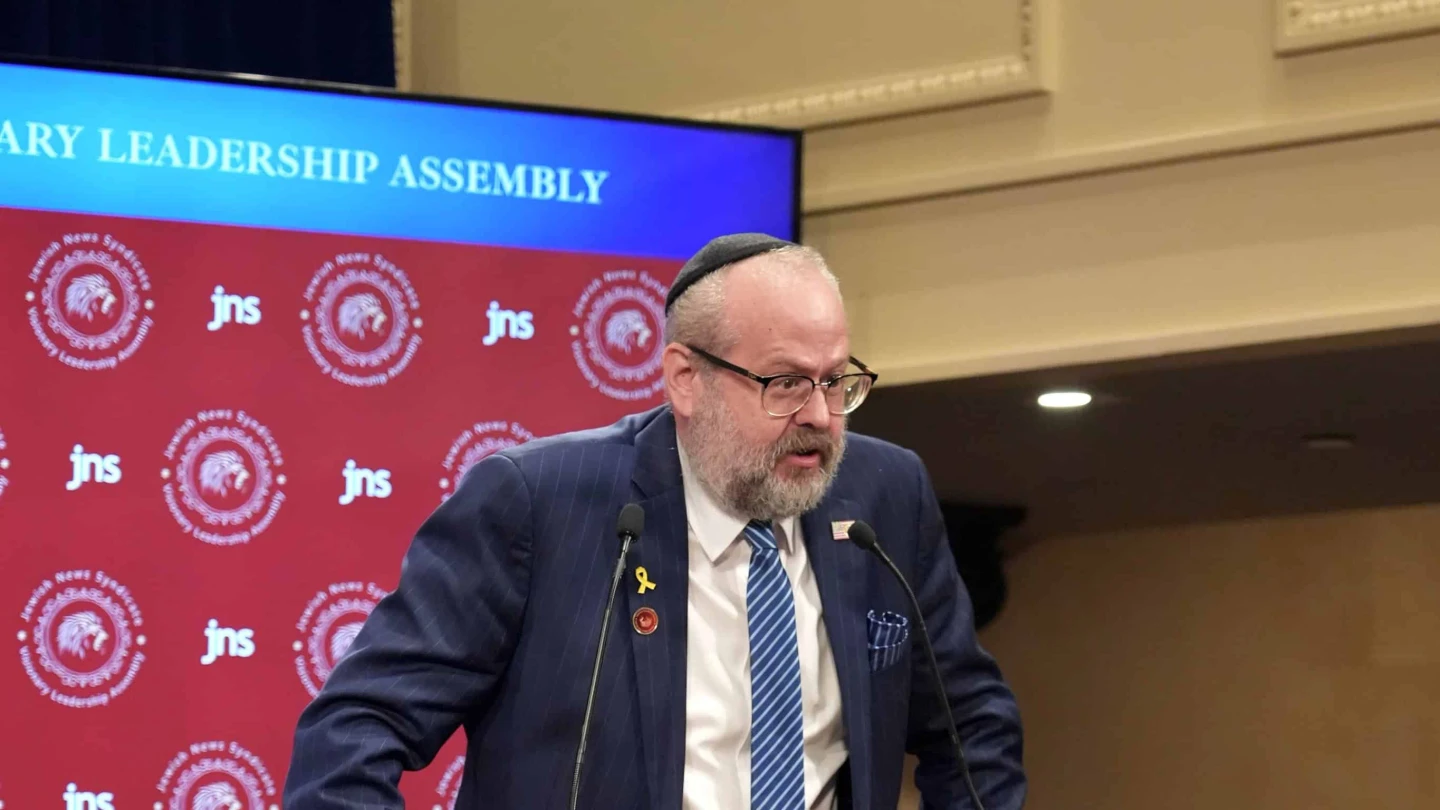
Researchers, academics, and writers gathered in Haifa on Tuesday for the opening of a three-day conference examining the impact of rising antisemitism across Europe and the United States. The event was delayed from earlier in the year due to the war, but it took place with hundreds of participants joining from more than 20 countries.
One of the most important themes presented was the power of language and how definitions can shape public discourse and influence new forms of antisemitism to emerge. It was a sobering reminder among many of the attendees, who themselves come from academia, that they need to address institutional antisemitism in educational and policy circles.
Definitions matter
One of the leading panels on the inaugural day examined the importance of definitions, exploring how legal, historical, and theological interpretations of antisemitism shape the way societies identify and respond to hatred against Jews.

Prof. Dina Porat of Tel Aviv University discussed the evolution of the International Holocaust Remembrance Alliance (IHRA) working definition of antisemitism, arguing that definitions provide a necessary framework for distinguishing between legitimate criticism of Israel and rhetoric that crosses into antisemitism.
“Even if it’s not ideal, it is today a tool that brings up awareness, that brings up the debate, that helps monitor antisemitism,” Porat said, describing the role the working definition plays in tracking and confronting contemporary antisemitism, even though it is not yet codified.
And that, she argued, is precisely what needs to change.
“What began primarily as a tool for monitoring antisemitism has evolved into a political, symbolic and legal reference point, reflecting broader positions on Israel, Holocaust memory, and having become the most widely accepted framework through which antisemitism is publicly, politically, and increasingly legally negotiated,” she concluded. “And so we can change it, and we should.”
The discussion also examined how language itself can shape perceptions of Jews and Israel. Prof. Nikolay Tabah of the University of Haifa argued that while antisemitic rhetoric has evolved across centuries and political movements, recurring patterns remain. “Historical context activates deeper symbolic and ideological tensions surrounding the Jewish collective,” he stated. “The vocabulary changes, the symbolic structure remains remarkably consistent.” Finally, he highlighted how historical accusations against Jews by Nazism, Soviet anti-Zionism, and Islamic discourse can reappear in modern political and social contexts.
Antisemitism’s global rise
Discussions came amid a backdrop of rising antisemitic sentiment and incidents worldwide. Across Europe, Jewish communities continue to face record levels of hostility. Britain recorded 3,556 antisemitic incidents in 2024, its second-highest annual total on record, while France logged 1,570 antisemitic acts, accounting for nearly two-thirds of all religiously motivated hate crimes in the country.
According to the Anti-Defamation League, 2025 was the third-highest year for antisemitic incidents since 1979 when it began tracking them. It was also the most violent on record with assault-related incidents, rising 4%, with attacks involving a deadly weapon jumping 39%. The FBI reported that anti-Jewish offenses accounted for nearly 70% of all religion-based hate crimes nationwide.
Globally, nearly half of all adults surveyed by the ADL hold significant antisemitic beliefs, a trend hardening fastest among younger generations.
The surge has been accompanied by attacks on synagogues, Jewish institutions, and university campuses, reinforcing concerns among scholars and policymakers that antisemitism remains a challenge.
‘Spiritually Israeli’
Dr. Liram Koblentz-Stenzler, head of the Extremism and Antisemitism Desk at the International Institute for Counter-Terrorism, examined how online language can gradually shift from political criticism into antisemitic targeting.
Tracking the phrase “Spiritually Israeli” across multiple platforms, she argued that it evolved among online users from an ambiguous expression into a label applied to individuals, carrying broader negative associations with Israeli and Jewish identity. “How does a word that simply describes a nationality now become a label for personality, values, and moral judgment?” she asked the crowd.
Koblentz-Stenzler described this process as “semantic drift,” where negative meanings develop gradually through repetition and normalization before becoming explicit. Her research, she argued, highlights the challenge of identifying antisemitism before it becomes openly recognizable and accepted.
“If my argument is correct, then the enduring question is not only why Jews have generated such intense reactions throughout history,” she pondered. “It is why the Jewish idea has repeatedly become a focal point through which civilizations negotiate their deepest moral, political, and historical questions.”
Recognizing the past and the resilient
The first night ended with a gala event that included a recorded message from Katharina von Schnurbein, European Commission Coordinator on combating antisemitism, to congratulate organizers and participants.
“I respect your deliberate decision to meet in Israel, even in uncertain times, as it sends a strong message of resilience and solidarity,” she said. “The remarkable resilience of Jewish communities across Europe and beyond is what should give all of us hope in the fight against antisemitism.”
A Lifetime Achievement Award was awarded to “honored, humbled, and happy” Prof. Dina Porat, chief historian of Yad Vashem and Professor Emeritus of Jewish History at Tel Aviv University, for her contributions to antisemitism research.
“Look at the long way we have come, this impressive conference,” she told the crowd, praising the work of universities and agencies that continue to conduct and publish work on antisemitism. She ended her remarks by sharing gratitude for young people in attendance who can explore new ways to share work “in this conference and the years after.”
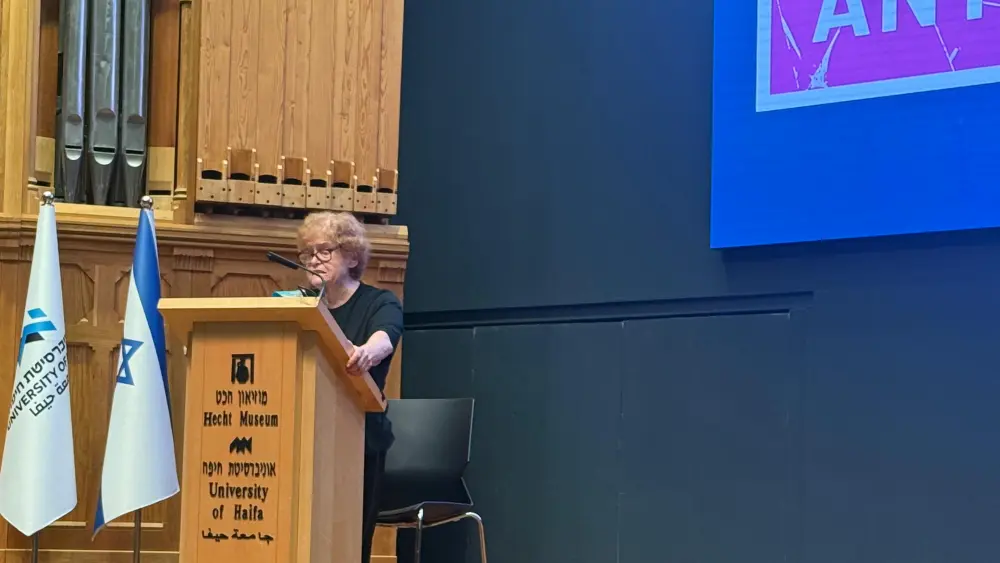
The keynote address was delivered by Deborah Lipstadt, distinguished university professor at Emory University, who served from 2022 to 2025 as the U.S. Special Envoy to Monitor and Combat Antisemitism. Best known for defeating Holocaust denier David Irving in a landmark libel case, Lipstadt argued that antisemitism today is increasingly driven by and a convergence of ideological movements “known as the Red-Green Alliance”, rather than a traditional political spectrum.
“I came to recognize that the horseshoe structure is also inadequate,” she said. “It fails to include the third, and increasingly most dominant force in the spread of Jew hatred: Islamist jihadism.”
She concluded by warning that antisemitism is ultimately “not only about Jews ... It is about Western civilization at large.”

Looking to the future
Former Soviet refusenik and human rights activist Natan Sharansky, who today serves as chairman of the Institute for the Study of Global Antisemitism and Policy (ISGAP), also reflected on the parallels between the global movement that fought for Soviet Jewry and the current struggle against antisemitism. Speaking exclusively with JNS, he argued that while today’s challenges are different, both movements rely on international solidarity and the willingness of individuals to defend Jewish identity.
“We Soviet Jews, and American Jews, and European Jews, together had the struggle,” Sharansky said, arguing that a similar sense of collective responsibility remains necessary today.
He added that young people have an important role to play, encouraging them to draw strength from their identity regardless of pressures or social rejection.
“Sometimes it means that he was cancelled in his WhatsApp group - and that’s accepted as a big tragedy? I have to remind him that the inner freedom of being part of your people is much more important than being cancelled from your WhatsApp group.”
Contemporary Antisemitism is the largest annual academic conference on modern-day antisemitism, with an estimated 550 participants and 220 in-person presenters, with many more joining virtually from abroad.