
The 19th day of “Operation Roaring Lion” has brought a literal and metaphorical darkness to the Iranian capital. As Israeli and American precision strikes dismantle the infrastructure of the Islamic Revolutionary Guard Corps, a toxic phenomenon known as “black rain” has begun to fall over Tehran.
While international bodies like the United Nations and the World Health Organization have quickly pivoted toward familiar rhetoric regarding proportionality, they are missing the deeper strategic lesson written in the soot falling from the sky. This environmental crisis is not a mere byproduct of war, but rather the final, crushing evidence of 47 years of Islamist environmental mismanagement.
The black rain is the ultimate symbol of a regime that effectively declared war on its own geography long before the first bunker-buster hit Tehran.
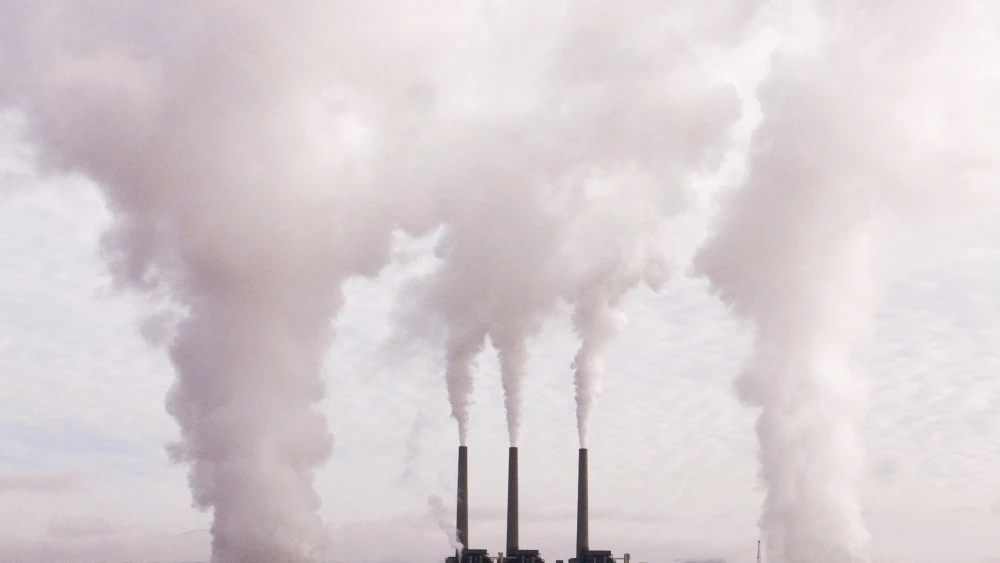
The technical cause of the phenomenon is straightforward yet devastating. Following strikes on major oil storage facilities and refineries in the Shahran and Karaj districts, massive plumes of hydrocarbon-rich smoke were released into the atmosphere. When a local weather system moved into the area, these soot particles combined with moisture to create an acidic, oil-laden downpour.
Residents of a capital already plagued by air-quality failures for years are now reporting severe respiratory distress and skin irritation as the toxic mix settles as an oily residue on the Alborz snowpacks. Yet to view this strictly through the lens of recent kinetic operations is to ignore the systemic water bankruptcy that the clerical regime has cultivated since 1979.
For decades, the Islamic Republic has treated Iran’s natural resources as a strategic asset for theocracy survival rather than a national heritage. This obsession with ideological self-sufficiency led to the aggressive damming of every major waterway to benefit IRGC-linked firms and the systematic draining of aquifers to support inefficient, state-run agricultural projects. By turning wetlands into salt flats and dust bowls, the regime left the country in a state of terminal thirst where any infrastructure disruption triggers a catastrophic collapse.
The black rain falling today is the physical manifestation of a regime that prioritized deep underground missile bunkers over the preservation of the watersheds that sustain 10 million people in the capital.
The irony of the current situation is sharpened by the recent diplomatic fallout at the United Nations. While Amir Saeid Iravani, the Iranian ambassador to the world body, decries the destruction of civilian sites, his narrative is directly contradicted by the passage of U.N. Security Council Resolution 2817. Adopted on March 11 with a decisive 13-0 vote, the resolution formally condemned Iran’s egregious attacks against its regional neighbors, specifically targeting residential areas in the Gulf states and Jordan.
By invoking Article 51 of the U.N. Charter, the council affirmed the inherent right of self-defense against Tehran’s aggression, effectively documenting that the regime weaponized its geography against its neighbors before complaining about the fallout at home. The strikes on oil depots have released toxic sulfur oxides, but the true toxicity lies in a system that embeds its military nodes within civilian energy sectors to ensure environmental collateral damage.
This moment represents the end stage of an ideology that views the environment as a secondary concern to the projection of terror. As the WHO issues urgent warnings for residents to stay indoors to avoid the poisonous air, the Iranian public is reminded that their rulers are the primary threat to their survival. Victory in this conflict will not just be measured by the destruction of missile silos, but by the eventual dismantling of a governance model that has left a great civilization choking on its own fuel and parched for its own water.
The black rain is not an external creation. It is the final harvest of a regime that sowed the wind of environmental neglect and is now reaping the whirlwind of ecological collapse.