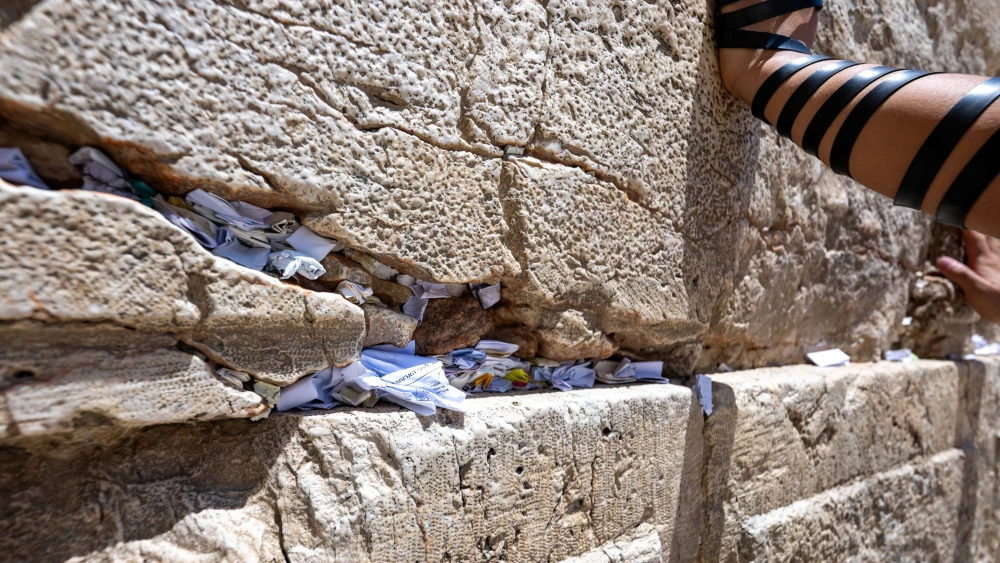

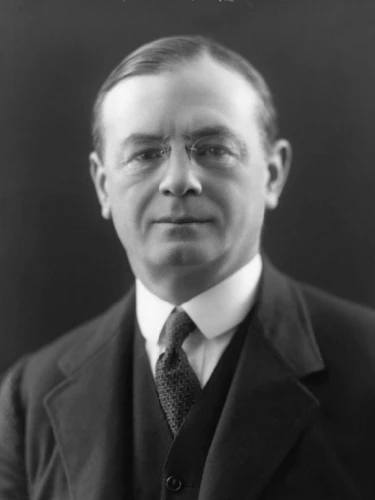
Two weeks after the 1967 victory in the Six-Day War, Israeli Minister of Defense Moshe Dayan changed the status quo that had officially been in place at the Western Wall courtyard in Jerusalem. It had been set by British Mandatory authorities as part of the November 1928 White Paper, authored by Leopold Amery, Secretary of State for the Colonies.
Interestingly, Amery was the son of Charles Frederick Amery of England and Elisabeth Johanna Saphir, who was born to the Leitner family of Hungarian Jewish descent. She had left England for British-controlled India, where her parents had settled and converted to Protestantism, and where Leopold was born. (Elisabeth later left India and returned to England, divorcing her husband.)
That status quo established a Jewish “right of access to the pavement in front of the wall for the purposes of their devotion.” However, no further advantages would be afforded them.
The government apparently could not “compel the Muslim owners of the pavement to accord any further privileges or rights to the Jewish community.”
The basis for their conclusions: “to the Muslims belong the sole ownership of, and the sole proprietary right to, the Western Wall.” The Temple Mount precincts, the British decided, as well as the Wall and its alleyway, formed an integral part of the Haram-esh-Sharif area and were deemed “Waqf property.”
Therefore, only those objects that were allowed to be taken to the Wall under the Turkish regime would be permitted. Those did not include benches, stools or prayer partitions that separated men and women (mechitza). In December 1930, an International Commission confirmed those prohibitions, adding, among other things, a ban on blowing the shofar at the wall.
At the Temple Mount, no Jewish prayer had been allowed at all since the time Maimonides entered the site in 1165. In fact, from the late 13th century until the middle of the 19th century, no non-Muslim had been permitted to enter the Haram al-Sharif compound, under pain of death.
Those who did, as in 1391 when four Franciscan friars entered and attempted to preach their faith, were martyred in a most horrible fashion.
The change in the status quo in 1967 also affected arrangements at the Temple Mount. Jews could now enter, but as tourists. The government, and later, the High Court, recognized the Temple Mount as a Jewish holy site. The Cave of the Patriarchs (Machpelah) in Hebron was also opened to Jewish visitors who, until 1967, similarly had been prevented from entering the edifice.
At the Western Wall Plaza, the status quo began to move. The start was a 1994 Israeli Supreme Court judgment addressing a petition of the Women of the Wall. Menachem Elon viewed as reasonable an Israeli Ministry of Religious Affairs regulation prohibiting prayer that is not according to the local custom. Moreover, it expresses the principle of maintaining the status quo, he wrote.
Fellow justice Shlomo Levin disagreed. His opinion was that “the nature of a custom changes according to the changes of time.” Paramount to him was that “a pluralistic and tolerant approach must be expressed to the opinions and customs of others.”
After several Women of the Wall were arrested in April 2013 for wearing tallises (considered a disruption of the public order), District Court Judge Moshe Sobel reinterpreted the High Court’s 1994 decision. He decided to remove any legal provision forbidding Women of the Wall from wearing prayer shawls and praying in their own fashion. They would not be charged.
Sobel preferred that the Western Wall custom be pluralistic. A new, post-1967 status quo had been created. The court identified with egalitarian feminist thinking and removed the “status quo” from being defined by an Orthodox religious framework.
The other status quo in place at the Temple Mount in Jerusalem has been administratively altered. Although the High Court had long recognized a principled lawful right of worship by Jews there, they permitted that the police could prevent it. Their reason was that the location is “extremely sensitive” and that public order would probably be disturbed by Muslims.
Why that same thinking does not apply to the Western Wall—where Reform and Conservative prayer seems to cause verbal, and at times, physical violence—remains unexplained.
However, these last several years, a specially approved path circumvents the Temple Mount’s sacred sections for Jews. Brief prostrations are allowed, and short prayers in a quorum are permitted, at its eastern section.
This situation has upset groups like the Israeli NGO Ir Amim (Hebrew for “City of Nations”). It sees these developments as “violations” of the status quo. As The Jerusalem Post informed on Feb. 15, policies including “expanding Jewish prayers in the compound [and] granting permission to bring prayer sheets for Jews” are “changes to the status quo” and need be condemned.
In addition, Ir Amim criticized a “time-sharing” policy of worshipping at separate hours as something that “could lead to widespread harm.” The group wishes that the ban on Jewish prayer be reinstated “in accordance with the status quo.” Supporters of the Women of the Wall also decline to express support for a new status quo there.
Readers can be forgiven for being perplexed, even confounded, by this course of events.
One new status quo at the Wall is praised by liberals and progressives, even in the face of ultra-Orthodox violence, verbal or otherwise, while another developing at the Temple Mount is faulted and censured. They both essentially fulfill the same aspiration of freedom of worship. And yet, they both come with threats of violence amid changes they do or do not champion from opposite religious-oriented viewpoints.
Would that be a new form of the Jerusalem Derangement Syndrome?