Newsletter
Newsletter Support JNS

Russia warns Israel not to arm Ukraine

“Any attempts—implemented or even unrealized but announced—for the supply of additional, new or some other weapons will lead to an escalation of this crisis,” said Russian Foreign Ministry spokesperson Maria Zakharova.

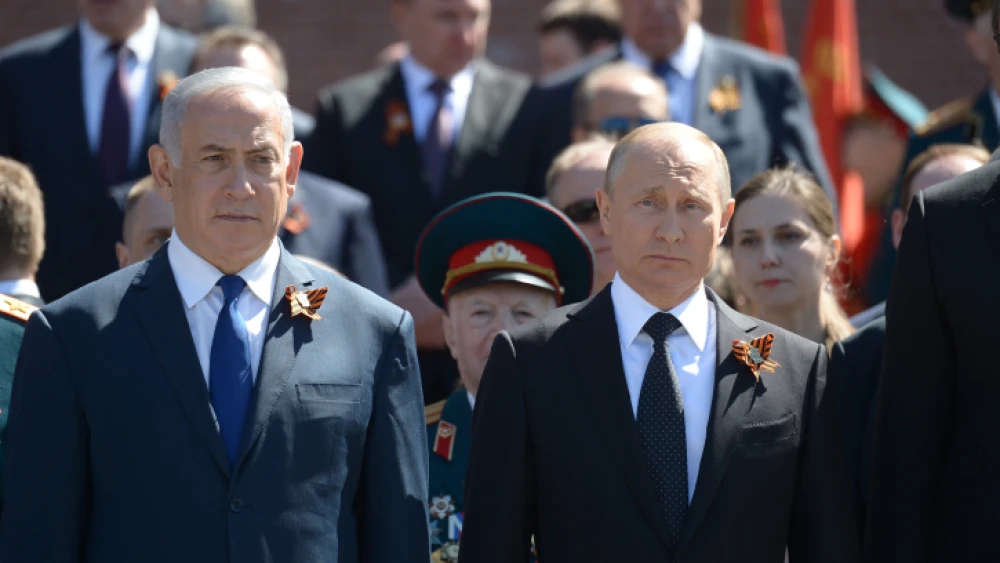
Israeli Prime Minister Benjamin Netanyahu and Russian President Vladimir Putin during a wreath-laying ceremony at the Tomb of the Unknown Soldier in Moscow on May 9, 2018. Photo by Amos Ben Gershom/GPO.

Russia on Wednesday warned Israel against arming Ukraine, after Israeli Prime Minister Benjamin Netanyahu indicated he was considering providing military assistance to Kyiv and was willing to mediate.

“We say that all countries that supply weapons [to Ukraine] should understand that we will consider these [weapons] to be legitimate targets for Russia’s armed forces,” said Russian Foreign Ministry spokesperson Maria Zakharova, reported AFP.

“Any attempts—implemented or even unrealized but announced—for the supply of additional, new or some other weapons will lead to an escalation of this crisis. And everyone should be aware of this,” Zakharova said.

Washington has been cautious about which arms it provides Kyiv and from where the weaponry arrives. But speaking in Israel Tuesday, U.S. Secretary of State Antony Blinken told Israeli counterparts that they should be doing more to support Ukraine from a security perspective.

Alongside Israeli Prime Minister Benjamin Netanyahu, Blinken stated as a matter of fact that “Russia’s ongoing atrocities” underscore the importance of “providing support for all of Ukraine’s needs—humanitarian, economic and security.” He implied that this support was an international responsibility.

Israel has yet to provide weapons directly to Ukraine. Doing so could risk undermining Israeli security, some commentators have argued.
In a draft report delivered to the U.S. president, the commission also called for improved religious accommodations for U.S. service members.
Salah Salem Sarsour, accused of concealing Israeli military court convictions on immigration forms, argued his detention was part of a Trump admin effort to target the pro-Palestinian movement.
CENTCOM stated that the strikes targeted missile, drone and radar facilities after the Islamic Republic attacked a cargo ship in the Strait of Hormuz, calling the assault a violation of the ceasefire.
Now that the primaries are over, “we hope that everyone will come together and be united,” Christine Quinn, chair of the executive committee of the New York State Democratic Party, told JNS.
An Iranian official warned on Friday that the safety of ships passing through the Strait of Hormuz without Iran’s permission “cannot be guaranteed.”
“We have put the train back on the tracks and going in the right direction,” said Yechiel Leiter, Israeli ambassador in Washington. “Final destination? Peace between our two countries.”
Benny Gantz, JNS editor-in-chief Jonathan S. Tobin, Gilad Erdan, Mosab Hassan Yousef, Nissim Black and leading voices in security, diplomacy, media, law and Jewish communal affairs headline the summit’s third day in Jerusalem.