Saudi Arabia

Oct. 7 toppled two peace agreements that were almost ready for signing.
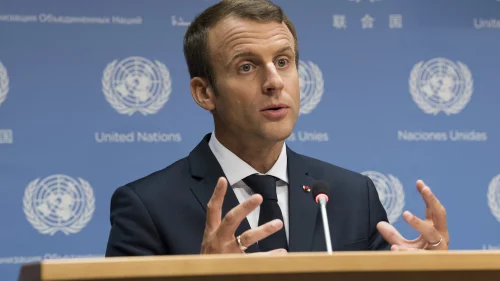
The French president said the forum, planned for June, would push for a two-state solution.
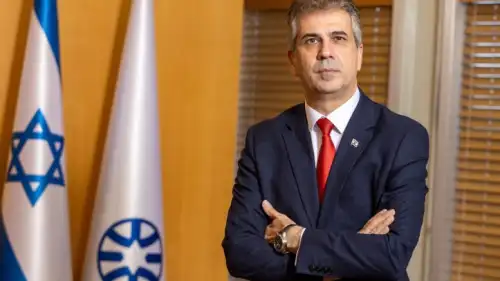
“Between the Jordan River and the Sea, there will only be one state,” Energy and Infrastructure Minister Eli Cohen says.

The next test will be Lebanon’s presidential election, which Hezbollah can no longer prevent.

U.S. Special Coordinator for the Middle East Brett McGurk was heading to Saudi Arabia on Tuesday to discuss using an Israel-Hezbollah truce as a “catalyst” to end hostilities with Hamas.

“Friendships are forever in this region,” an Israeli source who dealt with the first Trump administration said.

A nuclear-armed ayatollah is an “nightmare for the world,” the U.S. senator said.

Fresh attempts by the United States and Saudi Arabia to reach a defense pact are part of a wider effort to reshape regional and global dynamics, and to degrade Iran’s influence, according to observers in Israel.
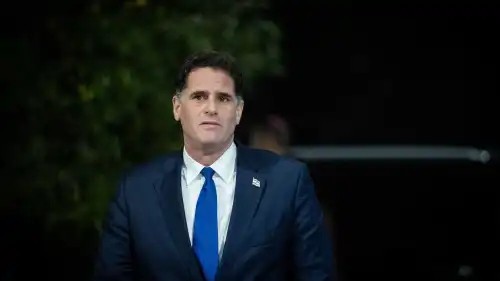
Israel’s strategic affairs minister discussed with the U.S. president-elect Jerusalem’s plans in Lebanon and Gaza, Iran and Israeli-Saudi normalization.

Saudi Arabia’s de facto ruler called on the international community to “immediately halt the Israeli actions against our brothers in Palestine and Lebanon.”

U.S.-Saudi deals on trade and technology are “not tied to any third parties,” Foreign Minister Prince Faisal bin Farhan Al Saud says.

Egypt and Qatar have rejected the American plan to push Hezbollah out of power as “unrealistic and even dangerous.” However, the Saudis support it.