


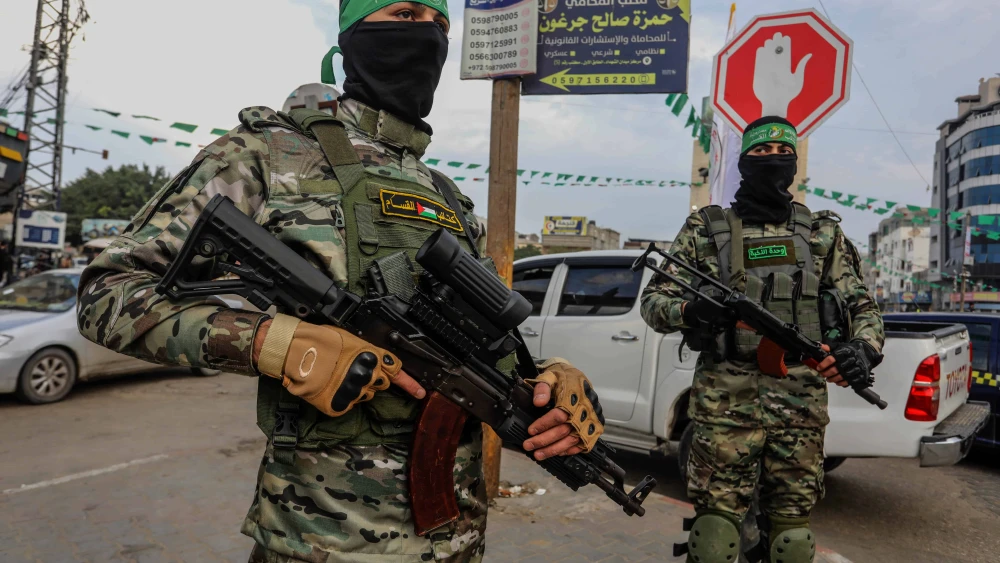
The majority of Arab residents of Judea and Samaria believe that the Hamas terrorist group will emerge from the war with Israel strengthened.
To the question, “Do you estimate that the war will end with a rise or fall in the popularity of Hamas among Palestinians?” 55% said the terror group’s popularity would rise. Only 13.1% thought Hamas’s popularity would decline and 27.3% said its popularity wouldn’t change.
The Jerusalem Media & Communication Centre, an Arab NGO in Jerusalem, conducted the survey almost eight months after Hamas’s Oct. 7 attack.
Nearly 40% of respondents said the attack served “national Palestinian interests” while 30.2% thought it would hurt those interests. Another 23.5% said it didn’t hurt or help.
More than 41% of those surveyed said that the war would end in Hamas’s favor. Only 6.3% said it would end to Israel’s advantage.
In response to the question: “Which Palestinian leader do you trust the most,” 7.1% named Marwan Barghouti, serving five life sentences in Israeli prison for murder and ordering suicide bombings during the Second Intifada.
Hamas leader Yahya Sinwar received 2.7% support, 2.5% chose Palestinian Authority President Mahmoud Abbas and 3.6% said they prefer Hamas spokesman Abu Obaida. Sixty-five percent answered that they don’t trust any of the leaders.
The survey, conducted between May 22-25, involved 715 Palestinians ages 18 and older from Judea and Samaria, including residents of the heavily Arab eastern parts of Jerusalem.


