


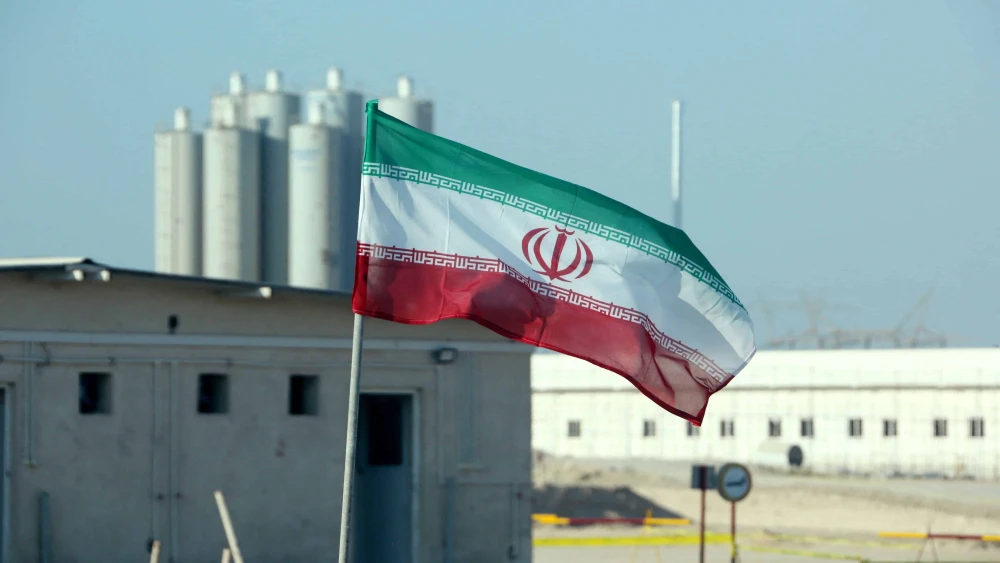
Iran will participate in another round of talks on its nuclear program with Britain, France and Germany in Geneva on Jan. 13, the Islamic Republic’s semi-official ISNA news agency reported on Wednesday.
The last meeting with the three European nations took place in November.
London, Paris and Berlin last month called on Tehran to “reverse its nuclear escalation,” saying that there is no “credible civilian justification” for the amount of highly enriched uranium it is stockpiling.
According to the International Atomic Energy Agency (IAEA), Iran has become the only non-nuclear state to have uranium enriched to 60%, a short technical step from the military-grade level.
Tehran’s Foreign Minister Abbas Araqchi told reporters in Beijing on Saturday that “2025 will be an important year regarding Iran’s nuclear issue.”
In comments broadcast on Iranian state television, Araqchi said he had discussed the matter with his Chinese counterpart Wang Yi. The statements may have been an acknowledgment of U.S. President-elect Donald Trump’s vow to apply “maximum pressure” on the Islamic Republic; however, the foreign minister neither mentioned Trump nor elaborated on why 2025 might be pivotal.
Earlier this month, The Wall Street Journal reported that Trump’s transition team is weighing two main options to prevent Iran from obtaining nuclear weapons, including airstrikes.
In 2018, the U.S. under Trump withdrew from the 2015 nuclear agreement brokered by his predecessor, Barack Obama. According to that deal, Iran committed to scale back uranium enrichment—an activity that can produce materials for nuclear weapons—in exchange for relief from U.S. and U.N. economic sanctions.
Trump snapped the sanctions back, in an effort to persuade Tehran to drop its nuclear program and abandon its sponsorship of terrorism.
On Saturday, the Iranian rial hit a record low against the U.S. currency, plummeting to 820,500 per dollar on the unofficial market, reflecting uncertainty ahead of Trump’s inauguration on Jan. 20. The rial has depreciated by about 18% since Trump’s election in November.



