
The Iranian regime is killing its own people—and then lying about it with familiar, practiced cruelty.
As protests shake the Islamic Republic, the ayatollahs are deploying the same propaganda machinery perfected by Hamas after Oct. 7, 2023: deny the crime, invert victim and perpetrator, and flood the world with fabrications meant to paralyze moral clarity and delay action.
With electricity and internet access cut off across Iran, only one international media outlet continues to operate freely in Tehran: Al Jazeera. The result is not journalism but amplification of the regime’s narrative, its excuses and its grotesque rewriting of reality.
As in Gaza, the purpose is not to inform but to confuse, to relativize mass violence and blunt international response.
Iran’s Foreign Minister Abbas Araghchi did not deny the scale of the bloodshed. In a post on X, Araghchi accused Israel of fueling the unrest to pave the way for an American attack on Iran.
“Israel has always sought to drag the U.S. into fighting wars on its behalf,” he wrote. “But remarkably, this time they are saying the quiet part out loud. With blood on our streets, Israel is explicitly gloating about having ‘armed protesters with live weapons’ and ‘this is the reason for the hundreds of dead.’”
He conceded that as many as 12,000 people have been killed—but claims they were victims of “infiltrators,” supposedly American and Israeli terrorists who fired on security forces, burned buildings and beheaded officials.
“We had to respond,” he said. This is the old formula, recycled yet again: the regime massacres civilians and then declares itself the victim.
But the images tell a different story. Rows of young people piled one atop another. Bodies are sealed in black bags as families wander in despair.
Thousands of wounded flooding hospitals—eyes gouged out, bullet wounds to the face and head, mutilations that speak of punishment, not crowd control. These are not the marks of a state defending order. They are the signatures of terror used to preserve power.
The lies are not only meant for domestic consumption. They are aimed squarely at Washington—at U.S. President Donald Trump, who warned the regime against killing demonstrators and spoke of aid for the Iranian people. By claiming restraint, by promising to halt executions, Tehran hopes to buy time, to fracture resolve, to convince the world that the crisis is “cooling down.”
It is not.
Even if the streets appear quieter after mass slaughter, the reality has not changed. Iran remains an inexhaustible source of global instability: a nuclear aspirant, a ballistic-missile power, a strategic ally of China and Russia, and the central sponsor of regional terror. In recent months alone, it has rebuilt and expanded its missile capabilities. A regime that massacres its youth will not restrain itself abroad.
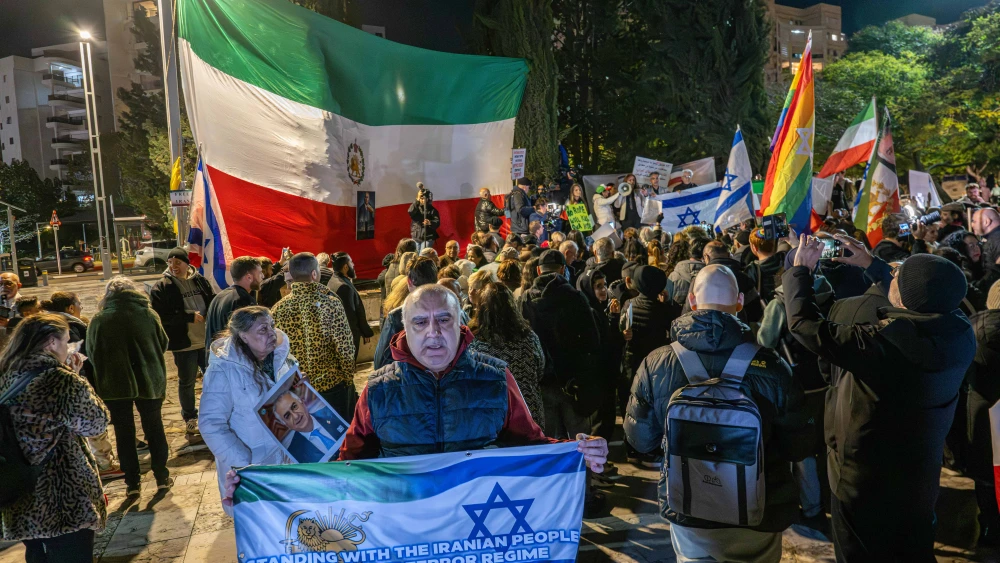
Israel understands what is at stake. Shelters remain open. The Iranian people themselves have appealed to both Washington and Jerusalem for help. They know this is a decisive moment.
While families bury their dead, Iran’s Supreme Leader Ali Khamenei is reportedly transferring fortunes abroad—preparing an escape even as his people demand that he finally go.
The question is not whether the ayatollahs are lying. They are. The question is whether the world will once again allow lies to replace action—until it is too late.