


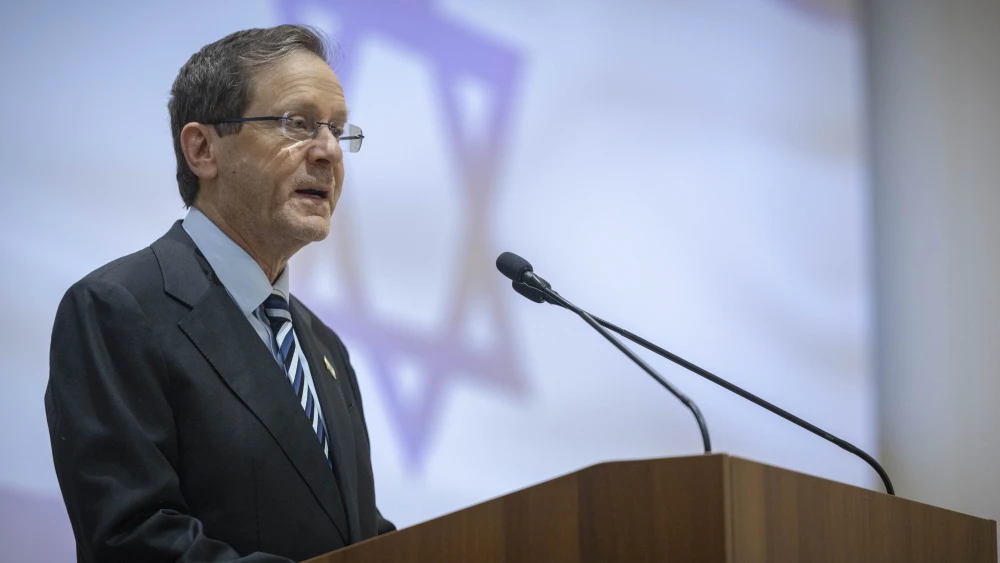
Israeli President Isaac Herzog will receive the official results of the elections for the 26th Knesset from the Central Elections Committee chairman Justice Noam Sohlberg at 12 p.m. on Wednesday, in accordance with procedure and Israeli law.
The event will be broadcast live as both will deliver statements to the media, the President’s Office said.
Herzog is slated to begin the round of consultations with all elected political parties at 5 p.m. on Wednesday. The first faction scheduled to meet with the president is Finance Minister Bezalel Smotrich’s Religious Zionist Party.
The other meetings in order will be ultra-Orthodox Shas faction at 6:15 p.m., Avigdor Liberman’s Yisrael Beiteinu party at 7:30 p.m. and the Zehut party, led by former lawmaker Moshe Feiglin, at 8:45 p.m., according to the president.
Faction leaders who wish to make an official statement to the media will be able to do so following their meeting with the president.
Who will form the government?
According to Israel’s legal procedures, the president meets with representatives of each faction and hears its recommendations for a candidate to forge the next government coalition. Following the consultations, he assigns the task to a member of Knesset.
Unlike in the past, Herzog has decided to start with smaller parties first. The decision is intended to allow for a broader examination of coalition options and encourage fresh thinking before meetings with the larger factions, the President’s Office said.
Herzog aims to hear each faction’s position and explore possible alternatives and agreements that could facilitate the formation of a government. At this point, it is important to exhaust all options, broaden dialogue and examine every possible path forward, his office said. Herzog has also left open the possibility of an additional round of consultations.
The designated candidate will have 28 days to form a government, and Herzog may grant an extension of up to 14 additional days.
If the first candidate fails, the president can assign another candidate 28 days to try.
If that attempt also fails, at least 61 members of Knesset have 21 days to request an alternative candidate, who then gets 14 days to form a government.
Likud emerged from the Oct. 27 election as the largest party with 27 seats, followed by Yashar with 21 and B’Yachad with 12. The Joint List won 11 seats, The Democrats and Ra’am eight each, Yisrael Beiteinu, United Torah Judaism and Otzma Yehudit seven each, and Shas and the Religious Zionist Party six each.
The two Arab parties, Joint List alliance and Ra’am, together won 19 seats, leaving neither of the Zionist blocs with a majority and setting the stage for tough coalition negotiations.


