“Iran is looking for freedom, perhaps like never before. The USA stands ready to help!” President Donald Trump said on Saturday.
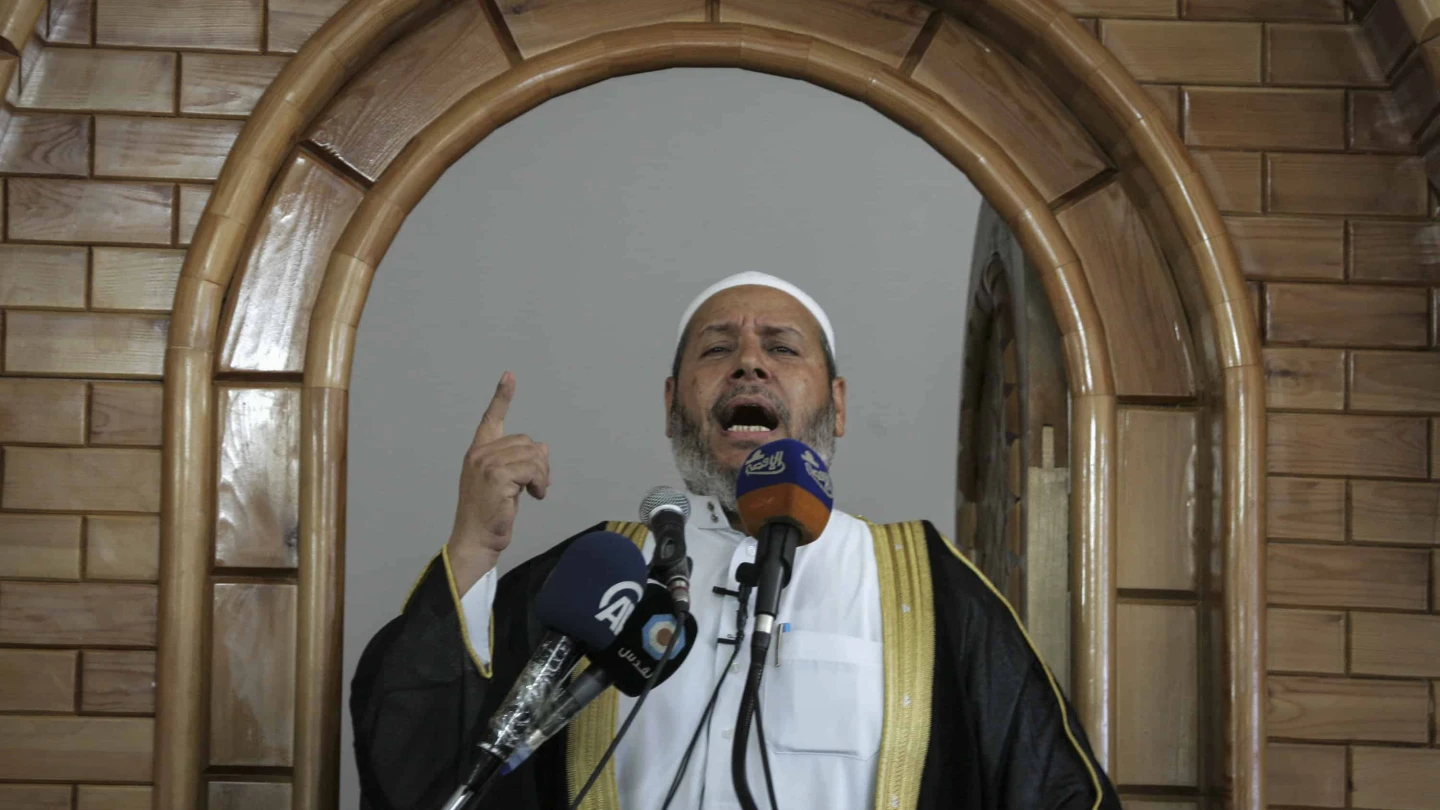
His message on Truth Social came after defiant comments made the previous day by Iran’s dictator Ayatollah Ali Khamenei, who, in a speech aired on state TV, called those participating in anti-regime protests sweeping his country “vandals” and “saboteurs.”
The supreme leader reiterated his charges against the United States for supporting the protesters, asserting that “a bunch of vandals [last night in Tehran] came and destroyed a building that belongs to them to please the U.S. president,” AFP cited him as saying.
“Everyone knows the Islamic republic came to power with the blood of hundreds of thousands of honorable people, it will not back down in the face of saboteurs,” he added.
The 86-year-old said that U.S. President Donald Trump would be “overthrown” like the Pahlavi dynasty that ruled Iran up to the 1979 Islamic Revolution.
Trump, speaking to reporters later on Friday, said that “Iran is in big trouble. … It looks to me that the people are taking over certain cities that nobody thought were really possible just a few weeks ago,” AFP reported.
The American leader issued another warning to the Islamic regime, saying that if it started gunning down demonstrators, “We will get involved. We’ll be hitting them very hard where it hurts.”
Iranian authorities have imposed a total internet blackout since Thursday night, with internet monitor Netblocks saying the following morning that the country has “now been offline for 12 hours ... in an attempt to suppress sweeping protests,” the report continued.
Footage posted on social media on Friday night showed a mosque being burned down in Tehran.
BREAKING: Iranian protesters set fire to the Al-Rasool Mosque in Tehran.
— Dr. Maalouf (@realMaalouf) January 9, 2026
Iranians are completely done with the Islamic regime.
pic.twitter.com/VX5ZHrvK2O
Although most international media is barred from reporting in Iran, coupled with the internet blackout, some Iranians still manage to contact sources abroad via Starlink satellite internet.
A doctor from Iran spoke with the BBC, saying that Tehran’s main eye specialist center, Faradi Hospital, is being overwhelmed with wounded patients.
Another hospital in Tehran was inundated with patients injured from gunshot wounds, a health worker told the British public broadcaster.
A medic in the city of Shiraz was cited as saying that his or her hospital did not have enough surgeons to cope with the influx of injured patients, most of which sustained shots to the head and eyes.
A physician in Tehran told Time magazine on Friday that at least 217 protesters have been killed, according to information that has been gathered from only six hospitals. The deaths were caused mostly “by live ammunition,” the doctor added.
Protests and rallies have intensified in numbers since they erupted in the nation of more than 90 million people on Dec. 28. Protests have spread to all 31 provinces, with chants of “Freedom” and “Death to the dictator” heard among the masses of demonstrators, according to Time.
An Islamic Revolutionary Guard official warned parents on Friday via state TV to keep their children away from protests, saying, “If ... a bullet hits you, don’t complain,” the report continued.
Tehran’s prosecutor announced that protesters could face the death penalty.
Afshon Ostovar, a professor of international security at the Naval Postgraduate School in Monterey, Calif., told Time that although the regime’s power is still “very solid …, it’s weaker than it’s ever been on just about every front.”
On Saturday morning, U.S. Secretary of State Marco Rubio tweeted a message of solidarity with Iranians.
The United States supports the brave people of Iran
— Marco Rubio (@marcorubio) January 10, 2026
The Iranian army, which is separate from the Islamic Revolutionary Guard Corps, on Saturday released its first statement since the eruption of the unrest, saying that it would act under the command of Khamenei, according to Reuters.
It stated that it is monitoring “enemy movements in the region,” apparently referencing Israel, as well as defending “national interests, critical infrastructure and public property.”
Meanwhile, Iran’s exiled Crown Prince Reza Pahlavi, who lives in the U.S., issued on Saturday a second call for protests, urging Iranians to press on and reclaim city centers.
“I ask all of you today and tomorrow, Saturday and Sunday [Jan. 10 and 11], this time, from 6 p.m., to come to the streets with flags, images and national symbols and claim public spaces as your own. Our goal is no longer merely to come to the streets; the goal is to prepare for seizing the centers of cities and holding them.”
هممیهنان عزیزم،
— Reza Pahlavi (@PahlaviReza) January 10, 2026
شما با شجاعت و ایستادگی خود، تحسین جهانیان را برانگیختهاید. حضور دگرباره و پرشکوهتان در خیابانهای سراسر ایران در شامگاه جمعه، پاسخی دندانشکن به تهدیدهای رهبر خائن و جنایتکار جمهوری اسلامی بود. یقین دارم که او این تصاویر را از مخفیگاهش دیده و از وحشت لرزیده… pic.twitter.com/MaQDiwkXRL