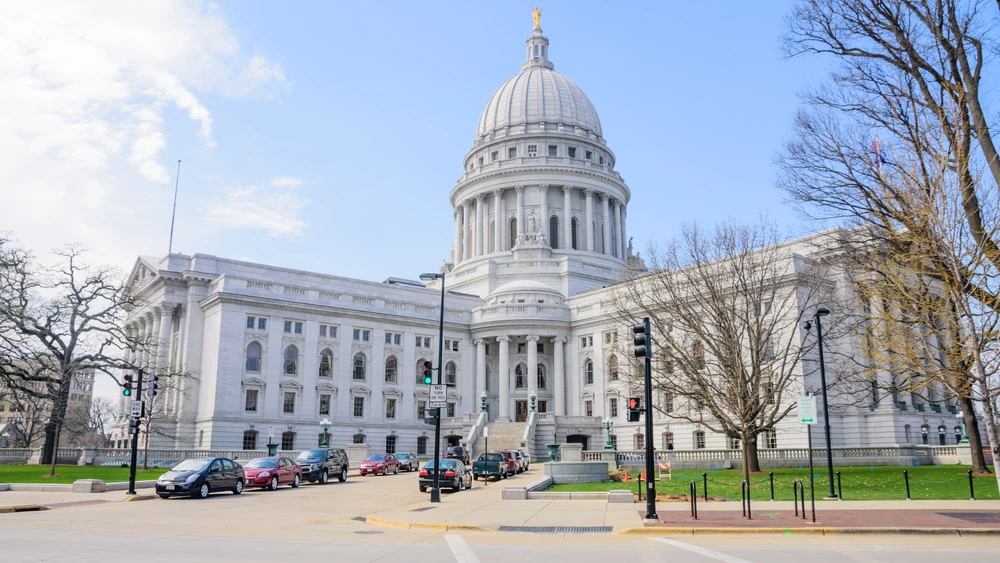
The Wisconsin State Senate approved legislation on March 17 requiring state and local agencies to consider the International Holocaust Remembrance Alliance working definition of antisemitism when evaluating discriminatory intent.
The bill, AB 446, directs government entities and officials to use the IHRA definition when assessing whether bias played a role in cases involving discrimination based on race, religion, color or national origin, as well as in applying hate-crime penalty enhancers.
The measure explicitly states that agencies cannot infringe on First Amendment rights or conflict with existing anti-discrimination laws.
David Soffer, director of state engagement for the Combat Antisemitism Movement, said this “will make a difference in combating antisemitism.”
“The bill will help identify what is, and importantly, what is not considered antisemitism, and help provide a guide to state institutions to understand best what actions should be treated as antisemitic-driven activity,” he said.
The measure has drawn some opposition from civil-liberties groups, including the ACLU of Wisconsin. It argued that the legislation could blur the line between protected political speech and unlawful discrimination, particularly regarding criticism of Israel and its government.
With Senate approval secured, AB 446 now heads to the governor, where it is expected to be signed into law, marking Wisconsin’s entry into a growing number of states that have adopted the IHRA definition.