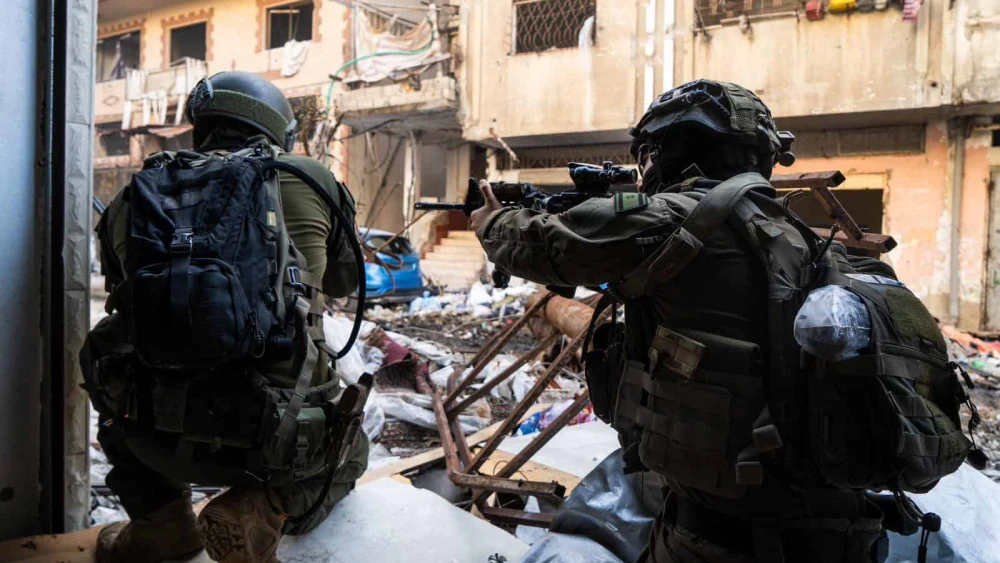

Before the Iran war, the military reality in Gaza was governed by the October 2025 ceasefire. Under this framework, the Israel Defense Forces pulled back to the “Yellow Line” demarcation, maintaining rigid control over approximately 53% of the Gaza Strip. Rather than engaging in broad offensives, the IDF adopted a strategy of strict perimeter defense, using buffer zones to neutralize the enclave. Since October, this status quo has been overseen by the Board of Peace (BoP), an international body headed by the United States. The Board’s primary mandate has focused on maintaining the ceasefire while coordinating the secure delivery of humanitarian aid. Looking toward the next stages of the framework, the Board was tasked with overseeing the demilitarization of Hamas and the extensive rebuilding of civilian infrastructure throughout the strip.
Domestic implications
However, the eruption of the Iran war on Feb. 28 has forced a shift in the status quo. As Israel diverted its primary air force, infantry and intelligence units toward the Iranian and Lebanese theaters, it compensated for its reduced footprint in Gaza by initiating a palpable spike in offensive operations. Moving beyond the standard enforcement of the yellow line supplemented by occasional punitive airstrikes in response to Hamas ceasefire violations, the IDF has carried out a series of isolated targeted attacks throughout the strip since the beginning of “Operation Roaring Lion.”
In mid-March, the IDF executed a targeted drone strike against Muhammad Abu Shaleh, the military intelligence commander of Hamas’s Khan Younis Brigade. An official IDF statement confirmed the assassination, noting that Shaleh had “operated in violation of the ceasefire agreement to rehabilitate the organization’s capabilities in the Gaza Strip and planned to carry out terror attacks against IDF troops and the State of Israel.” On March 15, the IDF launched a strike against a police vehicle in Salah al-Din, killing nine police officers, including Col. Iyad Abu Yousif, the director of the Intervention Police in central Gaza. Earlier that same morning, the IAF struck an apartment belonging to the Ayyash family, a clan with known affiliations to Hamas, in the southwest of the Nuseirat Refugee Camp. Two days later, on March 17, an Israeli warplane targeted a moving vehicle in western Khan Younis, killing three individuals. To supplement the recent operations of the IAF in Gaza, the Israeli security establishment has increased collaboration with local anti-Hamas militias. The most prominent of these Israeli-backed factions is the “Popular Forces” (PF), a militia operating primarily in the southern Rafah district under Israeli military oversight. Operating with official Israeli sanction, the PF have been equipped with seized Hamas weaponry, including AK-47 assault rifles and PKM machine guns, and have assumed partial responsibility of securing the Rafah border crossing. Throughout February and March 2026, coinciding with the outbreak of the broader regional war, the PF ramped up intense firefights against Hamas operatives and dismantled subterranean tunnel complexes in the Rafah area.
A parallel dynamic has unfolded in Khan Younis, where a separate militia known as the “Strike Force Against Terror” (CTSF) commands approximately 100 fighters under the leadership of Hussam al-Astal. Since the initiation of “Operation Roaring Lion,” the CTSF has launched a series of deep raids into Hamas-controlled zones. Despite the offensive posture, remnants of the Hamas leadership have aggressively moved to exploit the split focus of the IDF to reassert administrative and security dominance. Since the outbreak of the Iran war, Hamas forces have significantly ramped up operations to secure control of the civilian population and to destroy rivals. The primary mechanism for this internal repression is Unit 103 of the Hamas Ministry of Internal Affairs, known as the “Sahm” (Arrow) Unit. Originally established in March 2024 to “combat looting and secure humanitarian aid,” the unit, consisting of plainclothes operatives, has been repurposed into an internal security force. Following the outbreak of the war in late February, Hamas deployed Sahm operatives to violently enforce stringent new taxation protocols on commercial goods, aid and dual-use items entering the enclave. According to the Meir Amit Intelligence and Terrorism Information Center, this economic extortion is designed to offset the broader financial starvation the group is experiencing and has led to a massive surge in the price of basic home goods. Civilians who resist these extraction methods or attempt to bypass Hamas-sanctioned distribution channels have faced severe retaliation. The U.S. State Department recently verified footage documenting “masked Sahm operatives physically tearing down the tents and stalls of displaced Gazans in Khan Younis who refused to pay taxes, illustrating a brutal campaign to suppress internal dissent.”
Despite the increased taxation, the Iran war has tightened the economic screws on Hamas. The core architecture of the group’s financial solvency relied heavily on smuggling networks managed and directed by Iran’s Islamic Revolutionary Guard Corps (IRGC). Kobi Michael, a senior researcher at the Institute for National Security Studies (INSS) and at the Misgav Institute noted that despite Israeli control over Gaza’s borders, Iran was still giving significant aid to Hamas. “Even recently, the Iranians were trying to smuggle weapons and money to the Gaza Strip, the West Bank and to Hamas abroad,” he told JNS. “Hamas understands that if this regime collapses or is weakened to the degree that it will not be able to continue supporting Hamas, they are in big trouble,” he added. The assault on Iran was explicitly designed to target this infrastructure, with multiple IRGC commanders responsible for collaboration with Palestinian terror groups being neutralized in the early days of the campaign. Outlining the strategic intent behind destroying these networks, U.S. President Donald Trump explained in a briefing in early March that the military campaign ensures “that the Iranian regime cannot continue to arm, fund, and direct terrorist armies outside of their borders”.
Compounding the loss of Iranian logistical support is the severe restriction of Gaza’s external land borders. On March 1, the Israeli government announced the closure of the Rafah border crossing to Egypt, citing the regional security escalations triggered by the strikes on Iran. This border closure caused an immediate suspension in commercial transit, until its partial reopening on Thursday March, 19. For Hamas, the strategic consequence was a total cessation of the taxation revenue it previously generated from skimming commercial goods and humanitarian aid convoys. Deprived of both external Iranian capital inflows and internal cross-border taxation revenues, the organization’s financial architecture has been deeply undermined by the outbreak of the Iran war.
International implications
Beyond the internal impact, the Iran war is likely to have a profound long-term effect on the future of Gaza. The war has had a deep financial impact on the Gulf Cooperation Council (GCC) states, potentially dealing a fatal blow to Gaza’s long-term reconstruction prospects. Since the start of the war, Iran has systematically struck critical energy and civilian infrastructure across all six GCC states. Since the start of the war, the GCC has seen a nearly 50% cut in its projected GDP growth rate for 2026. Several major energy exporters in the Gulf have been so damaged that they were forced to declare force majeure and renege on their global shipping commitments. Furthermore, the Iranian Navy and IRGC aggressively disrupted commercial maritime traffic through the Strait of Hormuz, dropping commercial trade through the Strait by 95% and resulting in a severe global economic shock and soaring international oil prices.
Faced with direct physical damage to their territory and the existential economic threat of a prolonged regional war of attrition, Gulf capitals are likely to aggressively pivot their fiscal priorities. In this context, the billions of Gulf dollars which were considered critical for the full implementation of the ceasefire and rebuilding plan are increasingly unlikely to materialize. However, Efraim Inbar, former head of the Jerusalem Institute for Strategy and Security (JISS), noted that the ideological background of some of the GCC states may drive them to continue backing reconstruction in Gaza despite their own economic interests. “I think Qatar will step in. Qatar is different from the rest of the Gulf states. Qatar has been the financial backer of the Muslim Brothers for decades. This is part of their DNA, and even this war can’t change that,” Inbar told JNS.
Beyond its economic implications, the Iran war is also likely to accelerate a strategic geopolitical realignment between the Gulf states and Israel, while simultaneously pushing the Palestinian issue to the margins of diplomatic relevance. For decades, the demand for a sovereign Palestinian state was the stated, albeit sometimes flexible, prerequisite for normalized diplomatic and security relations between the broader Arab world and Jerusalem. However, the unprecedented Iranian missile and drone barrages against critical GCC energy infrastructure have starkly recalibrated Arab priorities. The Gulf states are increasingly forced to operate less under a paradigm of ideological solidarity with Gaza and more under a paradigm of immediate national survival against the military threat of an increasingly unstable region. “The Gulf countries are recalculating their traditional heading strategy when it comes to Iran,” said Inbar.
“They understood that Iran is a very bitter and very dangerous enemy. I think that they are on their way to join the Americans,” Michael explained. “When we say to join the Americans, it means also to join Israel in the war against Iran to collapse this regime,” he added.
Saudi political analyst Abdulaziz Alshaabani noted that in the eyes of the Gulf, the current crisis has necessitated “swift and decisive measures to strengthen air defense coordination across the region.” Increased affiliation between Gulf states and Israel carries critical implications for the future of Gaza, as these regional drivers are more likely to align with Israeli interests, relieving diplomatic pressure on Jerusalem and increasing pressure on Hamas and the Palestinian Authority. Beyond a potential realignment with the Gulf, the Iran war has also transformed the U.S.-Israeli relationship in a manner that is likely to carry secondary consequences in the Gaza arena.
On one hand, the Iran war represents an unprecedented zenith in joint military coordination and strategic alignment between the United States and Israel. By actively fighting alongside Israeli forces to dismantle Iran’s military-industrial base and eliminate the upper echelons of the Iranian regime, the Trump administration has unequivocally validated Israel’s broader regional security objectives. This robust military partnership has granted Jerusalem vast diplomatic cover, significantly lowering the threshold of political capital required to achieve its objectives in Gaza. “I think that riding on the dynamic that will be created in Iran, it will be easier for President Trump to give the green light to the IDF to go and to accomplish the mission in Gaza,” Michael observed.
On the other hand, the war has also cost the Trump administration immense political capital and has galvanized a significant anti-Israel narrative in sectors of the U.S. population, including parts of Trump’s base. The administration may thus be hard-pressed to support further Israeli military operations in Gaza.
Inbar explained the double-edged nature of the recent shift in U.S.-Israeli relations, noting “we are interested in weakening Hamas, but we cannot do it ourselves without American permission, and they have a lot of leverage after this war with Iran.”
Michael added that “It will be easier for Israel to make concessions because of the partnership with President Trump in Iran. There are no free meals, as you know.”