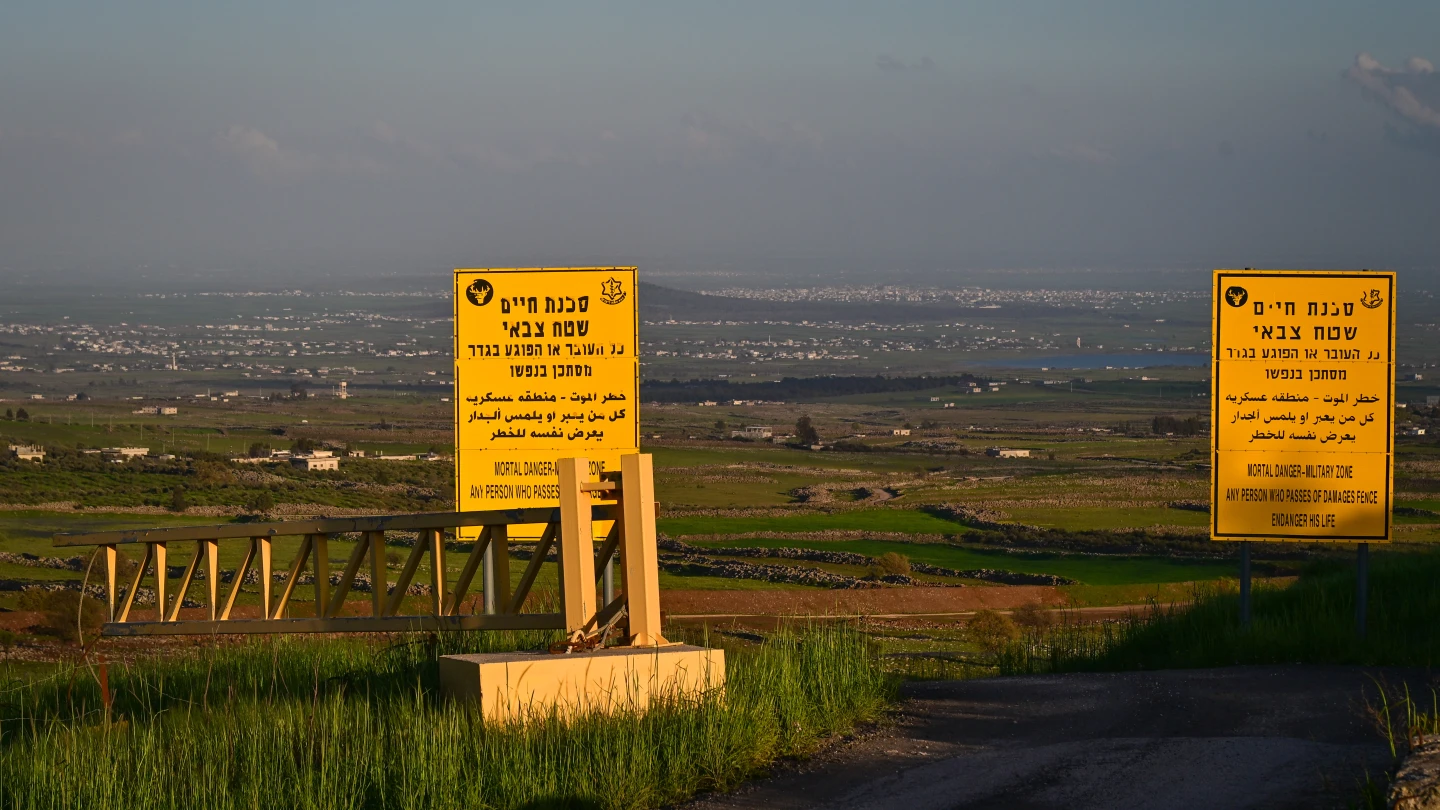
On Feb. 2, the Rafah border crossing officially reopened to pedestrian traffic, marking an operational milestone of the Trump 20-Point Plan for Gaza.
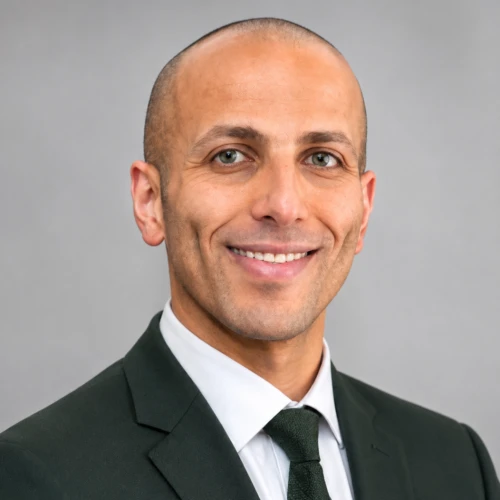
The reopening of the Rafah Crossing has been dubbed a “pilot program” and currently operates under the auspices of the Board of Peace, set up by U.S. President Donald Trump. Civil governance at the terminal is now managed by the National Committee for the Administration of Gaza (NCAG), a 15-member technocratic body chaired by Ali Shaath, a former deputy minister in the Palestinian Authority.
To maintain security standards, the transit capacity is currently strictly capped at 200 vetted travelers per day, with commercial goods remaining diverted to the Kerem Shalom crossing site.
Entry and exit protocol
For Gazans exiting the enclave, the Israeli security apparatus has shifted to a “nonphysical” oversight model. Egypt is required to transmit traveler manifests to the Israel Security Agency (Shin Bet) for vetting 24 to 48 hours before arrival.
Once at the terminal, travelers are processed by the European Union Border Assistance Mission (EUBAM) and P.A. officers under the gaze of high-definition live feeds streamed to Israeli operations rooms. These systems utilize facial recognition software to cross-reference individuals against an internal security database in real time.
Oversight is further enforced through an automated data link between Egyptian and Israeli border systems, ensuring no discrepancies in traveler identity. Israeli operators retain the ability to lock remote-controlled electronic turnstiles or halt passage through digital overrides.
Furthermore, the protocol grants Israeli intelligence the authority to remotely flag and scan electronic devices for dual-use software or encrypted militant communications. In a recent statement, a spokesperson for Israel’s Coordinator of Government Activities in the Territories (COGAT) unit explained that this “virtual” presence allows Israel to maintain an interdiction capability without the friction of a permanent IDF footprint at the gate.
While the exit process relies on remote oversight, entry into the Gaza Strip via Rafah utilizes a “fortress” model centered on a dedicated IDF military checkpoint established on the Gazan side of the Egyptian terminal. Within this facility, every individual undergoes physical biometric verification, including iris scans and fingerprinting, to cross-reference against COGAT’s authorized returnee list.
Security is reinforced by the deployment of large-scale X-ray scanners engineered to detect dual-use components hidden in personal luggage. This screening marks the “Yellow Line protocol,” a physical boundary indicating the transition into the 58% of Gaza under active Israeli security control.
Beyond digital checks, IDF personnel manage individual physical search zones for all belongings. Emphasizing the necessity of this thorough approach, a spokesperson for the IDF said in a recent statement that “the crossing is a potential lifeline for Gazans but must never again become a primary artery for Hamas’s military revival.” Currently, a strict daily limit of 50 Gazans is enforced, exclusive to those who fled during the war and have passed rigorous security clearance.
The operational security of the Rafah Crossing is tethered to the containment of the Philadelphi Corridor, the 14.3-kilometer (8.9-mile) strategic buffer zone along Gaza’s border with Egypt.
The primary defensive architecture, established since the IDF conquest of the corridor in May 2024, includes a reinforced concrete wall standing six to nine meters (about 20 to 30 feet) above ground, mirrored by a deep subterranean slurry wall engineered to block tunnel excavation. Integrated within this underground barrier are seismic sensor arrays (geophones) capable of detecting subterranean acoustic vibrations from manual or mechanical digging at depths exceeding 10 meters (33 feet).
Complementing the physical barrier is a 100-meter-wide (330-feet-wide) “buffer strip,” extended in specific sectors to a one-kilometer cleared zone, to maintain unobstructed lines of sight for 360-degree smart motion-detection cameras.

These sensors are linked to Remote Operated Weapon Systems, allowing for kinetic responses from remote command centers without a physical troop presence on the perimeter. The entire 14-kilometer stretch operates as a unified digital sensor grid, providing real-time alerts for any surface or subterranean breach.
Stressing the necessity for such stringent infrastructure during the final implementation phase, Israeli Prime Minister Benjamin Netanyahu stated late last month that “the crossing will be limited solely to people with a full Israeli oversight mechanism,” ensuring the corridor remains a hermetic seal against the infiltration of weapons or dual-use machinery.
Kobi Michael, a senior researcher at the Institute for National Security Studies (INSS) at Tel Aviv University, told JNS that, under the current constraints, the reopening of the crossing is unlikely to have a major impact on Gaza.
“There are many layers of control between the various security oversight mechanisms, and as of now, only pedestrians are crossing, and even that at very small numbers,” Michael said. “In the beginning, this process will proceed very slowly and very cautiously, and won’t significantly influence the internal politics of Gaza.”
Michael added, however, that even without a significant practical impact, the reopening of the crossing is likely to be used for political messaging. “This is Gaza’s exit to the world. From their perspective, it symbolizes sovereignty and Independence.”
Administrative oversight
The administrative oversight of the Rafah terminal is defined by tripartite cooperation between the European Union, NCAG and Israeli security agencies. Following the mission’s mandate renewal in June 2025, EUBAM Rafah has redeployed its specialized teams, including personnel from the Italian Carabinieri and Spanish Guardia Civil, to act as third-party monitors. These officers operate as a non-executive mission, providing technical support but without possessing the legal authority to execute arrests or detentions.
Shadi Othman, a media officer at the E.U. office in Jerusalem, confirmed on Feb. 1 that “the European mission’s mandate is limited to monitoring compliance with agreed standards and procedures, without intervening in the management of the crossing.”
Terminal management is handled by Shin Bet-vetted P.A. officers following training focusing on narcotics and explosives detection. Daily operational coordination is maintained through formal meetings between EUBAM, the P.A. and the Israeli District Coordination Office.
Egyptian lobbying efforts have been central to the reopening of the Rafah Crossing. The renewed movement across the Gaza-Egyptian border has significant ramifications for the Egyptian economy and for Egypt’s position in determining the future of Gaza.
For Cairo, the Rafah reopening is the centerpiece of an economic recovery strategy aimed at reversing a $9 billion direct revenue loss from the Suez Canal sustained over the previous two years.
“At the end of the day, there’s a clear economic incentive for Egypt. There’s a lot of money to be made if the Rafah crossing opens fully,” Michael observed.
Logistically, the Egyptian Ministry of Health has mobilized a network of 150 hospitals nationwide to receive specialized cases, supported by a frontline fleet of 250 to 300 fully equipped ambulances. The Egyptian Red Crescent has simultaneously expanded its physical infrastructure within the Rafah terminal’s arrival and departure halls.
However, Michael cast doubt on Egyptian intentions, explaining that Cairo intends to use Rafah mostly to return Gazans to the enclave, then to facilitate humanitarian evacuations. “There are as many as 100,000 Palestinians who entered Egypt since the beginning of the war, and they are definitely also interested in kicking a lot of them out,” Michael said.
According to Ofir Winter, a senior researcher at INSS, Egypt is presenting the reopening of the Rafah crossing domestically as a “sovereign, tightly controlled move” designed specifically to “prevent displacement [of Gazans] rather than enable it.”
Cairo’s primary objective is to signal to its public that it has “blocked any scenario of mass refugee influx” and successfully “resisted external pressure on displacement.”
Winter told JNS that by ensuring that the crossing operates “strictly according to Egyptian conditions,” Cairo is framing the development as a “diplomatic victory” that proves it has “imposed its vision internationally.”

Michael added that the reopening of Rafah essentially secures Egypt’s position at the table for debate on the future administration of Gaza.
“The Rafah crossing is the most direct way for Egypt to take control of the situation and to become a significant player. Once they control the flow in and out of Gaza independently of Israel, they will automatically be relevant and need to be consulted regarding any future decisions on Gaza,” Michael observed.
Regarding technical security arrangements, Winter highlighted that Egypt’s agenda has centered on reducing the “visibility of Israeli oversight.” While the framework allows Israel to exercise “name-based approval and remote-control mechanisms” to block individuals, Cairo has “opposed any Israeli physical presence at the crossing itself” and “direct coordination with Israel over day-to-day movement.”
Winter noted that Egypt has objected to additional Israeli inspection points at or near the Egyptian border and to any Israeli-managed facility adjacent to Rafah. In place of Israeli participation, Egypt has vehemently advocated that the terminal be operated by Palestinian personnel “trained in Egypt,” with coordination conducted via the P.A.-affiliated administration and the E.U. mission.
The dominant position of Egypt and the P.A. in the Rafah terminal has catalyzed a shift in Israeli defense planning toward a “Tri-Border Hub” at Kerem Shalom.
This proposal, backed by the Defense Ministry, aims to phase out the Rafah terminal in favor of a consolidated facility located inside Israeli territory. This hub would centralize all pedestrian and cargo transit under a single, IDF-managed screening architecture, effectively rendering the Egyptian-Gazan border a “closed” perimeter while maintaining Israeli physical control over all entries.
Domestic response
Domestically, the current “remote oversight” model has drawn sharp criticism from across the political spectrum. Opposition leader Yair Lapid of Yesh Atid argued on Monday that the government “folded” by allowing the P.A. to manage the terminal without a permanent on-site IDF presence, labeling the move as “a lack of strategic initiative.”
Yair Golan, leader of the Democrats Party, described it as a “painful reminder of an ongoing strategic failure.” Gadi Eizenkot, head of the Yashar Party, noted that the reopening contradicts the government’s mandate of “total victory,” suggesting that it grants a symbolic victory to Hamas before its verified disarmament. Yoaz Hendel, head of the Reservists Party, characterized the reopening as a “U-turn” that signals a return to the pre-Oct. 7, 2023, status quo.
Within the Cabinet, National Security Minister Itamar Ben-Gvir and Finance Minister Bezalel Smotrich have consistently warned of a “Hamas or P.A. takeover” of the Rafah crossing.