Col. (ret.) Dr. Eran Lerman, former deputy director of the National Security Council, is the vice president of the Jerusalem Institute for Strategic Studies.
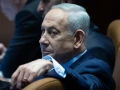 The prime minister delayed the publication of his annual medical report to prevent Iranian “false propaganda” during the war.
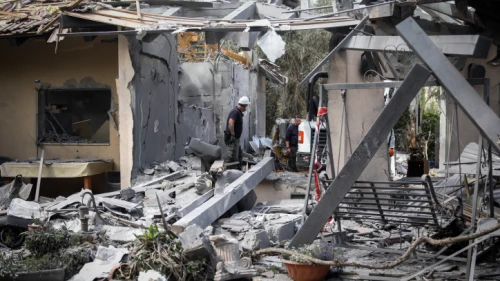
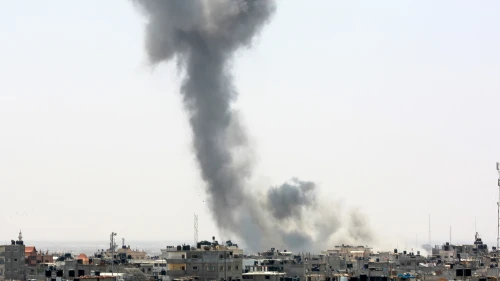
 The terrorists fired rockets into Israel as Trump announced the extension of a tenuous pause in the fighting.
 “We exposed the European Union’s complicity,” the NGO’s Naomi Linder Kahn tells JNS.
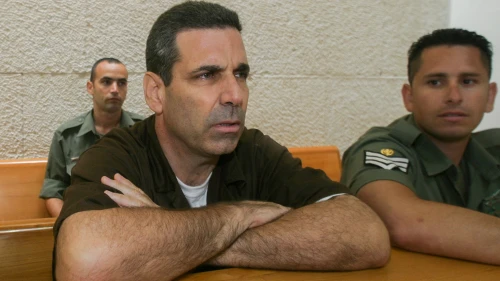
 The affair is a rare case where the Islamic Republic is believed to have recruited agents with access to highly sensitive material.
 One professor who served on the committee that created the report said the Trump administration’s accusations of antisemitism at Yale “were a pretty serious exaggeration.”
 “Activities specifically done to harass or intimidate people, especially as they’re entering into a religious institution to go worship, are unacceptable,” Rep. Tom Suozzi told JNS.
 “Relationships tied to military conflict are far more likely to be seen as burdens,” the survey stated.
 The “George H.W. Bush” just arrived in the Middle East, according to CENTCOM.
 Canadian Senate report on Jew-hatred calls for improved security, fails to mention Islamic extremism“Amid the alarming rise in antisemitic incidents across Canada, this report represents an important contribution to the development of effective solutions,” the Israeli embassy in Canada stated.
 “The environment at TMU pushed me to a place I never thought I’d be—feeling like I no longer belonged on my own campus,” said Toronto Metropolitan University student Liat Schwartz.
 Keir Starmer made the pledge during a solidarity visit to a synagogue that jihadists had targeted.
 The U.S. president is “trying to manufacture achievements from false news,” the Islamic Republic’s judiciary said.
-
Canadian Senate report on Jew-hatred calls for improved security, fails to mention Islamic extremism“Amid the alarming rise in antisemitic incidents across Canada, this report represents an important contribution to the development of effective solutions,” the Israeli embassy in Canada stated.
Keir Starmer made the pledge during a solidarity visit to a synagogue that jihadists had targeted.
 “Missouri stands with Israel and its people and we want to make sure that the world understands that,” the governor said while signing the bill.
 Kimberly Richey, assistant secretary for civil rights at the U.S. Department of Education, stated that “no child should be taught by his or her teachers to hate their peers.”
  Some 1,000 people showed up to the event, organized by the Hostages and Missing Families Forum and UJA-Federation of New York.
 “This week we are reminded that with true faith, eternal hope and the power of prayer, nothing can stop the people of God.”
 It appears as “a living educational framework—a connection between Jewish communities in Israel and abroad, and a reflection of the strength of these communities across generations.”
 Kalman Meir Bar releases special rules for holiday eve, advising evacuees and bomb shelter residents on leaven searches during war.
 A new project creates personal matches between bereaved families and therapeutic dogs that touch wounded hearts through play, touch and their very presence.
 Communities near Gaza push forward with resilience centers, therapy programs and infrastructure despite trauma.
 Clalit study finds hospital-level care at home can improve outcomes as wartime pressures reshape patient treatment.
 Counter-demonstrators called for the destruction of the State of Israel.
 The indictment of the Southern Poverty Law Center for funding extremism like the 2017 Charlottesville neo-Nazi rally discredits liberal hysteria about race, immigration and Islamophobia.
 Historical parallels with Nazi Germany underscore the peril of appeasement in confronting Tehran.
 Prioritizing a desire to keep its seat at the table over protecting the Jewish community is what we say in Yiddish is a shanda—something “shameful.”
 Josh Shapiro’s allegations of bullying and leading America into war with Iran are more than disingenuous; they lead to false accusations against the Jewish people and the State of Israel.
 “Think Twice” with Jonathan Tobin with guest Michael Doran, Ep. 219

-
The prime minister delayed the publication of his annual medical report to prevent Iranian “false propaganda” during the war.
The terrorists fired rockets into Israel as Trump announced the extension of a tenuous pause in the fighting.
“We exposed the European Union’s complicity,” the NGO’s Naomi Linder Kahn tells JNS.
The affair is a rare case where the Islamic Republic is believed to have recruited agents with access to highly sensitive material.
-
One professor who served on the committee that created the report said the Trump administration’s accusations of antisemitism at Yale “were a pretty serious exaggeration.”
“Activities specifically done to harass or intimidate people, especially as they’re entering into a religious institution to go worship, are unacceptable,” Rep. Tom Suozzi told JNS.
“Relationships tied to military conflict are far more likely to be seen as burdens,” the survey stated.
The “George H.W. Bush” just arrived in the Middle East, according to CENTCOM.
-
Canadian Senate report on Jew-hatred calls for improved security, fails to mention Islamic extremism“Amid the alarming rise in antisemitic incidents across Canada, this report represents an important contribution to the development of effective solutions,” the Israeli embassy in Canada stated.
“The environment at TMU pushed me to a place I never thought I’d be—feeling like I no longer belonged on my own campus,” said Toronto Metropolitan University student Liat Schwartz.
Keir Starmer made the pledge during a solidarity visit to a synagogue that jihadists had targeted.
The U.S. president is “trying to manufacture achievements from false news,” the Islamic Republic’s judiciary said.
-
Canadian Senate report on Jew-hatred calls for improved security, fails to mention Islamic extremism“Amid the alarming rise in antisemitic incidents across Canada, this report represents an important contribution to the development of effective solutions,” the Israeli embassy in Canada stated.
Keir Starmer made the pledge during a solidarity visit to a synagogue that jihadists had targeted.
“Missouri stands with Israel and its people and we want to make sure that the world understands that,” the governor said while signing the bill.
Kimberly Richey, assistant secretary for civil rights at the U.S. Department of Education, stated that “no child should be taught by his or her teachers to hate their peers.”
-
Some 1,000 people showed up to the event, organized by the Hostages and Missing Families Forum and UJA-Federation of New York.
“This week we are reminded that with true faith, eternal hope and the power of prayer, nothing can stop the people of God.”
It appears as “a living educational framework—a connection between Jewish communities in Israel and abroad, and a reflection of the strength of these communities across generations.”
Kalman Meir Bar releases special rules for holiday eve, advising evacuees and bomb shelter residents on leaven searches during war.
-
A new project creates personal matches between bereaved families and therapeutic dogs that touch wounded hearts through play, touch and their very presence.
Communities near Gaza push forward with resilience centers, therapy programs and infrastructure despite trauma.
Clalit study finds hospital-level care at home can improve outcomes as wartime pressures reshape patient treatment.
Counter-demonstrators called for the destruction of the State of Israel.
-
The indictment of the Southern Poverty Law Center for funding extremism like the 2017 Charlottesville neo-Nazi rally discredits liberal hysteria about race, immigration and Islamophobia.
Historical parallels with Nazi Germany underscore the peril of appeasement in confronting Tehran.
Prioritizing a desire to keep its seat at the table over protecting the Jewish community is what we say in Yiddish is a shanda—something “shameful.”
Josh Shapiro’s allegations of bullying and leading America into war with Iran are more than disingenuous; they lead to false accusations against the Jewish people and the State of Israel.
-
“Think Twice” with Jonathan Tobin with guest Michael Doran, Ep. 219