Newsletter
Newsletter Support JNS
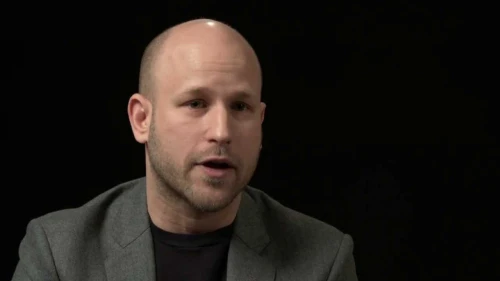
Moshe Phillips. Credit: Courtesy.

Moshe Phillips

Moshe Phillips, a veteran pro-Israel activist and author, is the national chairman of Americans For a Safe Israel (AFSI). A former board member of the American Zionist Movement, he previously served as national director of the U.S. division of Herut and worked with CAMERA in Philadelphia. He was also a delegate to the 2020 World Zionist Congress and served as editor of The Challenger, the publication of the Tagar Zionist Youth Movement. His op-eds and letters have been widely published in the United States and Israel.

Jordanian Parliament Speaker Ahmad al-Safadi said maps of ancient Israel “express a criminal mentality and malicious ambitions that cannot be tolerated.”
The wave of Palestinian Arab violence that raged from December 1987 to the autumn of 1993 featured murderous bombings, shootings and stabbings.
Speakers who have been featured in recent months—and one who is slated to talk in January—have promoted anti-Israel libels.
Fuad Shubaki devoted his life to financing the bombers, snipers, grenade-hurlers, stabbers and rock-throwers waging nonstop jihad against Israel.
The problem of anti-Israel bias has become much worse, in part because it has become an accepted part of mainstream journalistic culture.
Dennis Ross is on television and in news articles offering unsolicited advice to Israel. But from 1993 to 1994, he was a source of hot air.
It’s bad enough that students at the university in Cambridge, Mass., have to contend with pro-Hamas demonstrators and faculty members; now, some of their own leaders have failed them.
The Palestinian Authority doesn’t arrest terrorists, shut down their explosives labs or confiscate their weapon depots, as Israeli forces discovered yet again.
It was only when modern-day Israel was established in 1948 that the Arabs began using the term “Palestine” as a way of attacking Israel’s legitimacy.
Is citing unproven rumors an appropriate professional way of reporting?
There are signs that leaders of the Schusterman Center for Israel Studies are regurgitating parts of an anti-Israel narrative that has been poisoning the academic world.
Both explanations for his misleading words in “The New York Times” remain deeply disturbing.