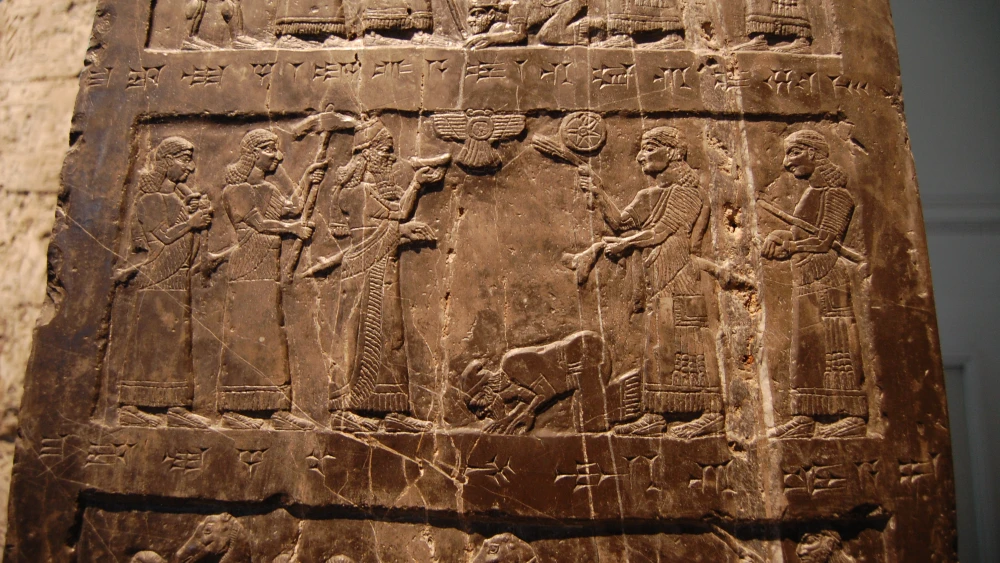
Paul Collins, keeper of the British Museum’s Middle East department, was slated to deliver a lunchtime talk about “Ancient Israel and Judah in the British Museum” on May 28. The museum now states that the lecture, which was to be part of Jewish Culture month, has been postponed.
“Please note this event has been postponed,” it states. “We apologize for any inconvenience.”
David Wolfson, a member of the House of Lords who is an Orthodox Jew, shared a screenshot of what he said was an email from the museum postponing the event.
“Important information about your booking,” the email from the museum’s ticketing team states. “Due to security concerns, the Ancient Israel and Judah in the British Museum talk on Thursday May 28 has been postponed. We apologize for any inconvenience.”
“If publicly-funded institutions cannot host such events without folding to pressure, serious questions arise about that funding,” wrote Wolfson, shadow attorney general.
In a separate statement, the museum said it had been “informed that a significant proportion of registered attendees were individuals intending to deliberately disrupt the event.”
“This decision was made to protect the event—not to diminish it,” it stated.
Alex Gandler, a spokesman for the Israeli embassy in London, stated that “it is shameful that historical and academic truths are being stifled by a grotesque, violent pressure campaign.”
“Those who need to be canceled are the violent criminals that are threatening,” he said.
“Jewish history under attack by extremists,” stated Michael Dickson, executive director of StandWithUS Israel. “The British Museum—one of the world’s most famous museums, founded in 1753—caved into them.”
Simon Sebag Montefiore, a prominent author and historian, stated that it is “dark times when a talk about ancient Judah and Israel at the British Museum is canceled for security concerns.”