Newsletter
Newsletter Support JNS
Sarah N. Stern

Sarah N. Stern

Sarah N. Stern is the founder and president of the Endowment for Middle East Truth (EMET), a think tank that specializes in the Middle East. She is the author of Saudi Arabia and the Global Terrorist Network (2011).

It comes one week before the next round of Israeli elections and on the heels of an announcement by the Islamic Republic that it is stepping up the level of enrichment of uranium.
If the international community persists in finding ways to offer the Iranians “economic relief” and evade U.S. sanctions, we will never stop its quest for control.
Title VI of the Higher Education Act jump-started a regional-studies industry that has become distorted and one-sided, presenting Israel in a pernicious light for students of all ages.
After American largess and Israeli know-how, the Jordanians have been offering safe haven to a cold-blooded murderer of American citizens who has made a career out of her crime.
The Iranians are masters of double speak and have brazenly manipulated most of the international community into blaming the United States for violating the terms of the 2015 nuclear deal.
Iran is playing brinkmanship with our friends and allies, and might end up baiting us into a horrible war.
If the U.S. House of Representatives can get legislation passed, it would be because it took a lesson from Germany on how to define and fight anti-Semitism.
Nations aren’t pulling the wool over U.S. President Donald Trump’s eyes and leading him blindly into war. Rather, they agree with Trump that Iran’s aggression and destabilization have worsened since the nuclear deal was concluded.
By refusing to inspect military sites like Parchin, the IAEA is sending a much different political signal than what the official thinks. It signals a policy of appeasement.
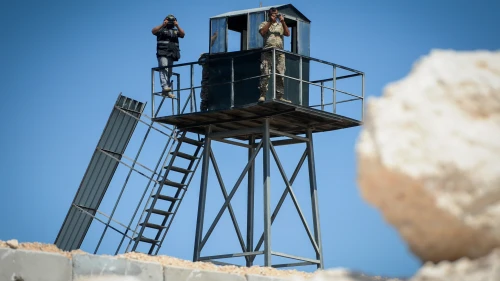
The reality on the ground is that the 400 square miles of the Golan Heights is the demarcation line of a Hobbesian state of war of “man against man” and a relatively tranquil, democratic area.
The radiant epoch of that optimistic history was a brief moment from Feb. 14 to April 27, 2005, known as “The Cedar Revolution.” It was a time when tens of thousands of Lebanese Christians courageously took to the streets and demanded an ouster of Syrian forces.
Throughout American history, there has been a familiar cycle of isolationist tendencies. All of these have been like waving a rare, sizzling steak to the voracious, hungry dogs in the region.