Newsletter
Newsletter Support JNS
Sarah N. Stern

Sarah N. Stern

Sarah N. Stern is the founder and president of the Endowment for Middle East Truth (EMET), a think tank that specializes in the Middle East. She is the author of Saudi Arabia and the Global Terrorist Network (2011).

If the new administration sees as part of its objective making Israel feel alone and isolated in the community of nations, this is certainly unwise.
For a brief period, the hopeful eyes of the world were watching with aspirations that this might lead to a more open and democratic Middle East, or at least one in which the most entrenched, tyrannical leaders would be overthrown and basic human rights would be established.
A team of progressives has put forth a list of 100 names to serve in national security and foreign-policy capacities in the Biden White House. If personality equals policy, the pro-Israel community has reason to be concerned.
We have to dispel the illusion in the foreign-policy establishment that a deal, any deal, is the penultimate objective of diplomacy.
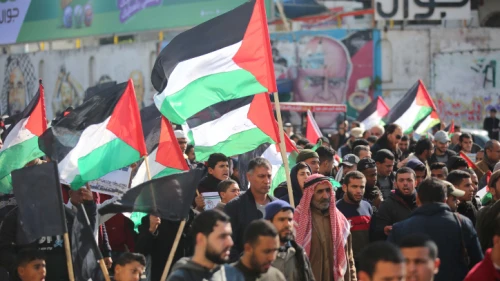
While many cling to the view that the Palestinian issue is merely a human-rights struggle, think for a moment of the families of all of those who have had loved ones murdered by terrorists.
With its seemingly infinite wealth, the Sunni Arab nation has become the chief patron of radical Islamists throughout the world, as it simultaneously has become the most astute influence operator in Washington and throughout Western capitals.
For decades now, behind the ivory-covered towers of our universities, bias has reared its head against Israel and the United States, particularly within Middle East Studies programs.
It has taken 72 years and the Iranian threat, but the icy-cold chill of the presence of a Jewish state in the Middle East has begun to thaw.
Even before the tragic explosions that rocked Beirut on Aug. 4, the country’s economy has been in rapid freefall.
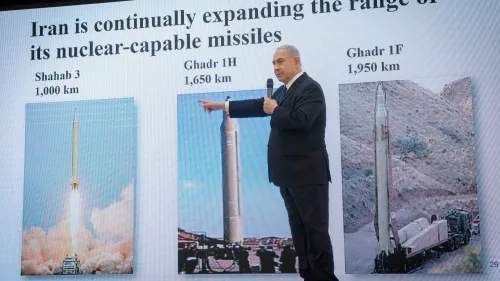
Iran and China are sworn enemies of the United States, and neither can be trusted when it comes to Israel’s national security interests.
The Israelis (or whoever might be responsible) for a series of explosions at power plants in Iran are correct to be worried—and to know that there’s no time like the present.
Many other variations set along the same basic themes have been offered: Oslo II, the Hebron Accords, the Wye River Memorandum, the “road map for peace.” The same set of conditions was continuously placed upon the Palestinians, all almost entirely ignored.