A new policy paper raises concerns that the world’s most widely cited database of attacks on health care may systematically record Israeli actions while undercounting or omitting those carried out by Hamas and other terror groups. It also examines how such records are later presented in diplomatic and legal forums as evidence of alleged war crimes.
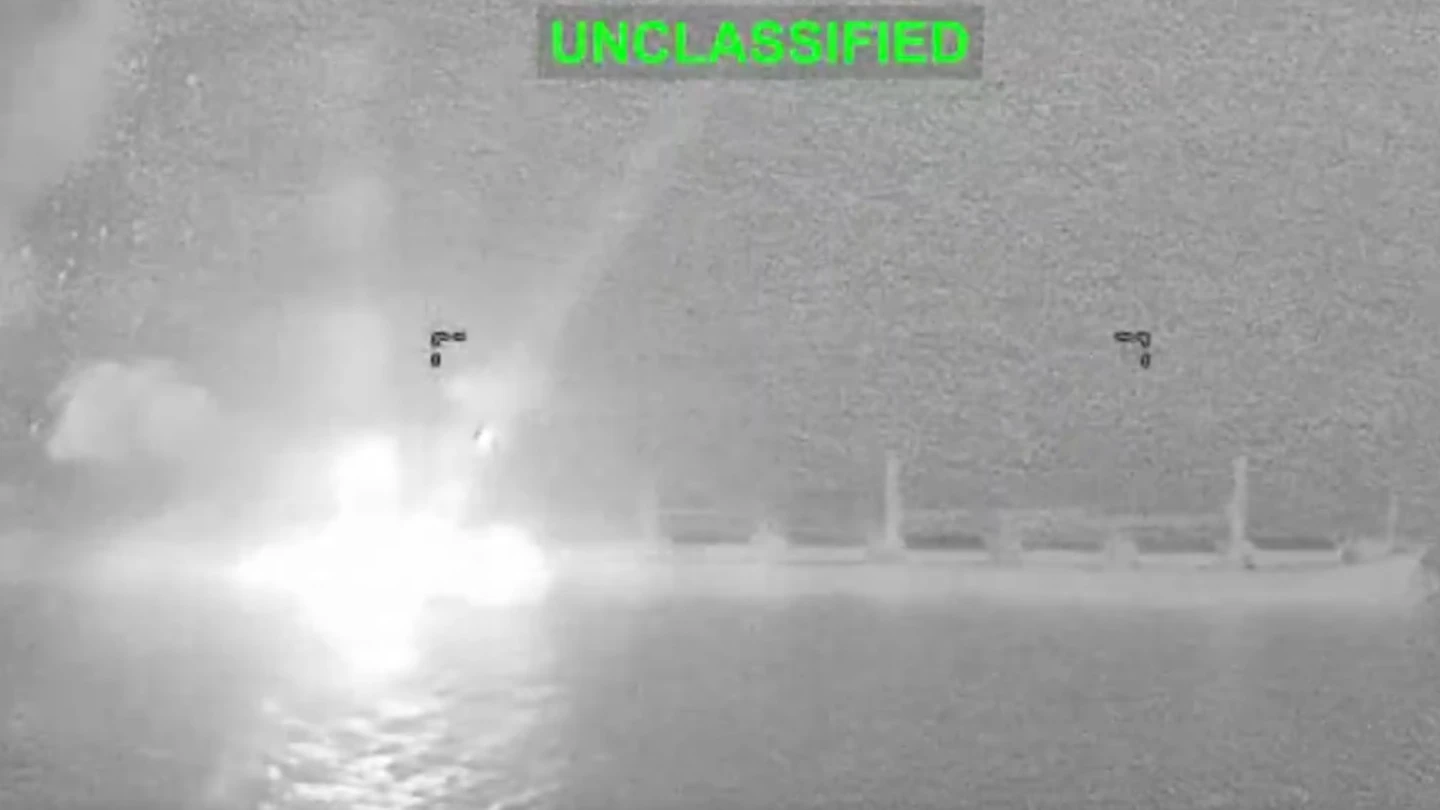
On Oct. 17, 2023, just 10 days after Hamas’s Oct. 7 attacks on southern Israel, which left widespread murder, devastation and mass hostage-taking, an explosion struck Al-Ahli Hospital in Gaza. Within hours, the Hamas-controlled Ministry of Health reported 471 deaths and blamed Israel. The claim spread quickly across international media.
Several heads of state paused engagements, and protests broke out in cities from London to Beirut. The World Health Organization logged the incident in its global Surveillance System for Attacks (SSA) on Health Care, recording 471 deaths as “confirmed.”
Both the attribution and the casualty figure were strongly disputed.
Within days, United States and Israeli intelligence assessments concluded that the explosion was caused by a misfired rocket launched by Palestinian Islamic Jihad, an Iranian terror proxy. President Joe Biden publicly stated this position. Human Rights Watch, an organization often critical of Israel, also reached a similar conclusion based on crater analysis and weapons fragments. The reported casualty figure was likewise found to be significantly overstated.
Despite this, the WHO entry was never corrected and still lists 471 deaths as confirmed.

At the 158th session of WHO’s Executive Board in February 2026, that same entry was referenced in support of a claim made on behalf of WHO’s Eastern Mediterranean member states, where it was claimed that almost 1,000 people had been killed in documented attacks attributed to Israel affecting health facilities and medical transport.
The Eastern Mediterranean region, in WHO terminology, includes 22 countries, among them Egypt, Iran, and Saudi Arabia. Many of these states are also members of the Organization of Islamic Cooperation. The OIC later cited these figures as evidence of what it described as Israel’s “deliberate devastation of the health system” and “flagrant violations of international law”. In practice, the same bloc that produced the statement was also, in part, relying on its own interpretation of the underlying data.
No correction was issued during the session.
New report highlights the problem
This episode is at the center of a new policy paper by the Center for Medical Integrity, published this month, which offers one of the most detailed critiques yet of the WHO Surveillance System for Attacks on Health Care.
The paper argues that while the system plays an important role in documenting violence against medical infrastructure, it suffers from structural imbalances in how incidents are recorded and interpreted, particularly in relation to Israel and Hamas.
Dr. William Stern, speaking on behalf of the Center’s Advisory Board, which includes Dr. Joseph Offenbacher, Dr. Rachel Spitzer, Dr. J. Ari Greenwald, Dr. Joel Zivot, and Dr. Baruch Berzon, put the concern in stark terms, saying, “The selective omissions and political abuse detract from its credibility. The anti-Israel bias exists in many U.N. systems, but the cost to the protections of health care in conflict, to medical neutrality and to patient health affects everyone.”
A system built on a contradiction
The SSA was established in 2017 to track violence against health care in conflict zones, identify patterns, and inform prevention efforts. It compiles reports from NGOs, U.N. agencies, governments, and media sources, assigns confidence levels, and publishes the results in a public database.
According to the paper, a central issue lies in how broadly the system defines attacks on health care. In international humanitarian law, the term carries legal implications related to intent and responsibility. In the SSA, however, it is applied across a wide range of incidents, including direct strikes on hospitals, delays at checkpoints, and disruptions caused by broader conflict conditions.
The WHO, the paper notes, does not have the mandate or capacity to determine which incidents constitute war crimes, which constitute legal violations, or which are incidental effects of armed conflict. Nevertheless, similar language is applied across these categories in the database.
Dr. Stern said, “WHO is not an investigative or enforcement body for international humanitarian law; it is tasked with achieving the attainment by all peoples of the highest possible level of health. It undermines this goal when it allows - or even encourages - its programs to be abused for lawfare.”
The paper argues that as a result, the database can function as a record that resembles legal evidence while lacking the verification standards normally required for such use.
What is recorded and what is not
The report further suggests that reporting is uneven in practice. It notes that Israeli military actions in Gaza, due to intense international media scrutiny, tend to be documented in detail, particularly where hospitals or medical infrastructure are affected. The SSA records airstrikes, ground operations, and related incidents when they impact health facilities.
By contrast, the paper argues that many actions attributed to Hamas and other armed groups that affect Gaza’s health system are not consistently reflected in the database.
It cites reports that Hamas has embedded military infrastructure inside and beneath hospitals, including tunnel networks under Al-Shifa Hospital, according to United States intelligence assessments. It also refers to allegations of armed presence in hospital wards, diversion of medical supplies, and restrictions placed on medical personnel.
Other incidents cited include armed activity inside Nasser Hospital in early 2026, which contributed to Médecins Sans Frontières suspending some operations. The report also references cases outside Gaza, including restrictions on medical care in Iran during protest crackdowns and the detention of health workers in Yemen by Houthi forces. It argues that these incidents are not consistently reflected in SSA records.
The misuse cycle
The paper describes what it calls a “misuse cycle” in which incomplete or uneven data enters the system, is published without correction, is later cited in official forums, and eventually used to support broader political or legal claims. It points to the Al-Ahli Hospital entry as a central example of how an uncorrected record can continue to shape international discourse.
Dr. Stern said, “The lack of correction, or even attempt to verify details of an event, prevents it from being used to develop policy recommendations or guide and protect health aid deployment.”
He added that the concern is not only what is included in the database, but how it is later used beyond its original public health purpose.
Why now?
When asked about the timing of the report, Dr. Stern said, “We have been looking for ways to address the SSA for some time.
“With the 10-year anniversary of U.N. Security Council Resolution 2286 dealing with attacks on health, and the upcoming 10-year anniversary of the establishment of the SSA, meetings were held in New York and Geneva by U.N. and WHO staff to discuss the SSA and plan for future directions,” he explained. “We want to use this process to encourage the adoption of our recommendations for the SSA and to raise awareness regarding the problematic usage of the SSA as a political weapon, and ultimately its failure to achieve its own objectives.”
Potential reforms
The paper proposes several reforms, including the use of more neutral terminology, such as conflict-related disruptions to health care, clearer documentation of prior military use of facilities, the introduction of a formal correction mechanism for disputed entries, and broader diversification of data sources.
For Israel, the issue has become part of a wider debate over how conflict data is collected, interpreted, and later used in international forums. The paper argues that when a system consistently records one side of a conflict in greater detail while omitting comparable actions by others, it risks presenting an incomplete picture of health care in war.
Ultimately, it raises a broader question about trust in global monitoring systems and whether they can maintain a clear distinction between public health documentation and material that later becomes part of legal and political argument.
The policy paper “WHO’s Surveillance System for Attacks on Health: Bias, Misuse, and the Path to Reform” was published by the Center for Medical Integrity in May 2026.