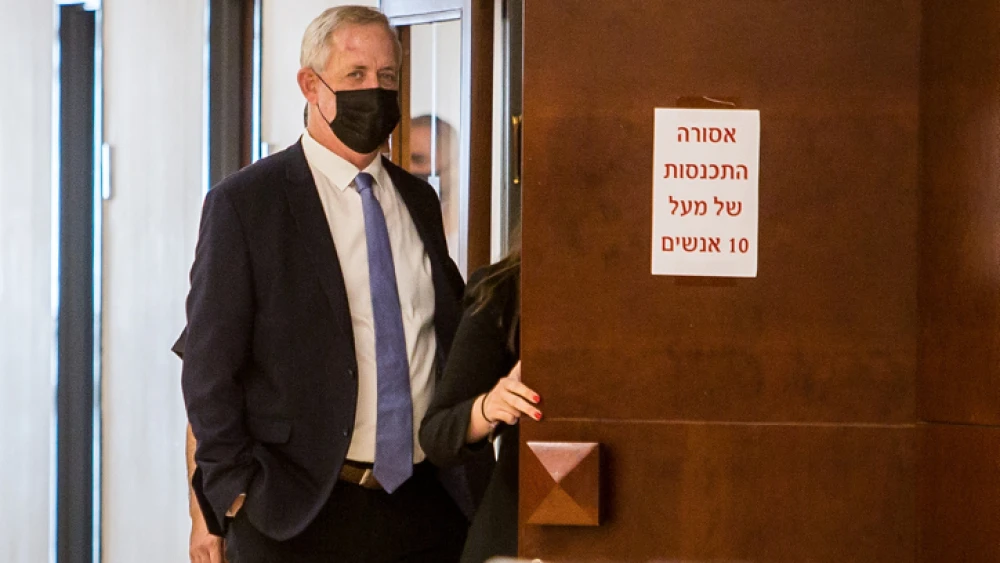
Israel’s Cabinet on Wednesday approved the appointment of Blue and White leader Benny Gantz as Israel’s justice minister for the duration of the transitional government after Israeli Prime Minister Benjamin Netanyahu agreed to the move earlier in the day in what can be considered a dramatic reversal.
In a stormy Cabinet session on Tuesday, Netanyahu advanced fellow Likud Party member Ofir Akunis for the role, after Gantz’s candidacy failed by a vote of 17-10.
The vote for Akunis passed, but Attorney General Avichai Mandelblit objected, claiming that it had violated the coalition agreement between Blue and White and Likud. The High Court of Justice then suspended Akunis’s appointment, giving Netanyahu until Wednesday afternoon to justify it.
Hours before the court’s deadline, Netanyahu chose to support Gantz’s appointment, though he insisted in his response to the court that Tuesday’s disputed vote was legitimate.
Gantz had been serving in the role in an interim capacity until March, when his term expired. Since then, Israel has been without a justice minister. When Gantz advanced his candidacy for the post on Tuesday, Netanyahu objected, saying that there was no need to appoint a permanent justice minister when a new coalition is expected to be formed shortly. Nevertheless, Gantz’s candidacy was brought to a vote.
When the vote failed to pass, Netanyahu then nominated Akunis in a surprise move, later claiming that since Israel has held elections since the coalition agreement was signed, it wasn’t clear whether the agreement is still in effect.