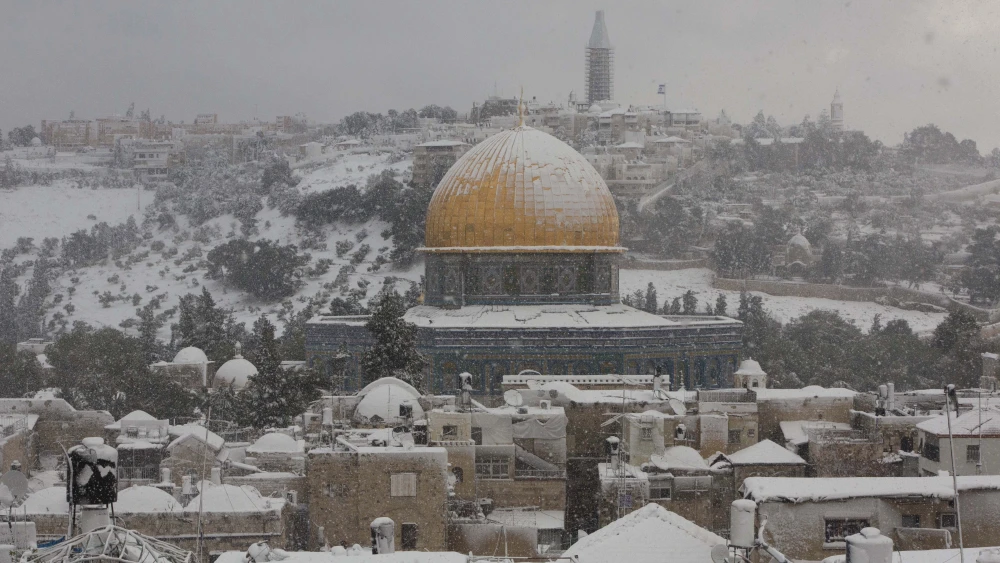

This week—on Tuesday night, to be exact—we begin a rather sad period in the Jewish calendar known as the Nine Days. It begins with Rosh Chodesh, marking the new month of Menachem Av, and will conclude after Tisha B’Av on July 23. These are the saddest days of the year: a national day of mourning with a 25-hour fast commemorating the date when both Holy Temples in Jerusalem were destroyed.
The First Temple, built by King Solomon, was destroyed by Nebuchadnezzar, king of Babylon, in 586 BCE. The Second Temple was destroyed in 70 C.E. by the Roman Empire under Titus, hence the Arch of Titus in Rome celebrating his victory and the expulsion of the Jews from Jerusalem.
Many people ask a seemingly legitimate question. Why are we still crying over events that occurred some 2,000 years ago? “Get over it” or “Let it lie,” they say. “Why keep remembering forever? Enough already!”
It’s a fair question.
Here is a story from a more recent period of destruction, the Holocaust.
While in the concentration camp, a Torah scholar was studying Talmud with his nephew, quite a heroic feat during those horrific circumstances. When the uncle felt that his end was near, he said to his nephew: “Promise me that if you survive, you will finish the book of Gemorrah we are studying, Moed Katan.” (Interestingly, my own decades-old weekly Talmud class is currently halfway through the tractate of Moed Katan.)
There, in the camp—amid the pain, hunger, misery and desolation, while looking death in the eye—what preoccupied that man’s mind? What was his heart’s last desire? That his student should finish the book of Talmud they were studying.
He had no other worries? No other concerns? It sounds unbelievable!
On second thought, maybe it’s not so crazy after all. Perhaps that is, in fact, the secret of our survival. That in the fires of hell, we were still dreaming of heaven. That we weren’t only thinking about life and survival, but the deeper reason for living and the purpose of our survival.
When the Jews were banished from Jerusalem by the Babylonians over 2,000 years ago, they famously sat by the river and wept, saying: “By the rivers of Babylon, there we sat and wept as we remembered Zion” (Psalm 137).
What could have been on their minds? How would they survive in those desperate circumstances? How to make a living, feed their children?
No. They were remembering Zion, Jerusalem and the Holy Temple. That’s what they were weeping and mourning for more than for themselves: “If I forget thee O’ Jerusalem, let my right hand lose its cunning. Let my tongue cleave to the roof of my mouth unless I place Jerusalem above my greatest joy.”
Amid the bondage, they aspired to freedom. Amid the ruins, they dreamed of returning and rebuilding. Precisely because we refused to forget Jerusalem, we come back. And because we never accepted defeat as final, we have built proud Jewish communities the world over.
So many of our victors have vanished or been vanquished, and Am Yisrael—“the people of Israel”—survives and thrives.
Tell me, have you bumped into any Babylonians lately? Have you rubbed shoulders with any Romans? Today’s Italians are not the descendants of the Romans of old.
Babylonians can only be found in museums or in archaeological digs. The Arch of Titus was built to commemorate General Titus’ conquest of Jerusalem. Indeed, the engravings there show the Jews being expelled from Jerusalem.
In 2015, I was invited to deliver an address at the Cardinal Bea Center for Judaic Studies at the Pontifical Gregorian University in Rome. (When I told my father, the sole Holocaust survivor of his family from Poland, he was absolutely stunned. He said it must be Moshiach’s tzeiten,” Messianic times.”)
Before we left Rome, I made a deliberate point of asking my hosts to take me to the Arch of Titus. I needed to have a few words with old Titus. Indeed, I told him in no uncertain terms that all that was left of him was an arch, but the Jewish people are alive and well in Jerusalem—and throughout the world.
What is left of the Third Reich? Perhaps a handful of old unrepentant Nazis here and there. Fortunately, today’s Germany is most repentant and has become very supportive of Israel. Just the other day, its parliament—the Bundestag—advanced new legislation that would make denying Israel’s right to exist a criminal offense punishable by a fine or up to five years in prison.
Because we never forgot Jerusalem, we passed our heritage and values on to the next generation. And if the uncle didn’t finish Moed Katan, then I hope the nephew did. Because we continue to remember who we are, where we come from and what we’ve gone through. And that’s exactly why we’re still here.
“Whoever mourns for Jerusalem will merit to see her joy,” says the Talmud in Taanit (30b).
You want to see Jerusalem rebuilt to all her former glory? Don’t forget her! If Jerusalem and our Holy Temple stay important in our lives, then we will be privileged to celebrate her revival and renaissance in our own times.
So, no, we do not forget historical events, even if they happened well over 2,000 years ago. We continue to remember and commemorate these crucial days in the lives of the Jewish people.