
Who could have imagined that Yemen—a poverty-stricken country 1,300 miles away—would effectively wage war against Israel? The fight with the Houthis has been perhaps the most obvious failure of Israeli Prime Minister Benjamin Netanyahu to prevent an Iranian proxy from terrorizing Israeli citizens and of the Israel Defense Forces to defeat a previously non-threatening enemy.
On Oct. 19, 2023, the Iranian-backed Houthis in Yemen began firing missiles at Israel and shipping in the Red Sea as part of an Iranian strategy to force Israel to fight on multiple fronts. Troops associated with the Islamic Revolutionary Guard Corps were working on the ground with the Houthis, who claimed that they were acting to support the Palestinians in the Gaza Strip and only targeting ships belonging to Israelis or heading for Israeli ports. Their attacks quickly expanded to other vessels—more than 145 merchant ship attacks by mid-2025—and led to an almost total blockade of the key commercial shipping route traversing through the Suez Canal into the Red Sea, and then out to the Arabian Sea and Indian Ocean.
On Nov. 9, 2023, Israel’s multibillion-dollar Arrow air-defense system, developed with American assistance, made history by intercepting a ballistic missile outside the Earth’s atmosphere. Since then, it has been regularly tested by Houthi rocket fire. But Israel has been unable to defend itself alone, relying also on U.S. forces to shoot down drones and missiles.
From Oct. 19, 2023, until July 2024, Israel largely avoided direct confrontation, relying on the United States to shoulder most of the burden. Former President Joe Biden, however, was reluctant to take decisive action because of his obsessive concern with escalation that might lead to a direct U.S. confrontation with Iran. In June 2024, Adm. James Stavridis, a former Supreme Allied Commander of NATO, described the Western response to the Houthis as “anemic, indecisive and predominantly defensive.” He said a successful campaign would consist of four phases: gathering intelligence on Houthi assets; striking Houthi command and control centers; hitting infrastructure used for their attacks; and severing their supply chain from Iran. The Biden administration failed to accomplish these objectives.
Meanwhile, Israel continued to come under attack. Its air defenses intercepted most but not all incoming rockets and drones. On July 18, an Iranian-made Shahed drone hit an apartment building near the former U.S. embassy (now the U.S. Consulate) in Tel Aviv. One person was killed and 10 others were wounded. That prompted Israel’s first direct strikes in Yemen. But these were also weak. Fewer than two dozen counterstrikes aimed at weapons stores, electricity infrastructure and economic targets failed to deter the Houthis from continuing to fire rockets.
The Biden administration, which inexplicably removed the Houthis from the Designated Global Foreign Terrorist list, continued to reject congressional calls for the decision to be reversed. After the Houthis launched a barrage of rockets and drones at U.S. Navy ships, which were all intercepted, Washington used B-2 stealth bombers to attack five underground weapons storage sites in Yemen. This was essentially a pinprick that demonstrated “U.S. global strike capabilities” but failed to impress the Houthis.
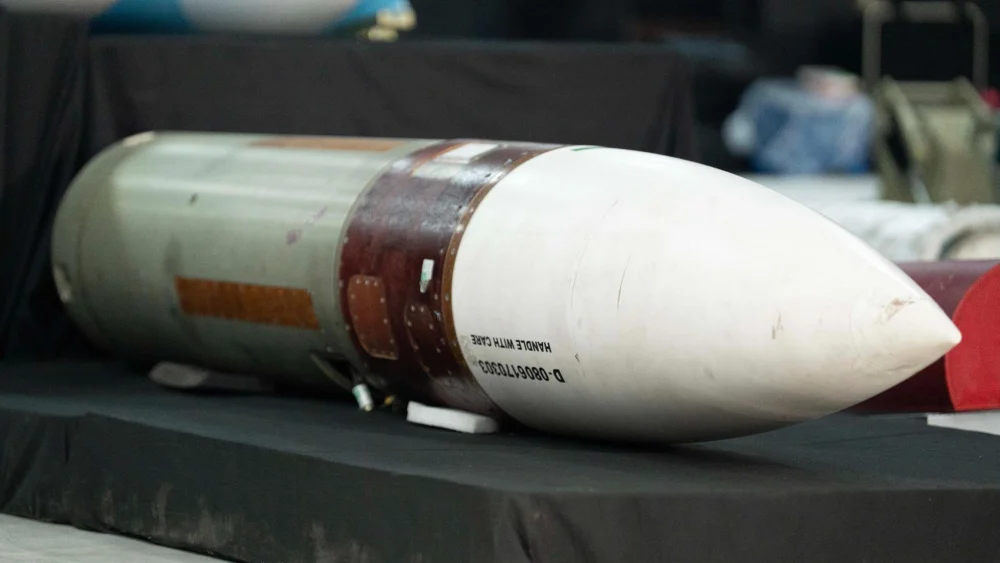
Israel displayed its own capability on Dec. 19, when 14 fighter jets flew 1,240 miles in the first attack on the Yemeni capital of Sanaa. Unknown to the pilots, a ballistic missile was heading for Israel. That projectile was intercepted outside Israeli airspace by the Arrow; however, the warhead crashed and destroyed an empty school building in Ramat Gan in what could have been a mass casualty event. This is why alarms are sounded when incoming missiles are detected, even when they are intercepted; shrapnel from the interceptor or the rocket that was destroyed may fall to Earth and cause death and destruction.
This provided Iran a low-cost way to terrorize Israelis. Their proxies need only fire one of their Iranian-supplied missiles in the middle of the night toward central Israel, and millions of Israelis are forced to flee to shelters in their pajamas and slippers. This has been going on for nearly two years, traumatizing the population, especially kids. The Western media that incessantly writes about Palestinian suffering has little or nothing to say about the Israelis, who have three to five minutes’ warning time to get infants, elderly parents and disabled individuals to a shelter.
There is also a significant financial cost. The Houthi bombardment has contributed to the reluctance of major airlines to fly to Israel, which has devastated the tourist industry for nearly two years now. The Red Sea blockade has had a marginal impact, as most of Israel’s trade is conducted with Europe via the Mediterranean. Nevertheless, Eilat remains critical for imports such as vehicles and oil, as well as exports of minerals. The privately operated port has incurred staggering losses, prompting its owner to warn in July that it may shut down without government aid. Closure would mark a symbolic victory for the Houthis.
When Donald Trump returned to the White House for a second term, there was hope that he would take decisive action. He relisted the Houthis as a Foreign Terrorist Organization to disrupt their financial support, but they continued to attack both Israel and ships in the Red Sea. On March 15, the U.S. launched large-scale military strikes against Houthi targets. Trump said the Houthis would be “completely annihilated” by U.S. military strikes and warned Tehran to “immediately” stop supplying them with military equipment. The United States also sent Iran a message by using its biggest bunker buster bombs against underground Houthi targets. Iran reportedly began pulling its forces out of Yemen.
Following a Houthi ballistic missile strike near Ben-Gurion International Airport on May 5, Israel and the United States conducted a joint counterstrike the next night against Houthi targets. The IDF launched extensive airstrikes, hitting Sana’a International Airport, power stations and cement factories, which were believed to support military operations. This marked the sixth Israeli airstrike on the Houthis since July 2024, as part of a broader response to some 400 Houthi attacks during the war. The escalation also followed Israel’s reassessment of its strategy after concluding that more than 1,000 U.S. airstrikes alone had not deterred further Houthi aggression.
Then, on May 6, Trump shocked Israel by abruptly declaring an end to the 30-day U.S. campaign, claiming the Houthis had “capitulated.” This was no victory. The Houthis had “successfully shot down at least seven multimillion-dollar American drones,” hindering America’s ability to “move into ‘phase two’ of the operation,” sources told CNN, which also reported the truce was “aimed at building momentum for nuclear deal talks with Iran.”
Trump’s decision was a blatant betrayal of Israel. The Houthis had not agreed to stop targeting Israel, and they wasted little time in resuming their attacks. These intensified when Israel began “Operation Rising Lion” against Iran on June 12. Three days later, the Houthis, in coordination with Iran and other proxies, launched dozens of ballistic missiles toward central Israel, including Tel Aviv, Bat Yam and Rehovot. The barrage killed at least seven civilians, wounded dozens, and caused significant damage.
On July 7, the Israeli Air Force launched “Operation Long Shadow,” striking three Houthi-controlled ports in Yemen: Hodeidah, Ras Issa and Al-Salif. It also hit a power station and the Galaxy Leader ship, which the IDF said was being used for terrorist purposes.
Still, Houthi missiles continued to target Israel.
A Jerusalem Post editorial said: “We underestimated an enemy that thrives on austerity, dispersion, and ideological fervor. We then tried to fix the problem with familiar tools that were never calibrated for this target.”
Israel is in a difficult position. It is being forced to win a war entirely through air power. It is too far away to use infantry and tanks. Yemen is a vast country that is difficult to infiltrate. And the Houthis are as extreme as the Iranian mullahs and Hamas.
In an interview with Ynet, a Houthi official explained that “we want only one thing from the Zionist entity: to leave the Arab land of Palestine. We believe Israel’s existence is illegitimate. Its end is a divine certainty.” The Houthis, he said, “believe this is an existential struggle—faith against heresy, the oppressed against the oppressors. We will prevail. We want Israel erased and Al-Aqsa Mosque purified. This is God’s promise to His servants.”
When asked if the Houthis would continue to threaten Israel after the Gaza war ends, he replied: “We are part of the Axis of Jerusalem and will continue supporting the Palestinian resistance—politically, militarily, and morally—until our greater goal is achieved: dismantling and destroying the Zionist entity.”
Now, perhaps the tide is turning. The intelligence deficit was clearly overcome when Israel targeted a meeting of senior Houthi officials, and killed the prime minister and several senior officials, including the energy, foreign and information ministers.
Mohammed Al-Bukhaiti, a senior figure in the Houthi Political Council, declared: “Israel has crossed the red lines by attacking the PM, which means the war has entered a new phase. There is no escape from revenge for the deaths of the martyrs.”
Israel’s cabinet was subsequently forced to convene in a secret location and security for Netanyahu has been beefed up.
Targeting the leadership of Hamas and Hezbollah may have degraded their abilities, but it has not stopped them from fighting. The Houthis gave early proof that they have equal staying power, launching a drone that was intercepted and two missiles that didn’t reach Israeli airspace. If Jerusalem cannot stop the Houthis, Israel faces not just a strategic failure but a psychological one: a nation kept awake at night by a still dangerous Iranian proxy from one of the poorest corners of the earth.
Part I: Gaza and the illusion of victory
Part II: Israel bloodied Hezbollah, but only Lebanon can defeat it
Next: Unexpected consequences in Syria